In the dynamic and often volatile world of oil and gas, investment success hinges not just on predicting market shifts but on understanding the operational bedrock that drives profitability. For too long, the industry has relied on simplistic metrics like “pump uptime” to gauge the efficiency of hydraulic fracturing completions. However, as OilMarketCap.com’s proprietary data reveals a period of significant market flux, investors must look beyond such superficial indicators. Real performance demands a redefinition of efficiency, one centered on autonomous systems that optimize throughput, minimize non-productive time (NPT), and ultimately deliver superior economic returns in challenging environments.
Redefining Frac Efficiency for Investor Returns
The traditional focus on continuous pumping, while seemingly logical, often misses the forest for the trees. An investor’s primary concern isn’t merely that pumps are running, but what’s being pumped, how consistently, and with what impact on overall well economics. We believe a smarter metric for completion operations efficiency should prioritize a “sand-flow guarantee”—the assurance that proppant delivery to the fracture proceeds uninterrupted until the stage is complete. This focus on consistent proppant delivery is paramount because it directly translates into maximum reservoir contact and, consequently, higher initial production rates and estimated ultimate recovery. Systems designed to provide this reliability, such as advanced surface pressure containment ecosystems, offer compatibility across various pumping units and robust end connections, minimizing bottlenecks that plague conventional operations. By shifting focus to this throughput-centric efficiency, operators can dramatically reduce rig-up time and NPT, factors that directly impact the daily spread rate and, by extension, investor profitability.
Market Volatility Demands Operational Precision
The current market landscape underscores the urgent need for enhanced operational efficiency. As of today, Brent Crude trades at $90.38, reflecting a significant -9.07% drop within the day’s range of $86.08 to $98.97. Similarly, WTI Crude has fallen to $82.59, down -9.41%, with its daily range spanning $78.97 to $90.34. This sharp decline follows a pronounced trend over the past two weeks, where Brent prices have plummeted by over 18.5%, from $112.78 on March 30th to $91.87 yesterday. Such pronounced volatility, coupled with a notable -5.18% decrease in Gasoline prices to $2.93, creates immense pressure on exploration and production companies. In an environment where margins are squeezed by falling commodity prices, every dollar saved through operational precision directly impacts the bottom line. Investments in advanced frac technologies that reduce NPT, mitigate failures, and enhance safety are not just about incremental gains; they are about safeguarding profitability and ensuring resilience against sudden market headwinds. Investors are increasingly scrutinizing operational expenditures, recognizing that superior field efficiency is a critical differentiator in a declining price environment.
Autonomous Systems: The Future of Field Operations
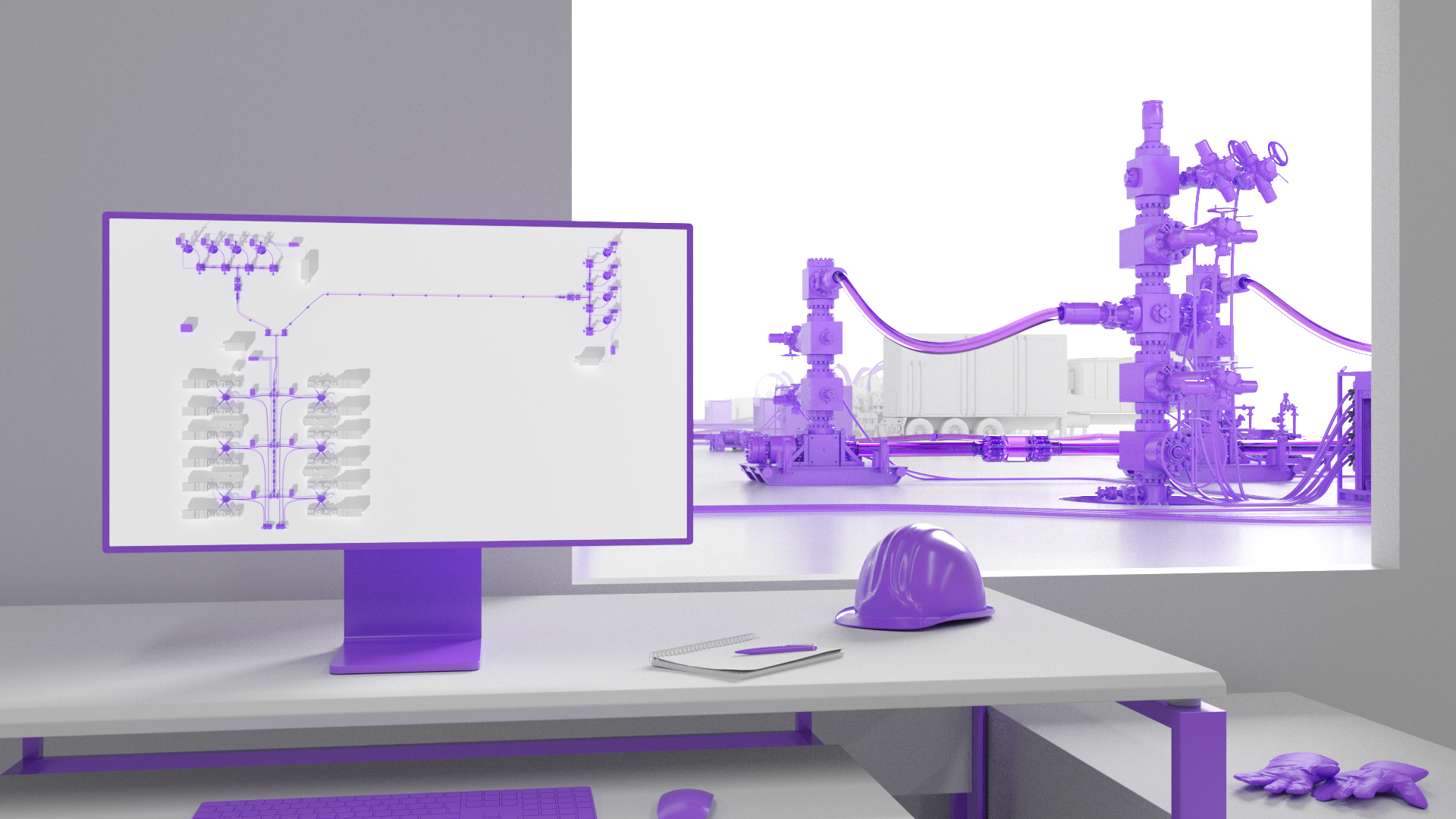
The distinction between automation and true autonomy in frac operations represents a pivotal evolution for the industry and a key area for investor focus. While automation effectively streamlines repetitive tasks, it still necessitates micromanagement and human intervention, leaving room for error and limiting scalability. Autonomous systems, conversely, reliably execute predefined sequences of tasks across multiple wells or pads, independently of human oversight. This eliminates the likelihood of introducing human error and, crucially, frees highly skilled operators to concentrate on strategic, high-value work rather than routine supervision. Platforms like the iComplete high-performance surface pressure containment ecosystem exemplify this shift. By integrating a digital backbone with advanced missile and well systems, these autonomous solutions create a closed-loop system between horsepower and the reservoir. This not only enhances the sand-flow guarantee but also drives significant improvements in safety by removing personnel from hazardous “red zones,” contributes to sustainability through optimized resource use, and delivers substantial economic benefits by reducing operational risks and improving overall job success rates, even with multiple stakeholders present on location. For investors, this translates into more predictable project outcomes and a de-risked operational profile.
Navigating Future Market Dynamics: A Proactive Stance
As investors ponder the trajectory of oil prices and the stability of the market, our proprietary intent data reveals persistent questions about future oil prices (e.g., “what do you predict the price of oil per barrel will be by end of 2026?”) and the influence of major players (“What are OPEC+ current production quotas?”). These concerns underscore the prevailing uncertainty. In this context, operational excellence, driven by autonomous frac systems, becomes a strategic imperative. The upcoming OPEC+ Joint Ministerial Monitoring Committee (JMMC) meeting on April 18th, followed by the Full Ministerial meeting on April 19th, could significantly impact supply decisions and, by extension, global oil prices. Regardless of the outcomes—whether quotas are adjusted or maintained—operators equipped with highly efficient, autonomous frac operations are better positioned to respond. They can maximize output from active rigs more cost-effectively, safeguarding margins against potential price fluctuations. Furthermore, the weekly API and EIA inventory reports (scheduled for April 21st/22nd and April 28th/29th, respectively) alongside the Baker Hughes Rig Count (April 24th and May 1st) will provide critical insights into supply-demand balances and drilling activity. Companies that have invested in autonomous completion technologies will demonstrate superior agility in capitalizing on these market signals, ensuring that every active rig operates at peak efficiency, thereby enhancing their attractiveness to long-term investors seeking resilience and consistent performance in an unpredictable future.