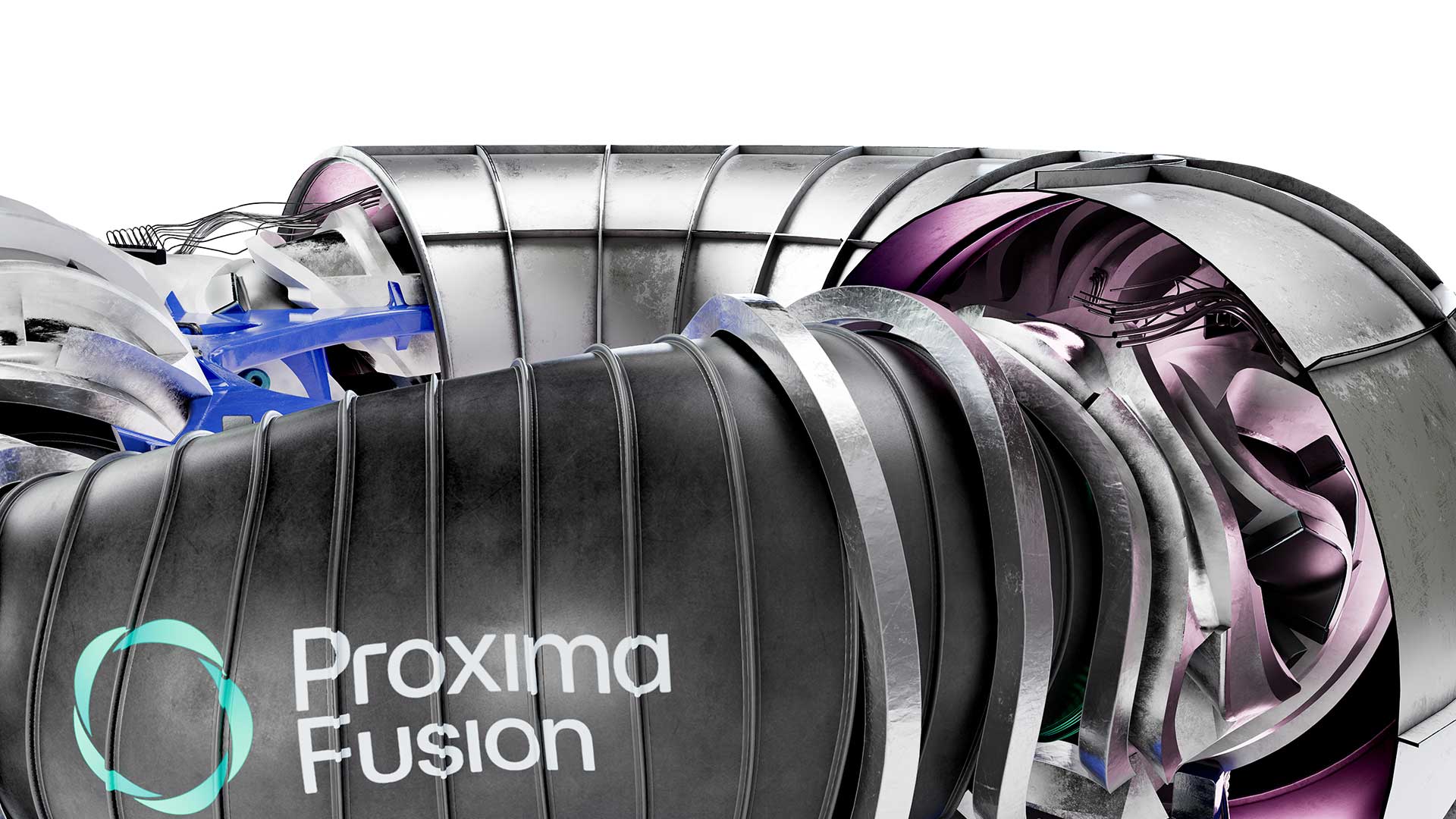
A significant capital injection into the European fusion energy sector is signaling a pivotal shift in the global energy landscape, one that traditional oil and gas investors should keenly observe. Proxima Fusion, a rapidly advancing innovator in fusion technology, has successfully closed a Series A funding round, securing an unprecedented €130 million (approximately $150 million). This landmark private investment stands as Europe’s most substantial capital infusion into fusion research to date, underscoring growing investor confidence in the long-term potential of this transformative energy source.
The financing round, spearheaded by prominent investment firms Cherry Ventures and Balderton Capital, also saw participation from a diverse group of notable climate and technology-focused entities, including UVC Partners, DeepTech & Climate Fonds, Lightspeed, and redalpine. This latest fundraising effort elevates Proxima Fusion’s cumulative capital acquisition to exceed €185 million (over $200 million), encompassing both private and public funding sources.
A Landmark Investment in Future Energy
For investors accustomed to the dynamics of fossil fuel markets, this substantial backing for fusion energy represents more than just a headline; it signifies an emerging strategic pathway away from conventional resource dependence. Proxima Fusion’s stated objective is ambitious: to expedite its strategic initiative to bring online Europe’s pioneering commercial fusion facility, leveraging stellarator principles, with an operational launch of its comprehensive Alpha demonstration system targeted for 2031. This timeline, while aggressive, highlights the accelerated pace of innovation and deployment within the fusion industry.
“Fusion energy now represents a tangible and strategic pathway to reorient global energy reliance from finite natural commodities towards advanced technological prowess,” stated Francesco Sciortino, Proxima Fusion’s CEO and Co-founder. He emphasized the company’s strategic positioning to capitalize on this growing impetus by bringing together an exceptional team of engineers and manufacturers with premier research institutions globally.
Stellarator Technology: A Path to Energy Sovereignty
Established in April 2023, Proxima Fusion originated as a spin-off from the renowned Max Planck Institute for Plasma Physics (IPP) and continues to sustain a robust collaborative relationship with IPP via a public-private framework. This strategic alliance allows Proxima Fusion to capitalize on Europe’s significant public sector investment in fusion research and established industrial infrastructure, thereby expediting the progression from theoretical research to viable commercial energy generation. This model of leveraging existing scientific foundations and industrial capabilities is crucial for de-risking such ambitious ventures.
Proxima’s methodological framework draws extensively from the Wendelstein 7-X stellarator experimental platform. Their approach integrates a simulation-centric engineering paradigm with advanced high-temperature superconducting (HTS) innovations. Earlier in the current year, in collaboration with IPP and KIT, Proxima introduced its Stellaris design. This blueprint was recognized as the inaugural peer-reviewed stellarator design that seamlessly combines physical principles, engineering execution, and operational maintenance considerations, and was widely applauded as a pivotal achievement for the worldwide fusion sector.
Filip Dames, Founding Partner at Cherry Ventures, commented on the significance of Proxima Fusion, stating, “This venture harmonizes Europe’s scientific superiority with its commercial aspirations, transforming elite scientific inquiry into one of the planet’s most promising fusion enterprises. It exemplifies cutting-edge technological innovation, sending a clear message that Europe is poised for global leadership in this critical domain.”
The fresh influx of capital is earmarked for the advancement of the Stellarator Model Coil (SMC) project, slated for completion by 2027. This SMC represents a critical hardware benchmark designed to affirm the viability and performance of HTS technology, a key enabler for compact and efficient stellarator designs. Successful validation of HTS at this scale would be a significant de-risking event for future commercial reactors.
Implications for the Oil & Gas Sector
For investors focused on the traditional oil and gas sector, these developments in fusion energy, while seemingly distant, carry profound long-term implications. The pursuit of fusion power represents the ultimate energy security solution: a clean, virtually limitless, and geopolitically independent energy source. As governments and industries globally intensify their decarbonization efforts, the successful deployment of commercial fusion could fundamentally alter the demand trajectory for hydrocarbons.
While the 2031 target for a demonstration plant is aggressive, and commercial widespread deployment is still decades away, the pace of investment and technological breakthroughs suggests that fusion is transitioning from purely scientific endeavor to a viable commercial prospect. This shift necessitates that oil and gas investors begin to factor in the potential for disruptive energy technologies when assessing long-term asset values, infrastructure investments, and portfolio diversification strategies. Companies heavily invested in conventional energy infrastructure, particularly those with long asset lifespans, must monitor these alternative energy advances to mitigate future stranded asset risks.
The strategic move towards “technological energy sovereignty,” as articulated by Proxima Fusion’s CEO, directly challenges the traditional geopolitical leverage associated with natural resource wealth. Nations that can generate their own clean, abundant power will inherently reduce their reliance on volatile commodity markets and politically sensitive supply chains. This macro-level shift could lead to a re-evaluation of national energy strategies, ultimately impacting global oil and gas trade flows and pricing mechanisms.
Investment Horizon and Risk Profile
Investing in fusion energy, much like early-stage exploration in nascent oil and gas fields, carries a high-risk, high-reward profile. The capital requirements are immense, the technological hurdles are significant, and the path to commercialization is long. However, the potential returns—solving global energy needs and mitigating climate change—are equally monumental. The willingness of top-tier venture capital firms to commit such substantial funds indicates a growing belief that the scientific and engineering challenges are becoming surmountable, moving fusion from the realm of pure science fiction to achievable engineering reality.
For diversified energy portfolios, a small, strategic allocation to innovative technologies like fusion could serve as a hedge against the long-term decline of fossil fuel dominance. It allows investors to participate in the upside of the energy transition while maintaining exposure to the current energy landscape. As progress continues, milestones such as the Stellarator Model Coil (SMC) validation in 2027 will become critical indicators of technological readiness and commercial viability, offering clearer signals for future investment decisions.
The Broader Energy Transition Landscape
Proxima Fusion’s success is not an isolated event but part of a broader, accelerating trend in the energy transition. Alongside advancements in renewables like solar and wind, and the ongoing development of advanced nuclear fission, fusion presents a compelling long-term solution. Its promise of clean, baseload power without the long-lived radioactive waste associated with fission reactors makes it particularly attractive in the context of global decarbonization goals. This holistic shift towards a diverse, low-carbon energy mix will profoundly reshape commodity markets and energy infrastructure globally.
The oil and gas industry, with its vast engineering capabilities, project management expertise, and capital deployment experience, could eventually find synergistic opportunities in the development and deployment of fusion energy infrastructure. While currently a potential disruptor, fusion could also evolve into a new frontier for energy services and technology companies with foresight.
Conclusion
The €130 million Series A funding secured by Proxima Fusion marks a watershed moment for the European fusion energy sector and underscores the accelerating global pivot towards advanced energy solutions. For investors navigating the complexities of oil and gas markets, this development is a clarion call to expand their analytical lens. While the direct impact on near-term oil and gas prices may be minimal, the long-term implications for energy security, demand patterns, and the strategic value of traditional hydrocarbon assets are undeniable. Vigilant monitoring of these disruptive technologies and their progress will be paramount for astute portfolio management and strategic positioning in the evolving global energy economy.


