The global energy landscape continues its dynamic evolution, and while traditional hydrocarbon investments remain central, the innovative financing structures emerging in frontier markets for renewable energy are increasingly capturing the attention of astute investors. A recent landmark transaction in Kenya underscores this shift, demonstrating how sophisticated financial engineering is unlocking substantial private capital for off-grid solar solutions across sub-Saharan Africa. This deal, orchestrating a significant inflow of $156 million (in Kenyan shilling equivalent) for solar energy provider Sun King, represents a pivotal moment in the region’s electrification journey, showcasing a template for future energy investment.
Catalyzing Capital for Frontier Energy Markets
At the heart of this groundbreaking initiative is Sun King, a prominent player in the off-grid solar sector, which successfully raised capital by securitizing future customer payments. This innovative asset-backed security (ABS) was met with robust investor interest, signaling a growing confidence in the financial viability of distributed energy assets in developing economies. Arranged by Citi, this deal stands out not only for its considerable scale but also for being the first of its kind to be predominantly driven by commercial banks, a significant departure from past reliance on development finance institutions (DFIs).
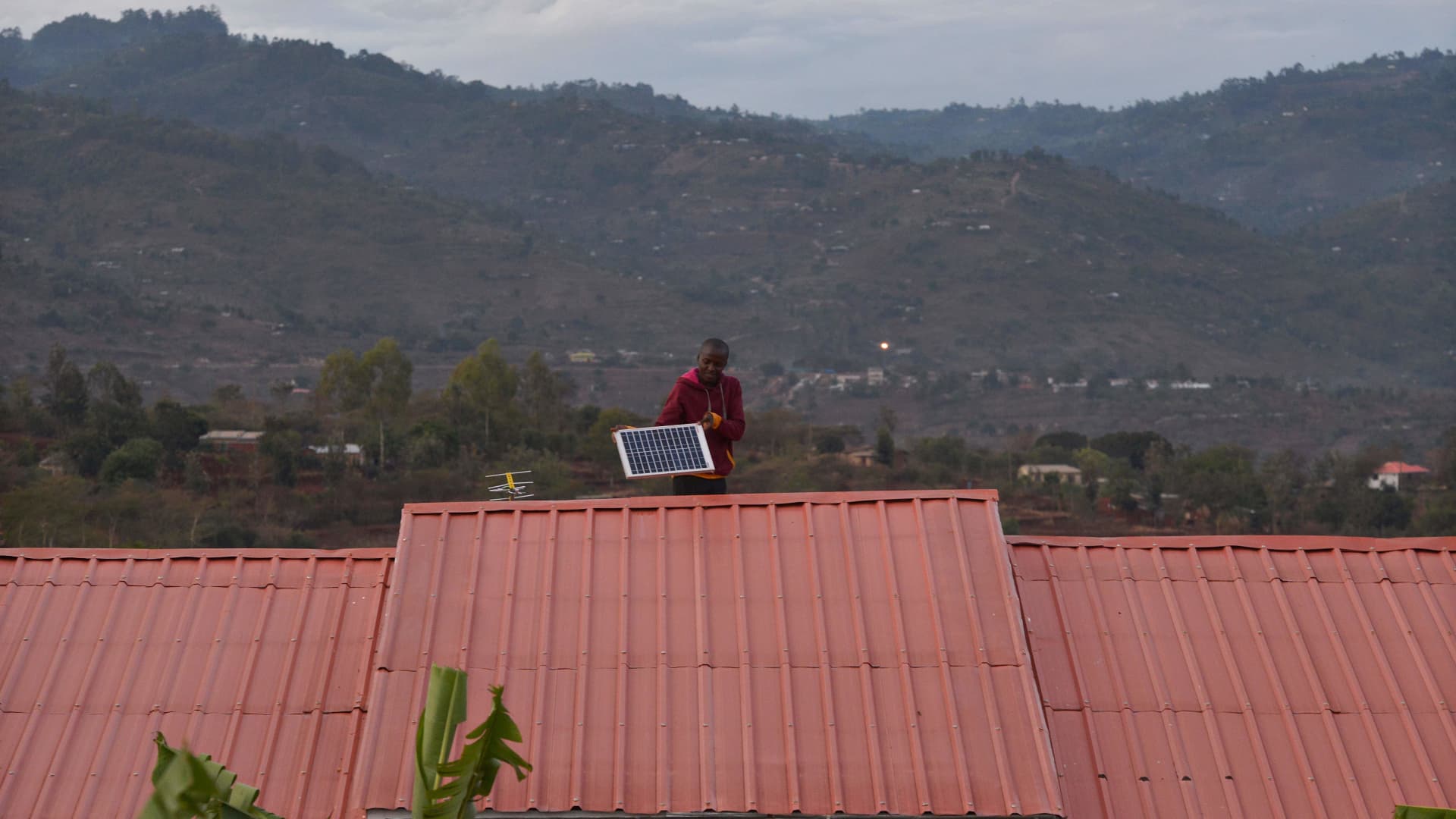
The transaction is projected to facilitate the deployment of approximately 1.4 million solar home systems, predominantly targeting rural Kenyan households that lack access to the national electricity grid. This direct impact on energy access for millions underscores the tangible returns on investment, extending beyond mere financial metrics to include substantial social and environmental dividends. For investors, this structure offers exposure to a rapidly expanding consumer base in a critical emerging market, underwritten by a predictable revenue stream from essential services.
Deconstructing the Deal: Risk and Return Layers
The financial architecture of this $156 million ABS was meticulously designed to appeal to a broad spectrum of investors with varying risk appetites. The deal was bifurcated into two distinct tranches, each offering a specific risk-return profile. The senior tranche, positioned as the more secure layer, attracted a consortium of leading commercial banks, including Absa, Citi, The Co-operative Bank of Kenya, KCB, and Stanbic Bank Kenya. These institutions are set to receive a yield that provides a modest premium above the prevailing Kenya government’s 6-month bond yield, which currently trades at 8.4%. This structure effectively de-risks the investment for commercial lenders, making it an attractive proposition within their portfolios.
Conversely, the junior, or “mezzanine,” tranche assumed a higher risk profile, designed to absorb initial losses should they occur. This segment was acquired by development finance lenders such as British International Investment and the Dutch development bank FMO. Historically, these DFIs have been the primary financiers of such ventures, but their strategic placement in the mezzanine layer here was critical. As Jorge Rubio Nava, Citi’s Global Head of Social Finance, articulated, this layered approach is instrumental in “creating structures that enable private capital to come in at scale” by providing a crucial “cushion to the senior private capital lenders.” This innovative collaboration between commercial banks and DFIs establishes a powerful blueprint for mobilizing significant private sector funding for essential infrastructure in challenging markets.
Kenya’s Economic Headwinds and the Investment Climate
This landmark financing arrives against a backdrop of considerable macroeconomic challenges for Kenya. The East African nation is contending with persistent budget deficits and a significant debt burden, evidenced by interest payments approaching 10% on its foreign currency-denominated debt. Analysts at Capital Economics, in a July 3 client note, expressed concerns about the sovereign’s long-term financial stability, with economist David Omojomolo stating that “without a clear and credible consolidation path backed by external support from the IMF we fear sovereign default will become harder to avoid over time.”
Despite these broader economic pressures, the successful closure of Sun King’s financing deal underscores the compelling nature of well-structured investments in essential services. It highlights that even amidst sovereign fiscal anxieties, specific sectors and projects, particularly those addressing fundamental needs like energy access, can still attract significant private capital when risk is appropriately mitigated and returns are competitive. This resilience in attracting investment, even during periods of national economic strain, speaks volumes about the perceived stability and growth potential of the underlying off-grid solar market.
Leapfrogging the Grid: A Model for African Electrification
The necessity for innovative energy solutions across Africa is stark. A 2022 report by the European Investment Bank revealed that approximately 600 million people across the continent still live without reliable grid-connected electricity. The fiscal constraints faced by many sub-Saharan African governments mean that traditional, state-led investments in expanding conventional electrical grids are often insufficient or too slow to meet surging demand. This reality has paved the way for agile, decentralized energy providers like Sun King and Ignite Energy Access to bypass legacy infrastructure entirely.
These companies are fundamentally transforming energy access by supplying households directly with solar panels and battery storage systems. A key barrier to adoption has historically been the high upfront cost of these systems. However, the widespread implementation of “pay-as-you-go” models, where customers make regular, affordable payments over time, has dramatically increased accessibility. This model not only makes off-grid solar affordable for low-income households but also creates a predictable, recurring revenue stream that can be securitized, as demonstrated by Sun King, to attract large-scale institutional investment. This strategy offers a scalable, sustainable path to energy access, promising significant growth for investors targeting the burgeoning African consumer market.
Investment Implications for the Broader Energy Sector
For investors in the broader energy sector, particularly those with a focus on oil and gas, this Kenyan solar financing offers crucial insights. It exemplifies the evolving landscape of energy investment, where innovative financial instruments are creating new asset classes and opportunities in emerging markets. The ability of an off-grid solar company to attract $156 million from commercial banks through an asset-backed security points to a growing sophistication in financing energy transition projects, even in environments traditionally viewed as high-risk.
This transaction is more than just a solar deal; it’s a masterclass in structured finance, demonstrating how private capital can be deployed at scale to address critical energy needs. It signals a maturation of the renewable energy sector in Africa, moving beyond niche DFI funding to mainstream commercial bank participation. For traditional energy investors considering diversification or seeking exposure to high-growth emerging markets, understanding these innovative financing mechanisms and the underlying demand drivers is paramount. The Sun King deal establishes a compelling precedent, suggesting that similar securitization models could be replicated across various essential service sectors in Africa, offering attractive risk-adjusted returns and contributing to significant regional development in the years to come.