Political Headwinds for Renewables Pave Way for Increased O&G Demand
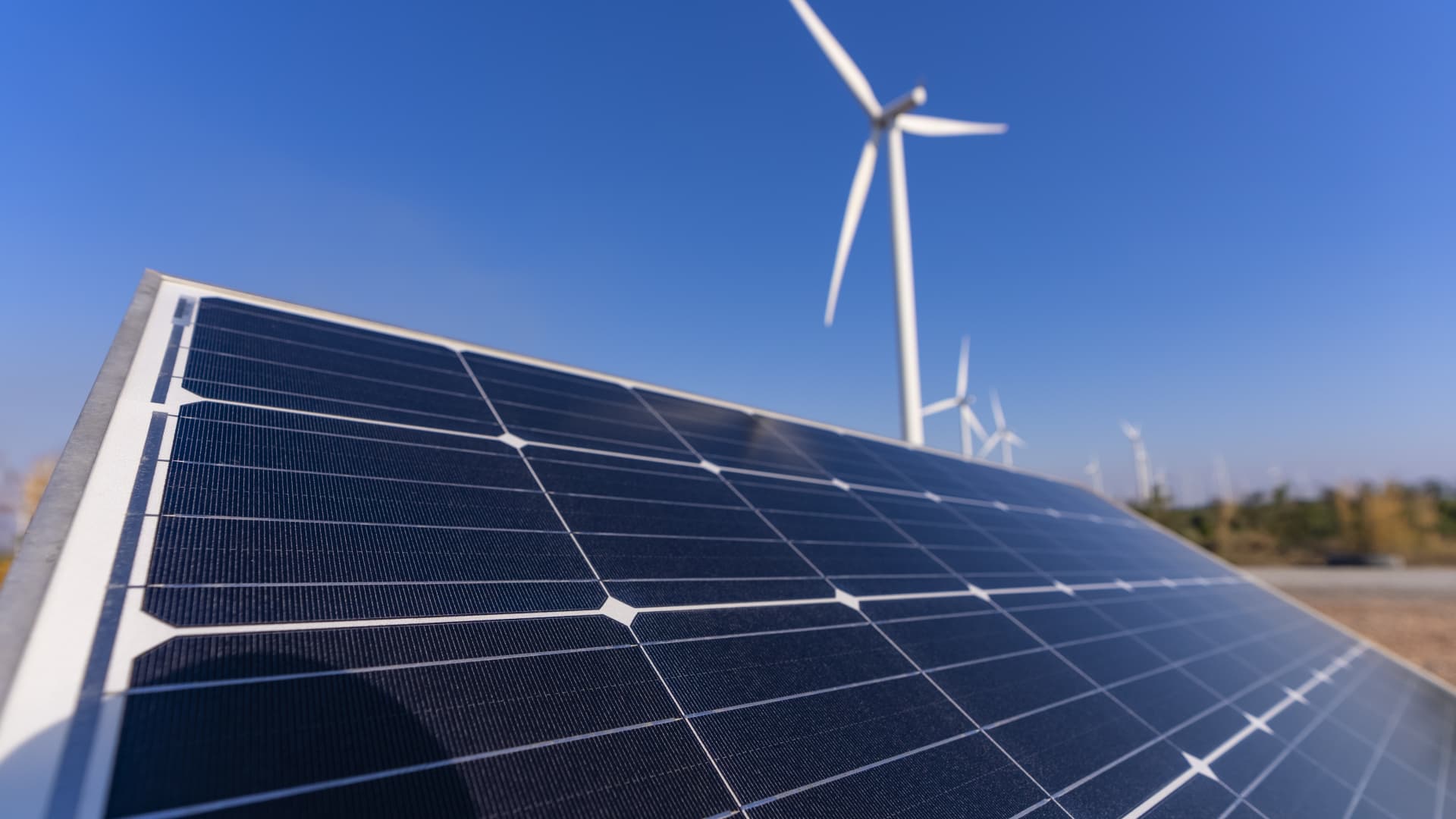
The energy landscape is undergoing a significant recalibration, driven not by market forces alone, but by a renewed political stance challenging the expansion of renewable energy projects. Recent declarations from former President Donald Trump, signaling an intent to block federal permits for solar and wind installations, are sending ripples through the power sector. This policy shift, coupled with the Interior Department’s move to centralize permit approvals—a step the American Clean Power Association has criticized as “unprecedented political review”—threatens to severely impede the growth of green energy. For oil and gas investors, this scenario is not merely a political talking point; it’s a potential catalyst for sustained demand in traditional hydrocarbons, as a looming power supply shortage necessitates reliable, dispatchable energy sources.
Stalled Green Projects and the Deepening Grid Crunch
The implications of a slowed renewable rollout are profound, particularly for an electric grid already grappling with rapidly growing demand. Industry leaders, including Kevin Smith, CEO of Arevon, a major solar and battery storage developer, warn of a significant “power crunch.” Arevon, which operates five gigawatts of power equivalent to $10 billion of capital investment across 17 states, along with other developers like Avantus and Engie North America, highlights how blocking federal permits will directly hinder their ability to bring new capacity online. Even projects on private land face potential hurdles from federal agencies like the U.S. Fish and Wildlife Service, adding layers of uncertainty and red tape. Cliff Graham, CEO of Avantus, which has built three gigawatts of solar and storage, succinctly captures the market instability: “We don’t want to sign contracts until we know what the playing field is.” This environment of regulatory unpredictability, compounded by rising costs from tariffs on materials like copper and steel, is demonstrably slowing investment and project execution, thereby exacerbating the vulnerability of the nation’s power supply.
Crude Prices React Amidst Policy Uncertainty and Investor Scrutiny
In this dynamic environment, crude oil markets are exhibiting increased volatility, reflecting a complex interplay of immediate macroeconomic concerns and long-term supply/demand re-evaluations. As of today, Brent Crude trades at $90.38, registering a significant daily downturn of 9.07% within a range of $86.08 to $98.97. Similarly, WTI Crude stands at $82.59, down 9.41% for the day, having traded between $78.97 and $90.34. This recent dip follows a broader trend, with Brent having declined by $20.91, or 18.5%, over the past two weeks, moving from $112.78 on March 30th to $91.87 yesterday. While some of this short-term downward pressure can be attributed to broader market sentiment or profit-taking, the underlying policy shifts against renewables introduce a unique long-term bullish tilt for traditional energy. Investors are keenly focused on what this means for future price trajectories, with many asking for predictions on the “price of oil per barrel by end of 2026.” The current market volatility, therefore, presents a nuanced scenario where immediate price action may diverge from the longer-term structural support building for fossil fuels due to policy-induced demand. Gasoline prices, currently at $2.93, also reflect this instability, down 5.18% today.
The Inevitable Boost for Oil and Gas Demand
With significant roadblocks impeding solar and wind development, the U.S. electric grid will increasingly rely on conventional energy sources to meet its expanding power needs. This policy-driven constraint on renewables translates directly into a higher baseline demand for natural gas, primarily for electricity generation, and potentially for refined products derived from crude oil. The scale of the projected power crunch, as highlighted by industry executives, means that existing and new oil and gas infrastructure becomes not just supplementary, but essential for grid stability and affordability. The Interior Department’s statement that it “will not give preferential treatment to massive, unreliable projects that make no sense for the American people” implicitly reinforces the role of traditional, dispatchable power. For investors, this signals a potential reversal of previous demand erosion forecasts for fossil fuels, creating a more robust and sustained market for crude and natural gas in the medium to long term, particularly as industrial and residential power consumption continues its upward trajectory.
Upcoming Catalysts and Strategic Positioning
The immediate future holds several key events that will further shape the investment landscape for oil and gas, particularly in light of the renewed focus on traditional energy sources. The upcoming OPEC+ Joint Ministerial Monitoring Committee (JMMC) meeting on April 18th, followed by the Full Ministerial meeting on April 19th, will be crucial. Investors are closely monitoring these gatherings, with many specifically inquiring about “OPEC+ current production quotas.” Any adjustments to these quotas, or even reaffirmations of current policy, will be viewed through the lens of potential increased demand from markets like the U.S., where renewable growth is being deliberately curtailed. Furthermore, the weekly API and EIA petroleum status reports (April 21st, 22nd, 28th, 29th) will provide critical insights into domestic crude inventories, refining activity, and product supplied, offering early indicators of how U.S. demand is responding to the changing energy policy. The Baker Hughes Rig Count reports on April 24th and May 1st will also be keenly watched for signs of increased drilling activity, as producers potentially ramp up to meet anticipated higher demand and seize opportunities presented by a more favorable regulatory environment for conventional energy. These upcoming events are not just routine data points; they are critical signposts for investors looking to capitalize on a shifting energy paradigm that increasingly favors oil and gas.