The global oil and gas markets remain on edge as Iran escalates its rhetoric against the United States, asserting control over the critical Strait of Hormuz while concurrently engaging in tenuous peace negotiations. This dynamic interplay of diplomatic overtures and military posturing casts a long shadow over global crude supplies, prompting significant investor concern regarding sustained energy market stability.
Following Iran’s declaration of reasserted control over the Strait of Hormuz, Mohammad Bagher Ghalibaf, Iran’s parliamentary speaker and lead negotiator, issued stark warnings. He affirmed the continuation of talks aimed at resolving the conflict with the U.S. and Israel but underscored Iran’s readiness to resume hostilities. Ghalibaf specifically cautioned against any U.S. naval blockade targeting Iranian vessels within the strait, stating, “It is not the case that we think just because we are negotiating, the armed forces are not ready. Rather, just as the people are in the streets, our armed forces are also ready.” This militant stance was echoed by Ghalibaf’s insistence on Iran’s right to restrict transit through the vital energy chokepoint, declaring, “It is impossible for others to pass through the Strait of Hormuz but not us. If the U.S. does not abandon the blockade, traffic in the Strait of Hormuz will certainly be restricted.”
U.S. President Donald Trump, while confirming that peace discussions with Iran are indeed progressing, simultaneously issued a stern warning against any attempts by Tehran to exert leverage through “blackmail.” Trump had previously announced a blockade on April 12, citing Iran’s failure to reopen the strait as a condition for the fragile two-week ceasefire currently in effect. The dual messages from both sides highlight the deep mistrust and delicate balance characterizing the ongoing diplomatic efforts, leaving oil market participants grappling with heightened uncertainty.
Escalating Maritime Tensions
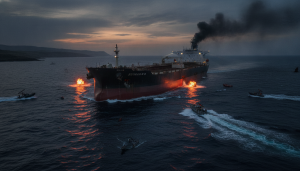
The situation in the Strait of Hormuz rapidly deteriorated over the weekend, punctuated by reports of direct naval confrontation. The British military’s United Kingdom Maritime Trade Operations (UKMTO) center confirmed that two gunboats belonging to Iran’s Revolutionary Guard opened fire on a tanker transiting the strait on Saturday. While the vessel and its crew were reported safe, its identity and destination remained undisclosed. Further reports from shipping sources, relayed by Reuters, indicated that at least two other commercial vessels also reported coming under fire while attempting to navigate the strategic waterway.
This series of aggressive incidents has plunged ship operators into a state of considerable apprehension and operational limbo. Video footage supplied by the ship-tracking firm Kpler vividly illustrated the confusion, showing multiple tankers and cargo ships attempting to exit the strait on Friday, only to reverse course and turn back. The inability of commercial shipping to reliably traverse this critical maritime corridor signifies a profound disruption to global trade and, more specifically, to the smooth flow of crude oil from the Persian Gulf to international energy markets. This operational paralysis underscores the tangible risks for investors evaluating maritime security and supply chain resilience in the region.
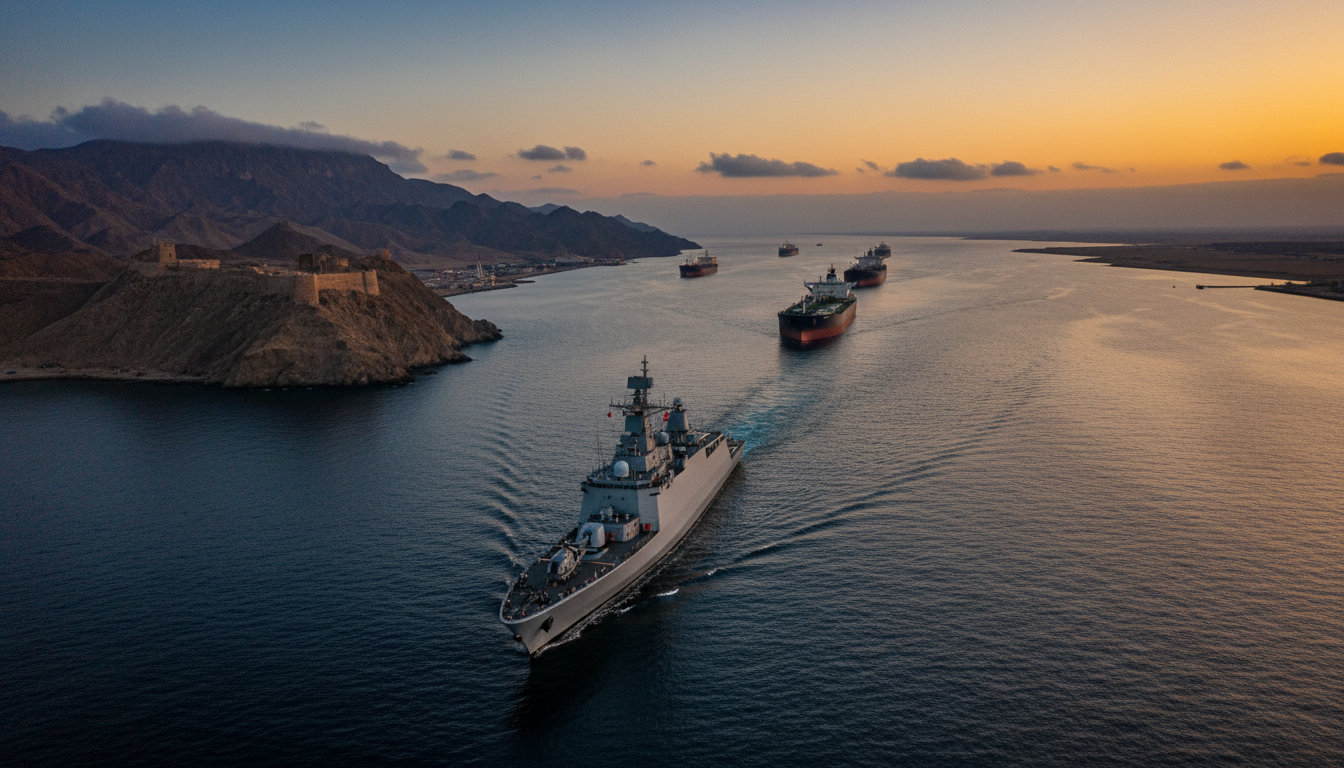
The direct consequence of this sustained geopolitical tension and the effective closure of the Strait of Hormuz has been a historic upheaval in the global crude oil market. This chokepoint typically handles approximately one-fifth of the world’s total crude supplies, making its disruption a matter of critical global economic concern. The current situation represents the largest oil supply disruption ever recorded, sending shockwaves through energy trading desks worldwide.
Despite the severe supply constraints, oil prices experienced a notable downturn on Friday, plunging more than 10% to settle below $90 per barrel. This counter-intuitive market reaction was primarily driven by investor hopes that the renewed diplomatic engagement might soon facilitate the unimpeded flow of energy supplies from the region, alleviating the acute supply crunch. However, the fragility of this optimism was highlighted by a separate incident in Mumbai, where India summoned Iran’s ambassador following an attack on an Indian-flagged crude oil vessel attempting to cross the strait. These incidents collectively underscore the volatile operational environment for global shipping and the inherent risks to oil and gas production and distribution.
President Trump, speaking at a White House event on Saturday, refrained from answering questions directly related to Iran but reiterated his position on the Strait of Hormuz. He remarked that Iran “got a little cute” and “wanted to close up the strait again,” unequivocally stating, “They can’t blackmail us.” This firm stance signals continued U.S. resolve even as dialogue continues, maintaining a delicate high-wire act for global crude flows.
Nuclear Ambitions and Diplomatic Standoffs
In parallel to the maritime disputes, the contentious issue of Iran’s nuclear program continues to be a central point of contention in U.S.-Iran relations. Iranian President Masoud Pezeshkian strongly asserted Iran’s sovereign right to its nuclear program, questioning the U.S.’s authority to deny such rights. “Trump says Iran cannot make use of its nuclear rights but doesn’t say for what crime. Who is he to deprive a nation of its rights?” Pezeshkian was quoted as saying by the Iranian Student News Agency, as reported by Reuters.
Further complicating the nuclear discussion, Iranian Deputy Foreign Minister Saeed Khatibzadeh explicitly rejected claims made by President Trump regarding Iran’s agreement to transfer enriched uranium to the United States. In an interview with the Associated Press during a diplomacy forum in Turkey, Khatibzadeh stated, “I can tell you that no enriched material is going to be shipped to United States. This is non-starter and I can assure you that while we are ready to address any concerns that we do have, we’re not going to accept things that are nonstarters.” This directly countered President Trump’s Friday assertion that Iran had consented to hand over its enriched uranium stockpile. Trump had also expressed an intention for the U.S. to enter Iran and “get all the nuclear dust,” referencing the estimated 970 pounds (440 kilograms) of enriched uranium believed to be buried at sites damaged by U.S. military strikes the previous year. The divergence in these statements highlights the significant gaps and fundamental disagreements that persist between the two nations.
Recent peace negotiations in Islamabad, Pakistan, involving a U.S. delegation led by Vice President JD Vance and Iranian negotiators headed by Ghalibaf, concluded last weekend without achieving a breakthrough agreement. The Iranian Supreme National Security Council issued a statement confirming that proposals were presented to Iran by Pakistan’s army chief, acting as an intermediary, during a recent visit to Tehran. These proposals are reportedly still under review, though their specific contents have not been disclosed, adding another layer of ambiguity for investors tracking the diplomatic landscape.
“Excessive Demands” and Fragile Openings
The Iranian Supreme National Security Council indicated that Iran has yet to formally respond to the proposals, emphasizing that future discussions would necessitate the U.S. to relinquish its “excessive demands and adjust its requests to the realities on the ground.” This stance suggests Iran’s unwillingness to concede easily, potentially prolonging the negotiation process and maintaining a risk premium on oil prices.
Amidst the escalating tension, Iranian Foreign Minister Seyed Abbas Araghchi announced on social media on Friday that, in alignment with the ceasefire in Lebanon, the passage for all commercial vessels through the Strait of Hormuz was “declared completely open for the remaining period of ceasefire.” However, Araghchi stipulated that vessels must transit through a “coordinated route” announced by Iranian maritime authorities. A key unresolved question for shippers and global investors is whether Tehran intends to impose a toll for passage through the strait, which could significantly impact shipping costs and ultimately crude oil prices.
The broader regional context also plays a crucial role in these negotiations. A 10-day ceasefire between Israel and Lebanon commenced Thursday at 5 p.m. ET. Israel’s military campaign in Lebanon against Hezbollah, a militant group closely allied with Iran, has been a significant impediment to constructive dialogue between Washington and Tehran. The intricate web of regional conflicts and alliances underscores the complexity of achieving a lasting resolution and stabilizing the critical energy corridors in the Middle East.
For investors, the current environment presents a complex risk-reward profile. The interplay of high-stakes diplomacy, military posturing, and the vital importance of the Strait of Hormuz to global crude supply means continued volatility is highly probable. Monitoring these developments closely will be paramount for anyone with exposure to global energy markets.