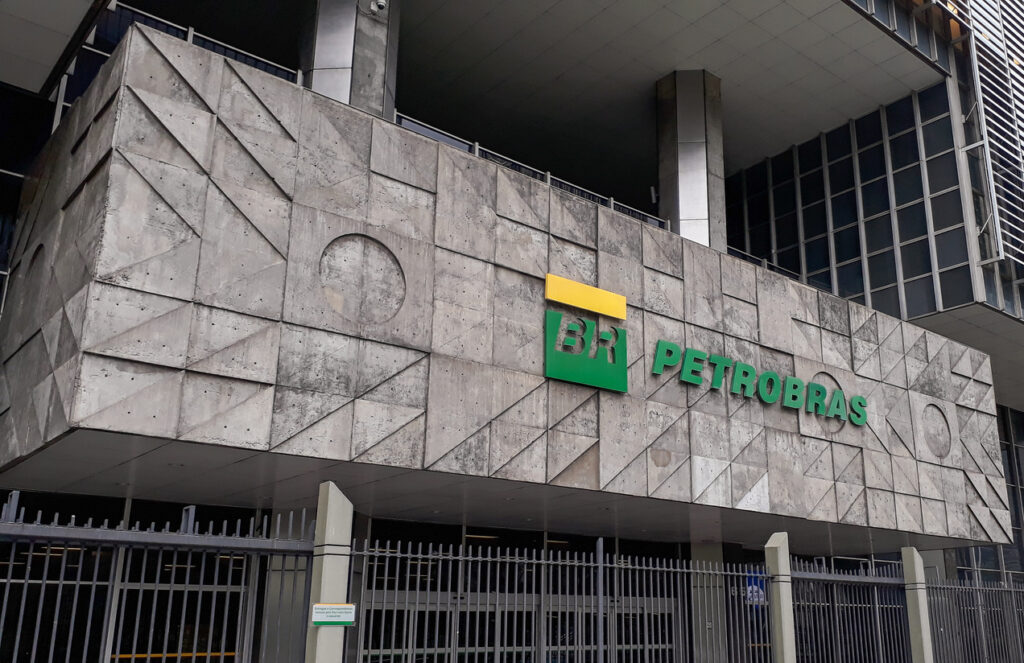
Petrobras has once again affirmed Brazil’s robust offshore prospectivity with a new oil discovery in the Sudoeste de Tartaruga Verde block, nestled within the mature yet prolific Campos Basin. This latest find of high-quality post-salt crude is more than just another data point; it represents a strategic reinforcement of Brazil’s long-term energy security, Petrobras’ deepwater expertise, and its crucial role in a global energy market grappling with supply dynamics and persistent volatility. For investors, this success underscores the ongoing value of disciplined exploration in proven basins and provides a fresh lens through which to evaluate the company’s future resource pipeline and capital allocation strategies.
Petrobras’ Strategic Deepwater Reinforcement in Campos Basin
The confirmation of oil at well 4-BRSA-1403D-RJS, located approximately 108 km offshore Campos dos Goitacazes, at a water depth of 734 meters, is a significant technical achievement. This discovery of high-quality post-salt crude was validated through comprehensive electrical logs, gas readings, and fluid sampling, with collected samples now undergoing detailed laboratory analysis to characterize reservoir properties and fluid composition. This crucial data will inform Petrobras’ subsequent appraisal and development planning, laying the groundwork for potential future production.
The Sudoeste de Tartaruga Verde block, awarded in Brazil’s 5th Production Sharing Round in 2018, is operated by Petrobras with a 100% interest. This full ownership stake maximizes the company’s direct exposure to the find’s future economic upside. The success further solidifies Brazil’s momentum in offshore exploration, demonstrating that significant prospectivity extends well beyond the widely recognized pre-salt plays. For Petrobras, it validates their continued success in mature deepwater basins, bolstering their near- to mid-term resource pipeline and confirming their position as a leading deepwater operator with a strong track record of converting exploration success into tangible reserves.
Navigating Volatility: New Reserves Amidst a Shifting Crude Landscape
This discovery emerges at a fascinating juncture for the global crude oil market. As of today, Brent crude trades at $90.61, marking an 8.83% decline, while WTI sits at $82.68, down 9.31% within a day range of $78.97-$90.34. This sharp daily correction frames the immediate market sentiment for new discoveries. Looking broader, Brent has shed a notable 12.4% over the last two weeks, falling from $112.57 on March 27th to $98.57 on April 16th. Such significant price swings highlight the extreme sensitivity of the market to geopolitical developments, demand forecasts, and supply signals.
In this environment, a new discovery, even one with a long lead time to production, serves as a critical long-term supply signal. While it won’t impact immediate supply-demand balances, it contributes to the perception of future resource availability. For investors, it mitigates some of the uncertainty surrounding long-term supply, offering a counterpoint to concerns about declining conventional reserves and the pace of energy transition. The high-quality nature of the crude also suggests favorable economics once production commences, potentially making it more resilient to future price fluctuations compared to higher-cost, lower-quality resources. This type of discovery can influence long-term investment decisions, providing a fundamental underpinning for valuations of integrated energy companies like Petrobras.
Investor Focus: Long-Term Supply & The Global Energy Equation
Many investors are keenly asking about the future trajectory of crude oil prices, particularly what to predict by the end of 2026. Discoveries like the Sudoeste de Tartaruga Verde find are foundational to answering such questions. While short-term price movements are dictated by immediate supply-demand imbalances, inventory levels, and speculative flows, long-term price stability is inextricably linked to the continuous replenishment of global oil reserves. This Petrobras success directly contributes to the world’s proven resource base, influencing future supply forecasts and, consequently, longer-term price expectations.
The strategic importance of this find extends beyond Petrobras itself, impacting the broader energy market’s supply equation. As deepwater projects typically require substantial capital expenditure and several years to reach first oil, these discoveries are crucial for ensuring a stable supply pipeline well into the next decade. Investors are evaluating not just the potential volume of oil, but also the geological risk, development costs, and the regulatory environment. Brazil’s robust production sharing framework, coupled with Petrobras’ deepwater expertise, offers a compelling investment case for offshore exploration. This new post-salt find diversifies Petrobras’ portfolio, reducing over-reliance on any single geological play and enhancing the company’s resilience in a dynamic energy landscape.
Upcoming Events: Shaping the Future Value of Offshore Assets
The value proposition of this new offshore discovery, and indeed all long-term energy assets, will be continuously re-evaluated against a backdrop of critical upcoming market events. With the critical OPEC+ Joint Ministerial Monitoring Committee (JMMC) meeting scheduled for April 17th, followed by the full Ministerial meeting on April 18th, market participants are on high alert for any shifts in production quotas. Should OPEC+ decide to maintain or even deepen supply cuts, the strategic importance of new non-OPEC discoveries like this one could increase, signaling a greater need for future supply diversification.
Further influencing short-term market sentiment are the weekly inventory reports. The API Weekly Crude Inventory reports on April 21st and April 28th, followed by the EIA Weekly Petroleum Status Reports on April 22nd and April 29th, will provide crucial insights into current supply and demand dynamics in key global markets. While these reports reflect immediate conditions, they indirectly influence the perceived urgency and value of long-term reserve additions. Similarly, the Baker Hughes Rig Count on April 24th and May 1st will offer a snapshot of drilling activity, primarily in onshore basins. A sustained increase in U.S. drilling could signal rising short-term supply, potentially tempering enthusiasm for long-lead-time deepwater projects, whereas a decline could heighten the strategic importance of new discoveries.
For investors, understanding how these near-term events interact with the long-term implications of new discoveries is paramount. The strategic value of Petrobras’ Campos Basin find will be continually assessed through the lens of these macro drivers, reinforcing the need for a comprehensive, forward-looking investment strategy in the oil and gas sector.