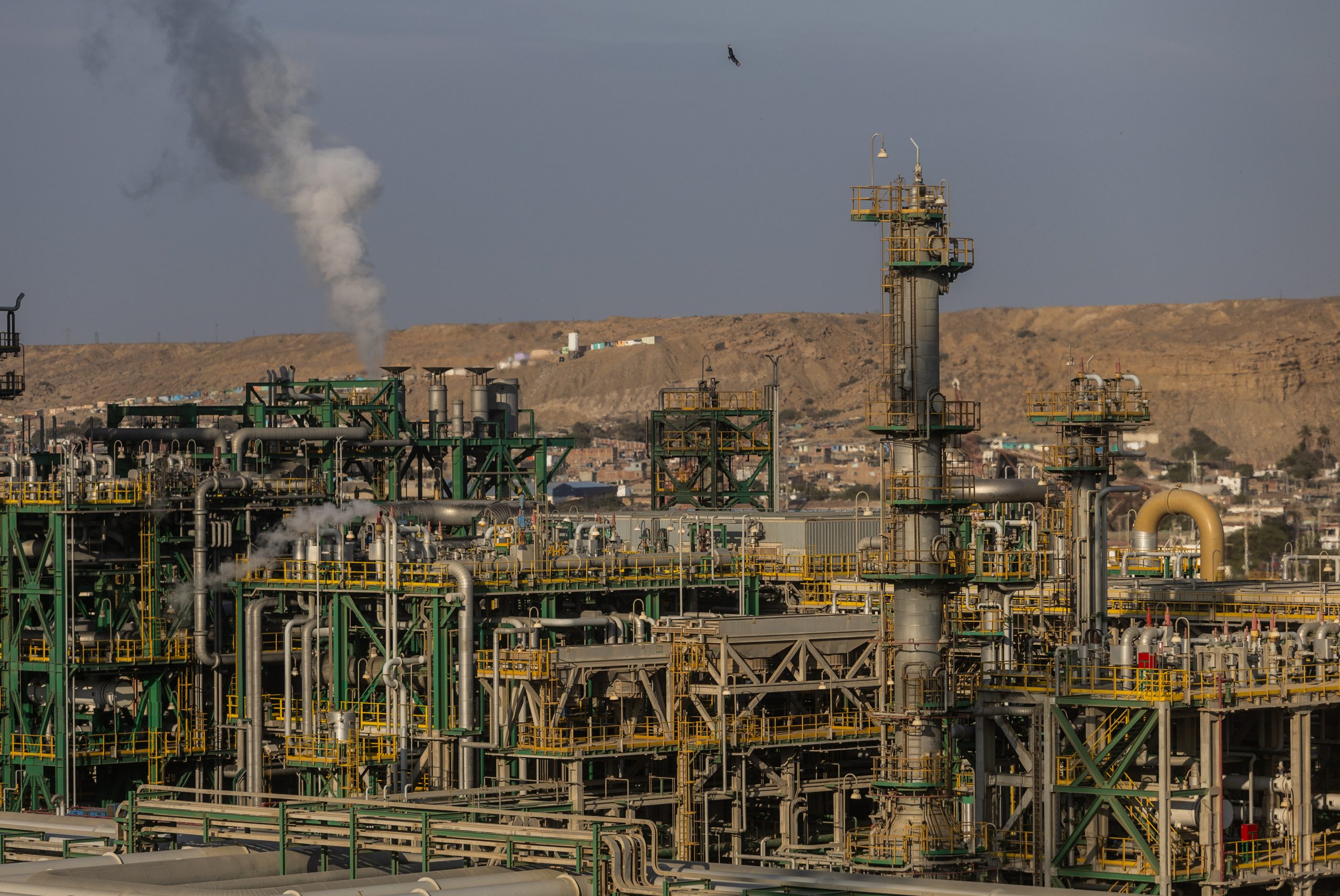
The strategic importance of national oil companies (NOCs) in emerging economies often intertwines with national pride and economic stability. However, when these entities become a perpetual drain on public finances, governments are forced to make difficult decisions. This is precisely the scenario unfolding in Peru, where President José Jerí’s administration has initiated what appears to be the most ambitious restructuring attempt yet for the beleaguered state-owned oil company, Petroperu. This bold move, announced via a New Year’s Eve decree, signals a potential paradigm shift in how Peru intends to manage its energy assets and could open doors for significant private investment in the region, a development keenly watched by global oil and gas investors.
The Petroperu Predicament: Debt, Distress, and the Talara Albatross
Petroperu’s financial woes are extensive and have become a persistent drag on Peru’s public finances. Over the past few years, the company has required approximately 17 billion soles, equivalent to about $5 billion, in government rescue packages. Despite this substantial support, Petroperu faces staggering debt obligations totaling an estimated $5.45 billion, according to S&P. Its liquidity position is equally dire, with a mere 66 million soles ($19.6 million) in cash as of October, starkly illustrating its “structural inability to generate liquidity from its operations,” as the government decree highlighted.
At the heart of Petroperu’s struggles lies the $6 billion Talara refinery project. Opened in 2023, the refinery was plagued by years of delays and significant budget overruns, financed primarily through bonds issued in international markets. Instead of becoming a source of profit, it has become a generator of losses, exacerbating the company’s financial instability. This situation is particularly challenging against a backdrop of volatile global crude prices. As of today, Brent Crude trades at $90.38, marking a slight decrease of 0.06% within a day range of $93.87 to $95.69. WTI Crude is at $86.68, down 0.85%, fluctuating between $85.50 and $87.49. These figures represent a significant softening from recent peaks; the 14-day Brent trend alone shows a substantial drop from $118.35 on March 31st to $94.86 on April 20th, a decline of nearly 20%. Such market shifts underscore the critical need for robust financial health and operational efficiency within state-owned energy entities, a capability Petroperu demonstrably lacks.
Peru’s Strategic Asset Unbundling: A Path to Private Capital?
President Jerí’s decree empowers ProInversion, Peru’s private investment agency, to segregate specific assets of Petroperu into separate business units. The Talara refinery is explicitly named for this process, alongside other unnamed assets. While the decree remains silent on the ultimate fate of these new units – whether they will be spun off, partially privatized, or offered for joint ventures – the intent to unbundle suggests a strong push towards greater private sector involvement. This move is a clear signal that the Peruvian government recognizes the limitations of direct state management in the current global energy landscape.
Investors are keenly observing market direction, with common queries ranging from “Is WTI going up or down?” to broader predictions on “What will the price of oil be by end of 2026?” These questions reflect a general appetite for clarity and stability in the energy sector, especially when considering regional opportunities. For those eyeing the broader Latin American refining and production space, particularly firms like Repsol, which frequently appears in our reader inquiries, the success or failure of Petroperu’s restructuring could establish a significant precedent for future state-owned enterprise (SOE) reforms and private sector engagement across the continent. This initiative indicates a potential opening for private capital, but the precise details of how these new asset units will be structured and what their eventual disposition will be remain critical factors for investor evaluation.
Forward Outlook: Geopolitics, Policy, and Upcoming Market Catalysts
The restructuring of Petroperu does not occur in a vacuum; it will be influenced by global energy market dynamics and Peru’s domestic political landscape. The lack of stable leadership at Petroperu, with President Jerí appointing three board chairs in just three months since taking office in October, highlights the ongoing internal challenges that could impact the smooth execution of this decree.
The next two weeks are packed with key energy events that will undoubtedly shape global crude pricing and sentiment, directly impacting the attractiveness and valuation of any privatized Petroperu assets. The upcoming OPEC+ JMMC Meeting on April 21st, for instance, could signal shifts in production quotas, influencing global supply dynamics. We also have critical data releases such as the EIA Weekly Petroleum Status Reports scheduled for April 22nd and April 29th, which will provide vital insights into U.S. inventory levels and demand trends. These reports, alongside the Baker Hughes Rig Count on April 24th and May 1st, offer a real-time pulse on the industry’s operational health. Furthermore, the EIA Short-Term Energy Outlook on May 2nd will provide a macro perspective on crude and product prices through the year, an indispensable input for any potential investor evaluating long-term commitments in Peru’s refining or upstream sector. These global dynamics will heavily influence the valuation and investor interest in Petroperu’s newly segregated assets, underscoring the interconnectedness of local reforms with international market forces.
Investment Implications and What to Watch
For investors, the Petroperu overhaul presents a complex mix of risks and potential opportunities. The segregation of assets, particularly the Talara refinery, could streamline operations, reduce political interference, and make these units more appealing to private capital seeking entry into the Peruvian energy market. The prospect of an efficiently managed, commercially oriented refining asset in a growing regional market is attractive. However, significant challenges remain. The decree has not yet addressed Petroperu’s substantial $5.45 billion debt burden, a critical factor for any potential investor considering involvement in its assets. Furthermore, the political will and stability required to execute such a complex restructuring, especially in a country that has seen frequent changes in leadership, will be crucial.
Investors should closely monitor the specifics of ProInversion’s implementation plan for these segregated units. Clarity on the legal framework, potential ownership structures, and the treatment of legacy debt will be paramount. Any indication of government guarantees or clear pathways for private sector profitability will significantly enhance investor confidence. Conversely, continued political uncertainty or ambiguity regarding the long-term vision for these assets could deter much-needed capital. The Petroperu overhaul is a pivotal moment for Peru’s energy sector, signaling a potential shift towards market-driven efficiency, but its success hinges on transparent execution and sustained political commitment.