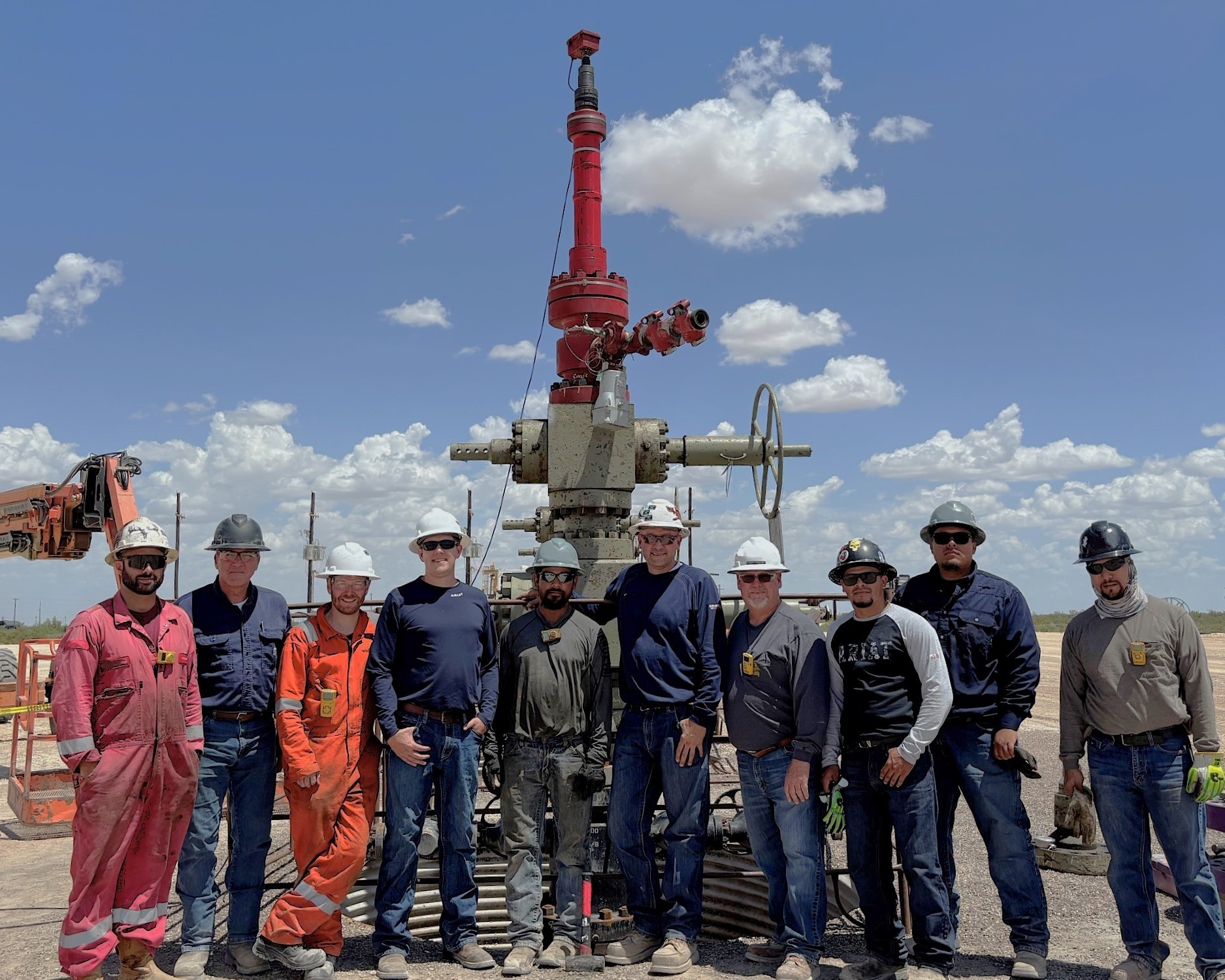
The Permian Basin, a cornerstone of U.S. energy independence, continues to be a hotbed for technological innovation aimed at optimizing production and enhancing capital efficiency. As investors navigate a volatile global energy landscape, the ability of operators to extract more value from existing assets, faster and more cost-effectively, becomes paramount. A recent field trial in the Permian, showcasing a groundbreaking fiber-optic well conveyance system, underscores this critical trend, promising a significant uplift in operational efficiency for horizontal wells and potentially reshaping investment theses for basin operators.
Revolutionizing Well Diagnostics: A New Era of Efficiency
The successful U.S. field trial of the FiberLine Intervention Conveyance System (FliCS), a jet-propelled, battery-powered technology, marks a pivotal advancement in well diagnostics. Conducted in August 2025 for a major international operator within the Permian, this system demonstrated its remarkable capability by deploying bare fiber into a 19,000-foot uncompleted horizontal well in just 50 minutes. This astonishing speed represents an approximately tenfold increase over conventional pump-down operations, which typically crawl at around 35 feet per minute compared to FliCS’s 350 feet per minute. The trial, utilizing a probe capable of deploying 25,000 feet of fiber, highlighted how quickly operators can now gain high-resolution distributed acoustic sensing (DAS) and distributed temperature sensing (DTS) data across the entire reservoir. This rapid data acquisition is not merely about speed; it translates directly into accelerated decision-making, enabling operators to fine-tune injection profiles, optimize fluid placement, and enhance matrix acid stimulation in carbonate reservoirs, ultimately boosting treatment performance and reducing associated operational risks. The operator involved in the trial has already committed to deploying FliCS in four additional projects over the next three months, signaling strong industry confidence in its immediate value proposition.
Navigating Market Headwinds with Cost-Effective Innovation
In today’s dynamic energy market, efficiency gains are not just advantageous; they are essential for sustaining profitability and attracting investor capital. As of today, Brent crude trades at $90.38 per barrel, marking a significant 9.07% decline in a single day, within a range of $86.08 to $98.97. Similarly, WTI crude is at $82.59, down 9.41%. This recent volatility is not an isolated event; our proprietary data shows Brent has retreated by nearly 20% over the past two weeks, dropping from $112.78 on March 30th to its current level. This underscores the intense pressure on operators to control costs and maximize output from every dollar invested. Technology like FliCS directly addresses this challenge by offering a cost-effective, low-risk well surveillance solution for horizontal wells. By improving understanding of the subsurface and optimizing completion strategies, operators can enhance recovery rates from existing wells, thereby lowering the overall lifting cost per barrel. This is precisely what investors are seeking: solutions that insulate returns from the fluctuations of commodity prices and provide a clearer path to predictable cash flow. The ability to enhance treatment performance and reduce carbon footprint, as highlighted by WellSense’s CEO, further aligns with growing investor demand for ESG-conscious operations, potentially opening new avenues for capital.
Upcoming Milestones and Investor Outlook
The commercial rollout of this innovative technology is on the immediate horizon, presenting a clear catalyst for interested investors. WellSense plans to officially showcase FliCS and its impressive field results at ADIPEC 2025, scheduled for November 3rd to 6th. This high-profile event will serve as a critical platform to generate broader industry awareness and secure further adoption commitments ahead of its anticipated commercial launch in early 2026. A slimmer version of the system, designed for smaller-diameter tubing applications, is also slated for the commercial launch, broadening its applicability across diverse well architectures. For investors tracking sector-wide metrics, the widespread adoption of such efficiency-boosting technologies could influence future Baker Hughes Rig Count reports. While not necessarily leading to an immediate surge in active rigs, it promises to enhance the productivity and longevity of existing and newly drilled wells. Moreover, the backdrop of key industry events like the upcoming OPEC+ Joint Ministerial Monitoring Committee (JMMC) Meeting on April 19th and the subsequent OPEC+ Ministerial Meeting on April 20th will continue to shape the global supply-demand narrative. Against this backdrop, technologies that provide operators with greater control over their production profiles and cost structures become invaluable, offering a hedge against macro-level uncertainties.
Addressing Investor Concerns: Long-Term Value in the Permian
Our proprietary reader intent data reveals a consistent theme among investors: a keen interest in long-term oil price predictions (e.g., “what do you predict the price of oil per barrel will be by end of 2026?”) and the performance of key operators (e.g., “How well do you think Repsol will end in April 2026?”). Technologies like FliCS directly contribute to answering these questions by empowering Permian operators to maximize the value of their assets regardless of short-term price swings. By enabling faster, more accurate diagnostics and optimization of horizontal wells, operators can improve recovery factors and reduce operational expenditures over the life of the well. This directly impacts key financial metrics that investors scrutinize, such as return on invested capital (ROIC) and free cash flow. The ability to deploy fiber quickly and safely, leaving lightweight components in the well toe, minimizes logistical complexity and further reduces costs, translating into a healthier bottom line. In an environment where sustained capital discipline and operational excellence are rewarded, investments in technologies that provide a competitive edge in the Permian Basin are increasingly attractive. FliCS represents a significant step forward in ensuring that Permian production remains not only robust but also among the most economically viable globally, securing long-term value for investors.


