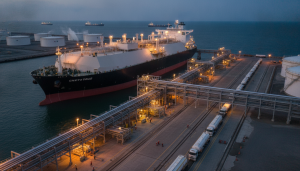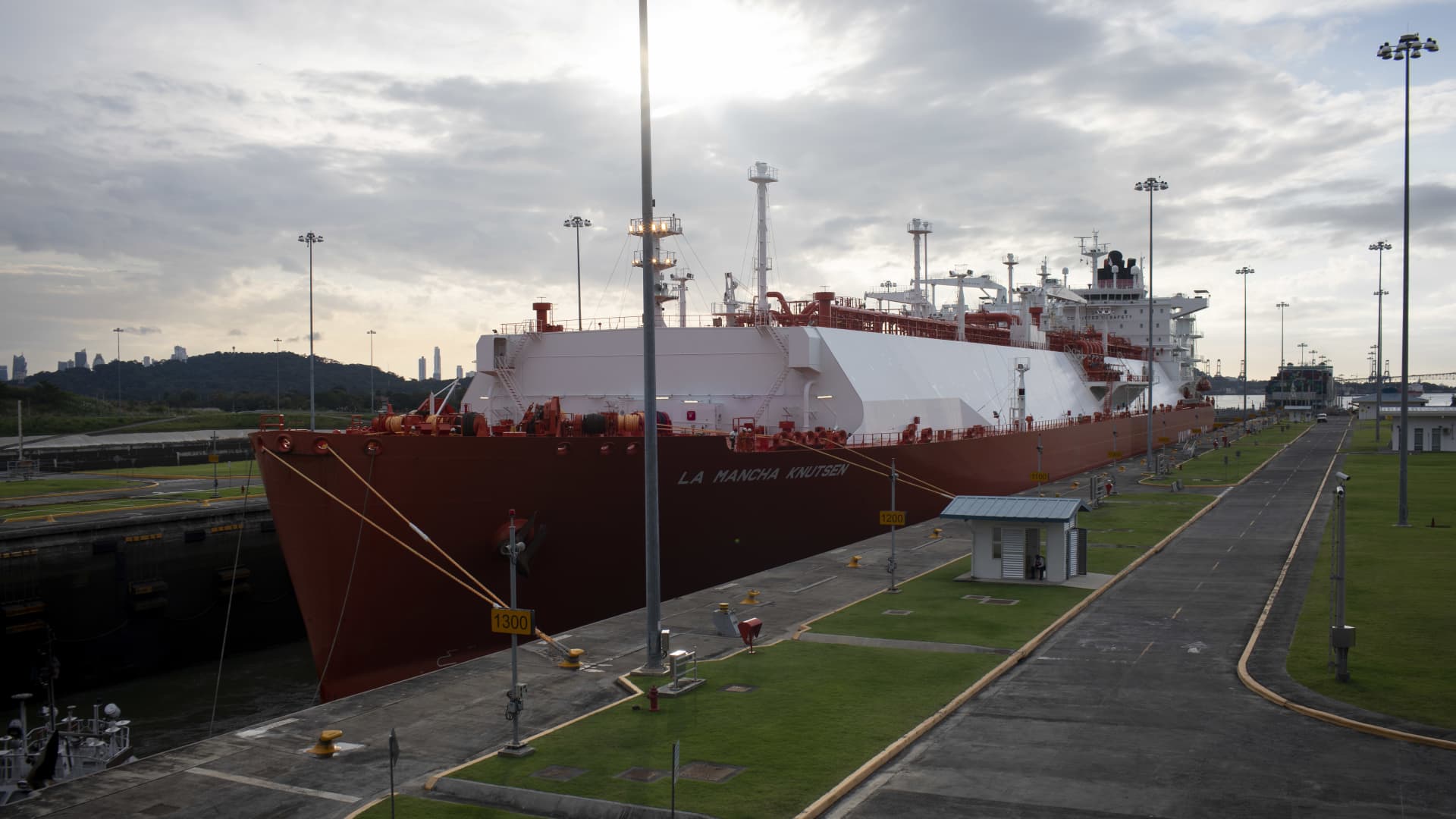
The Panama Canal has long been a linchpin of global trade, particularly for energy commodities. However, recent years of severe drought forced significant operational changes, diverting a substantial portion of critical liquefied natural gas (LNG) traffic and prompting a re-evaluation of its strategic role. Now, the Canal Authority is rolling out a multi-pronged strategy to reclaim its position, introducing revamped booking systems and an ambitious new interoceanic pipeline project. For energy investors, these developments signal a potentially significant shift in global shipping economics, supply chain resilience, and the competitive landscape for natural gas liquids (NGLs), demanding close attention to both the immediate logistical benefits and the long-term strategic implications.
Reclaiming LNG Dominance: Booking System Overhauls
The impact of drought on the Panama Canal’s capacity has been stark, leading to a dramatic 73% decline in LNG transits as carriers opted for longer, more costly routes around Africa’s Cape of Good Hope. This exodus highlighted a critical vulnerability in global energy logistics and a significant loss of revenue for the Canal Authority. In response, the Authority is moving to reinstate a preferred booking slot system specifically for LNG carriers, a mechanism that was suspended during the worst of the drought years. This move, expected to become effective next year, is a direct acknowledgement of the unique scheduling challenges faced by LNG shippers.
Beyond reintroducing preferred slots, the Canal Authority is also fine-tuning its offerings. Earlier attempts at a long-term slot allocation system, allowing full-year reservations, saw minimal uptake from LNG operators. Learning from this, new “packages” are being developed to provide greater flexibility, particularly in modifying tanker types and transit dates. This responsiveness to industry feedback is crucial for attracting back LNG traffic, as the dynamic nature of global gas markets often requires agile logistical adjustments. Investors should view these changes as a positive step towards de-risking LNG supply chains and potentially reducing transit costs, thereby enhancing the profitability of arbitrage opportunities for gas flowing from the U.S. Gulf Coast to Asian markets.
The Interoceanic Energy Corridor: A Game-Changer for NGLs
Perhaps the most transformative element of the Canal Authority’s strategy is the proposed Interoceanic Energy Corridor. This ambitious project involves constructing a 76-kilometer pipeline designed to transport natural gas liquids – including ethane, butane, and propane – directly between the Atlantic and Pacific ports. Crucially, this pipeline aims to bypass the canal entirely for NGL shipments, freeing up valuable vessel slots that can then be reallocated to other energy carriers, most notably LNG.
The scale of this project is significant, with a projected capacity to move approximately 2.5 million barrels of energy products per day. Complementing the pipeline will be two new maritime terminals, built to efficiently load and unload tankers at either end. The strong industry interest is evident, with the Canal Authority recently engaging with around 30 major corporations from Asia, the U.S., and South America, including energy giants like Exxon Mobil, Phillips 66, and Shell. Furthermore, the “very good reaction from the Asian market,” particularly from Japanese corporations such as Itochu, Mitsubishi, and Sumitomo – with Tokyo being the largest buyer of NGL shipments transiting the canal – underscores the strategic importance of this corridor for regional energy security and cost efficiency. For investors, this pipeline offers a new, robust, and potentially more cost-effective alternative for NGL logistics, diversifying transportation risks and potentially impacting the global pricing structure of these commodities.
Market Dynamics, Shipping Costs, and Investor Scrutiny
The strategic maneuvers by the Panama Canal Authority arrive at a critical juncture for global energy markets, influencing everything from supply chain resilience to overall commodity pricing. Investors are keenly focused on understanding market fundamentals and price drivers, with our proprietary data indicating frequent queries regarding OPEC+ production quotas and the current Brent crude price. As of today, Brent crude trades at $98.13, down 1.27% within a daily range of $97.92-$98.67, while WTI crude sits at $89.72, a 1.59% decline. This modest daily dip follows a more significant trend over the past two weeks, where Brent has fallen by $14, or 12.4%, from $112.57 on March 27th to $98.57 just yesterday. Such price volatility, even if not directly tied to shipping lanes, underscores the broader economic pressures on energy producers and traders.
Reduced transit times and enhanced reliability through the Panama Canal, courtesy of the new booking systems and pipeline, could translate into lower shipping costs for LNG and NGLs. This directly impacts the profitability of energy companies involved in trading and transportation, especially those operating between the U.S. Gulf Coast and Asia. Investors must evaluate how these savings could flow through to their bottom line, potentially increasing margins for exporters and reducing costs for importers. The shift also strengthens the competitive advantage of U.S.-sourced LNG and NGLs by mitigating a key logistical bottleneck that had previously favored alternative supply routes or origins.
Forward Outlook: Aligning Canal Strategy with Global Energy Events
Looking ahead, the successful implementation of the Canal Authority’s new strategies will intersect with a series of significant upcoming energy events, shaping the broader market landscape. The immediate focus includes the OPEC+ Joint Ministerial Monitoring Committee (JMMC) meeting tomorrow, April 17th, followed by the full Ministerial meeting on April 18th. These gatherings are critical for assessing global crude supply decisions, which, while not directly impacting LNG/NGL transit, can influence overall energy demand and the economic viability of long-haul shipping.
Further out, weekly data releases such as the API and EIA Crude Inventory reports (due on April 21st/22nd and April 28th/29th) and the Baker Hughes Rig Count (April 24th and May 1st) will provide crucial insights into North American supply dynamics. A more efficient Panama Canal, especially for NGLs, could amplify the impact of U.S. production growth by ensuring smoother and more cost-effective export pathways. Investors should monitor these events in conjunction with the Canal’s progress. A more reliable and predictable Panama Canal transit system provides a critical layer of stability for long-term energy investment planning, particularly as global energy markets continue to navigate geopolitical complexities and the ongoing energy transition. The ability to guarantee transit, even under varying climate conditions, adds a significant de-risking factor to the balance sheets of companies heavily reliant on this crucial waterway.