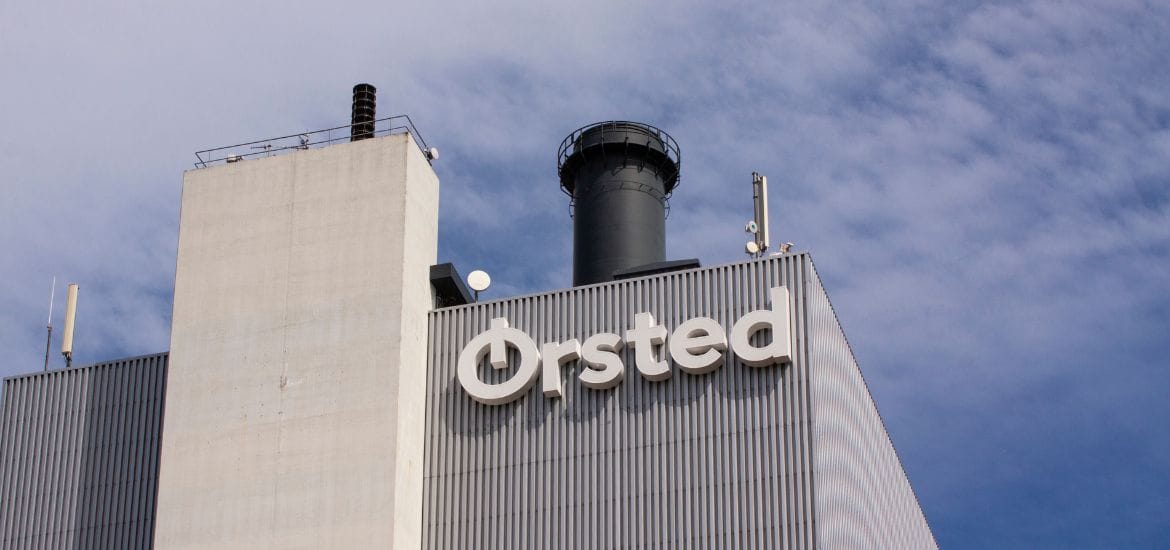
The energy investment landscape is facing a pivotal moment as Ørsted, a global leader in offshore wind development, has launched legal action against the US government. This move comes after a Trump administration order abruptly halted construction on the nearly complete $5 billion Revolution Wind project, a joint venture with Skyborn Renewables. The dispute, centered on claimed national security concerns, casts a long shadow over the future of US offshore wind and raises critical questions about regulatory stability, investor confidence, and the trajectory of the nation’s clean energy transition. For investors tracking the broader energy market, this episode highlights the significant policy risks inherent in large-scale infrastructure, particularly in emerging sectors, and underscores the dynamic interplay between political cycles and long-term capital deployment.
Policy Whiplash and the Future of Offshore Wind Investment
The sudden suspension of the Revolution Wind project, which is approximately 87 percent complete and had secured all necessary federal and state approvals, sends a jarring signal to the investment community. This isn’t an isolated incident; the order affects five offshore wind projects along the US East Coast, collectively representing nearly 6 GW of planned capacity. Companies like Ørsted and its partner, BlackRock’s infrastructure arm Global Infrastructure Partners, have already committed or spent roughly $5 billion on Revolution Wind alone, anticipating it would begin generating power as soon as January 2026. The rationale for the halt, citing potential interference with radar systems by turbine blades and reflective towers, raises questions, especially given Ørsted’s prior engagement and mitigation agreements with the US Department of Defense and other agencies. This kind of retroactive policy intervention, particularly on projects nearing completion, introduces an unacceptable level of uncertainty for capital-intensive, multi-year developments and could significantly chill future investment in the US renewable energy sector.
Regulatory Risk: A Costly Calculation for Energy Transition
The core of Ørsted’s legal challenge lies in the argument that Revolution Wind successfully navigated a rigorous, multi-year permitting process, securing approvals from a comprehensive list of agencies including the US Coast Guard, the US Army Corps of Engineers, and the National Marine Fisheries Service. The company emphasized its consultations with the US Department of Defense Military Aviation and Installation Assurance Siting Clearinghouse, culminating in formal mitigation agreements with the Department of War and the Department of the Air Force. This diligent adherence to established regulatory frameworks makes the subsequent suspension particularly problematic for investors. It suggests that even with comprehensive due diligence and full compliance, large-scale projects remain vulnerable to executive policy shifts. For energy investors, this incident mandates a re-evaluation of regulatory risk models, not just for renewables but for any sector where long-term governmental approvals are critical. The potential for billions in stranded assets due to political reversals elevates the risk premium for such projects, making them less attractive compared to regions with more stable regulatory environments or to established energy sectors with well-understood policy frameworks.
Market Dynamics and Investor Sentiment: A Diverging Path
In contrast to the sudden headwinds facing offshore wind, traditional energy markets continue to present a different set of opportunities and challenges, often driven by global supply-demand fundamentals rather than domestic policy shifts. As of today, Brent crude trades at $89.99, down 0.49% for the day, while WTI crude sits at $86.4, a decrease of 1.17%. This marks a notable shift from the recent past, with Brent having trended down significantly, falling from $118.35 on March 31st to $94.86 on April 20th – a substantial decline of nearly 20% in just over two weeks. This volatility in crude prices, while significant, is understood by investors as part of a cyclical commodity market. Our proprietary reader intent data reveals a consistent investor focus on price predictability and market direction in traditional energy, with common queries like “is wti going up or down” and “what do you predict the price of oil per barrel will be by end of 2026?” These questions reflect a desire for clarity in a market driven by known variables like geopolitical events, supply adjustments, and economic growth. The stark contrast between the fundamental-driven volatility in crude and the policy-induced disruption in offshore wind highlights a divergence in investment risk profiles. When renewable projects face such abrupt, policy-driven halts, capital may naturally flow back towards conventional energy assets, which, despite their own market fluctuations, often offer a more predictable regulatory environment for extraction and infrastructure.
Forward Outlook: Policy Stability and Energy Investment Pathways
The Ørsted lawsuit marks a critical juncture that will undoubtedly influence future capital allocation within the US energy sector. The outcome will be closely watched by investors globally, as it will signal the level of policy stability, or instability, that large-scale infrastructure projects can expect in the United States. Looking ahead, while the offshore wind sector grapples with this uncertainty, traditional energy markets will continue to respond to their own set of drivers. Key upcoming events on our calendar, such as the OPEC+ JMMC Meeting on April 21st, the EIA Weekly Petroleum Status Reports on April 22nd and April 29th, and the EIA Short-Term Energy Outlook on May 2nd, will provide critical insights into global supply, demand, and inventory levels for crude and refined products. These regular data points offer a more predictable rhythm for investors seeking to understand market direction and evaluate opportunities in oil and gas. The US faces a delicate balancing act: promoting clean energy and meeting climate targets while ensuring regulatory certainty for the massive investments required. Without a clear, bipartisan commitment to stable, predictable permitting and policy frameworks, the ambitious goals for energy transition could falter, potentially driving investment capital towards less politically volatile jurisdictions or reinforcing the dominance of established energy sources with mature regulatory ecosystems.


