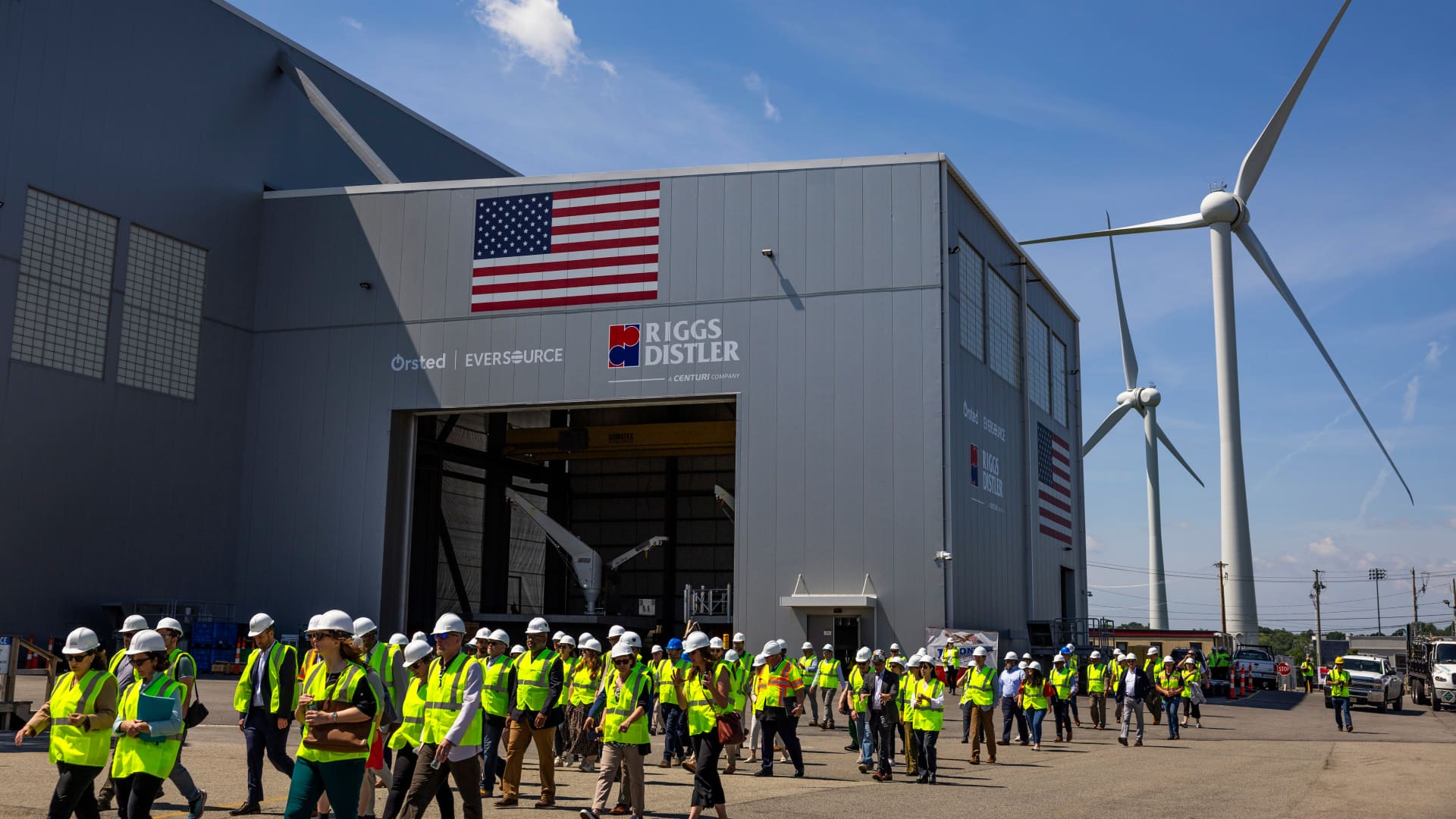
The energy investment landscape is currently grappling with a potent mix of market volatility and escalating regulatory uncertainty. A recent development, involving Danish energy giant Orsted’s legal challenge against a U.S. government stop-work order on its Revolution Wind project, serves as a stark reminder of the unpredictable political headwinds facing large-scale energy infrastructure. This situation, where a nearly complete, fully permitted project faces an abrupt halt, underscores significant risks not just for renewable developers, but for all capital-intensive ventures across the entire energy spectrum, including traditional oil and gas.
Regulatory Whiplash and Investment Risk in Renewables
Orsted has taken the unusual step of suing the U.S. government, specifically challenging the Interior Department’s sudden August 22nd order to halt construction on its Revolution Wind farm. This project, which is 80% complete and poised to power over 350,000 homes, had undergone extensive reviews and secured all necessary permits over nearly a decade. Orsted alleges the stop-work order is “unlawful” and “issued in bad faith,” attributing the justification of “national security” to a pretext for a long-standing political animus against wind power. The lawsuit highlights a critical vulnerability: even projects with substantial investment, advanced completion rates, and federal approval can fall victim to shifting political tides. For investors, this creates a chilling precedent, suggesting that regulatory stability, a cornerstone of long-term capital deployment, cannot be taken for granted. The administration’s recent cancellation of $679 million in funding for a dozen offshore wind infrastructure projects further amplifies this systemic risk, indicating a broader policy shift that could impact the pace and cost of the energy transition.
Broader Market Context and Shifting Investor Sentiment
Against this backdrop of significant policy uncertainty, the broader energy markets are exhibiting their own sensitivities. As of today, Brent crude trades at $98.34, reflecting a modest 1.06% daily dip, while WTI sits at $90.02, down 1.26%. This daily movement follows a more substantial market correction over the past two weeks, where Brent crude shed 12.4% of its value, retreating from $108.01 on March 26th to $94.58 by April 15th. While the market has seen a slight rebound since then, this volatility underscores an environment already sensitive to demand signals, geopolitical events, and increasingly, the regulatory viability of future energy supply. Our proprietary reader intent data further illuminates investor anxieties: a significant uptick in queries this week revolves around understanding crude price models and dissecting OPEC+ production quotas. This intense focus on foundational market dynamics and predictive analytics signals a clear desire for clarity and stability in an increasingly uncertain environment, a sentiment undoubtedly amplified by the kind of regulatory disruption seen in the Orsted dispute. Investors are seeking robust tools and insights to navigate a landscape where political decisions can profoundly impact project valuations and overall market direction.
The Interplay with Traditional Energy: An Extended Runway or Shared Risk?
The challenges facing large-scale renewable projects like Revolution Wind inevitably raise questions about the future trajectory of traditional oil and gas. If the path for renewables becomes more arduous due to regulatory and political resistance, does this inadvertently extend the investment runway for fossil fuels? The argument could be made that delays in deploying new renewable capacity necessitate a continued reliance on conventional sources for longer than previously anticipated. However, this is not a simple zero-sum game. The core issue highlighted by the Orsted lawsuit – the potential for sudden, politically motivated regulatory reversals – is a risk that transcends specific energy sectors. Investors in oil and gas projects, particularly those requiring significant upfront capital and long development cycles, must also contend with the possibility of similar policy shifts, perhaps driven by environmental mandates or new permitting hurdles. The cancellation of supporting infrastructure funding, for instance, signals a broader reluctance to facilitate energy build-out, irrespective of the source. This scenario could lead to a shared increase in regulatory risk premium across all energy investments, rather than a clear advantage for one sector over another.
Navigating Future Policy Shifts and Investment Strategy
For savvy investors, understanding the implications of the Orsted situation demands a forward-looking perspective, particularly given upcoming market catalysts. The legal battle itself could be protracted, with its outcome potentially setting important precedents for regulatory enforcement and the protection of permitted projects. Beyond the courtroom, the broader policy environment remains fluid. Investors should keenly monitor upcoming energy events for signals of market direction and potential stability. The OPEC+ Joint Ministerial Monitoring Committee (JMMC) meeting on April 18th, followed by the full Ministerial meeting on April 20th, will provide critical insights into global supply management strategies, which could be influenced by perceptions of demand stability and the pace of energy transition. Further, the weekly Baker Hughes Rig Count reports on April 17th and 24th, alongside the EIA Weekly Petroleum Status Reports on April 22nd and 29th, will offer granular data on domestic production and inventory levels, serving as vital indicators of supply-demand balances in the traditional sector. In an environment where political intervention can introduce such significant volatility, a diversified and adaptive investment strategy, underpinned by a deep understanding of market fundamentals and regulatory landscapes, becomes paramount. Investors must be prepared to assess not only the economic viability of projects but also their resilience against potential political interference and policy shifts.