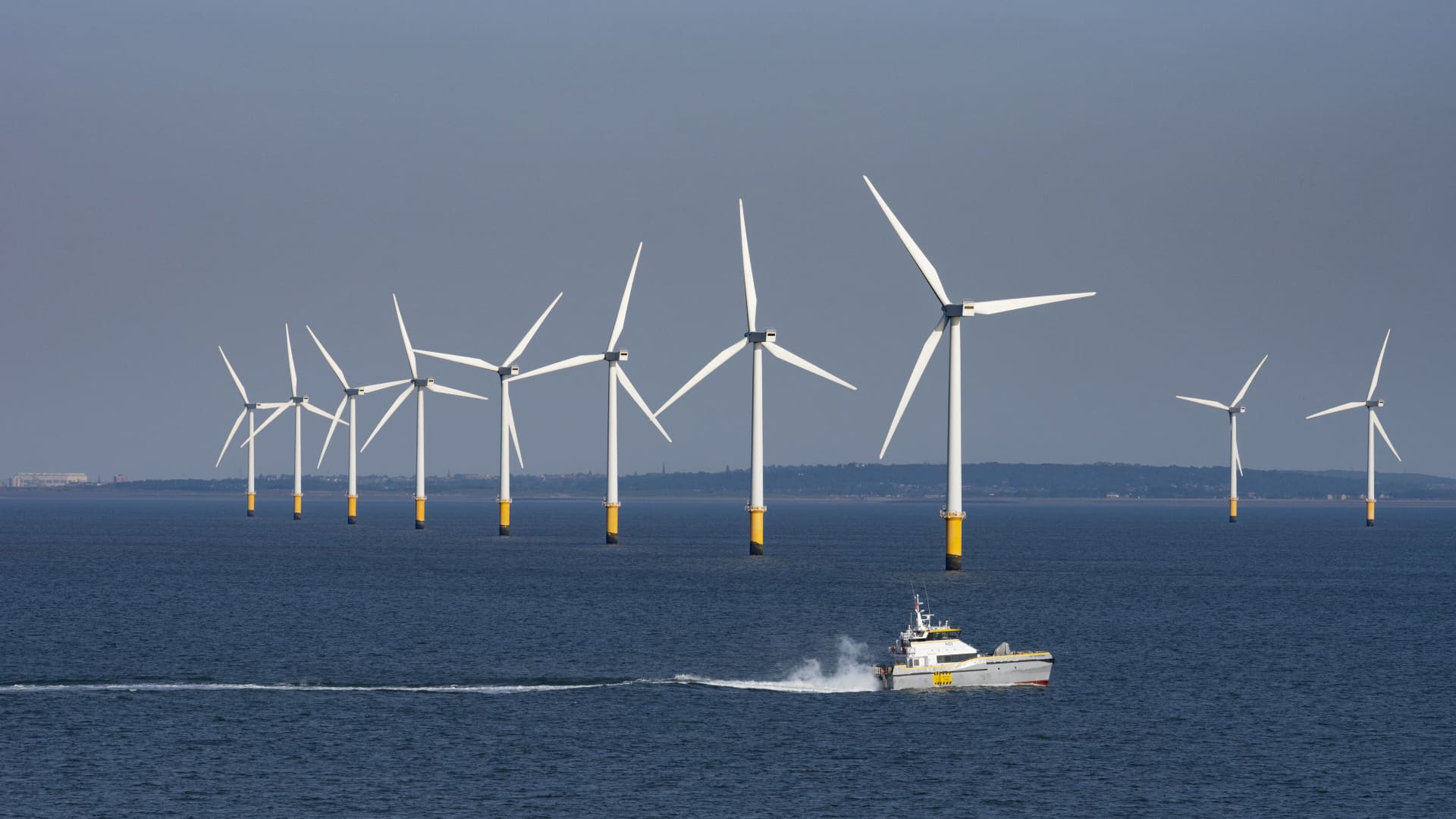
The energy investment landscape continues to evolve, presenting both formidable challenges and distinct opportunities across sectors. Recent developments surrounding Orsted, the offshore wind giant, underscore the intense capital demands and regulatory hurdles facing the renewables industry. With shareholders approving an emergency 60 billion Danish kroner ($9.4 billion) rights issue, investors are once again reminded of the significant financial commitments required to scale new energy infrastructure, even as traditional oil and gas markets navigate their own dynamics amidst global supply and demand shifts.
Capital Restructuring and Profit Headwinds in Renewables
Orsted’s successful emergency capital raise, totaling approximately $9.4 billion, comes at a pivotal moment, highlighting the inherent volatility and capital intensity of large-scale renewable projects. This financial maneuver follows a fresh profit warning from the company, exacerbated by lower-than-normal offshore wind speeds during July and August. While some analysts have characterized the cut to full-year operating profit outlook as “relatively minor,” it nonetheless paints a picture of operational sensitivities. For energy investors, this situation serves as a critical reminder that even sectors positioned for long-term growth are not immune to short-term operational challenges and significant funding requirements, often leading to substantial share price volatility. Indeed, Orsted shares had plummeted nearly 90% from their 2021 peak before seeing a modest 2.9% uptick following the rights issue approval, demonstrating the market’s cautious optimism for recapitalized ventures.
Navigating Geopolitical and Regulatory Tides
Beyond operational performance, the Orsted narrative brings into sharp focus the impact of political and regulatory risks on energy investments. The abrupt White House order to halt work on the Revolution Wind project off the coast of Rhode Island and Connecticut illustrates how swiftly policy shifts can disrupt even fully permitted developments. This project, which is 80% complete and designed to power over 350,000 homes, now faces an uncertain future as Orsted pursues legal action against the administration. For oil and gas investors, this situation resonates deeply; the sector constantly contends with evolving environmental regulations, geopolitical tensions, and shifting government priorities. The Orsted case underscores that regardless of the energy source, regulatory stability and political backing are paramount for long-term project viability and investor confidence. The ongoing legal battle will set important precedents for future infrastructure development across the energy spectrum.
Oil Market Resilience Amidst Broader Energy Fluctuations
While the renewables sector grapples with capital and regulatory challenges, the traditional oil market continues to exhibit a distinct set of dynamics. As of today, Brent crude trades at $98.57, reflecting a marginal daily decline of 0.83% within a range of $97.92 to $98.57. WTI crude similarly saw a slight dip, closing at $90.18, down 1.09% for the day. This current price environment follows a notable correction, with Brent having fallen approximately $14, or 12.4%, from its level of $112.57 just fourteen days ago. This recent volatility in crude prices, while significant, is part of the cyclical nature of the commodity market. Investors are keenly observing these fluctuations, seeking clarity on underlying supply-demand balances and macroeconomic signals. Our reader intent data indicates a strong focus on understanding current Brent prices and the factors driving them, underscoring the market’s ongoing search for real-time insights into crude benchmarks.
Forward-Looking Insights: Key Events Shaping the Next Fortnight
Looking ahead, the next two weeks are packed with critical events that will undoubtedly shape short-term market sentiment and provide further direction for oil and gas investors. Our calendar highlights several key dates. This Friday, April 17th, brings the latest Baker Hughes Rig Count, offering a snapshot of North American drilling activity. The following week is particularly significant for global supply policy, with the OPEC+ Joint Ministerial Monitoring Committee (JMMC) meeting scheduled for Saturday, April 18th, followed by the full OPEC+ Ministerial Meeting on Monday, April 20th. Investors are especially focused on these gatherings for any indications regarding current production quotas and future output strategies, a topic consistently high on our reader’s inquiry list. Beyond OPEC+, we anticipate the API Weekly Crude Inventory report on Tuesday, April 21st, and the comprehensive EIA Weekly Petroleum Status Report on Wednesday, April 22nd. These reports will provide crucial data on U.S. crude, gasoline, and distillate stocks, influencing domestic and international price movements. Another Baker Hughes Rig Count will close out the week on April 24th, with subsequent API and EIA reports rounding out the end of the month. These scheduled events demand close attention as they collectively provide the pulse of the market, offering vital data points for informed investment decisions.