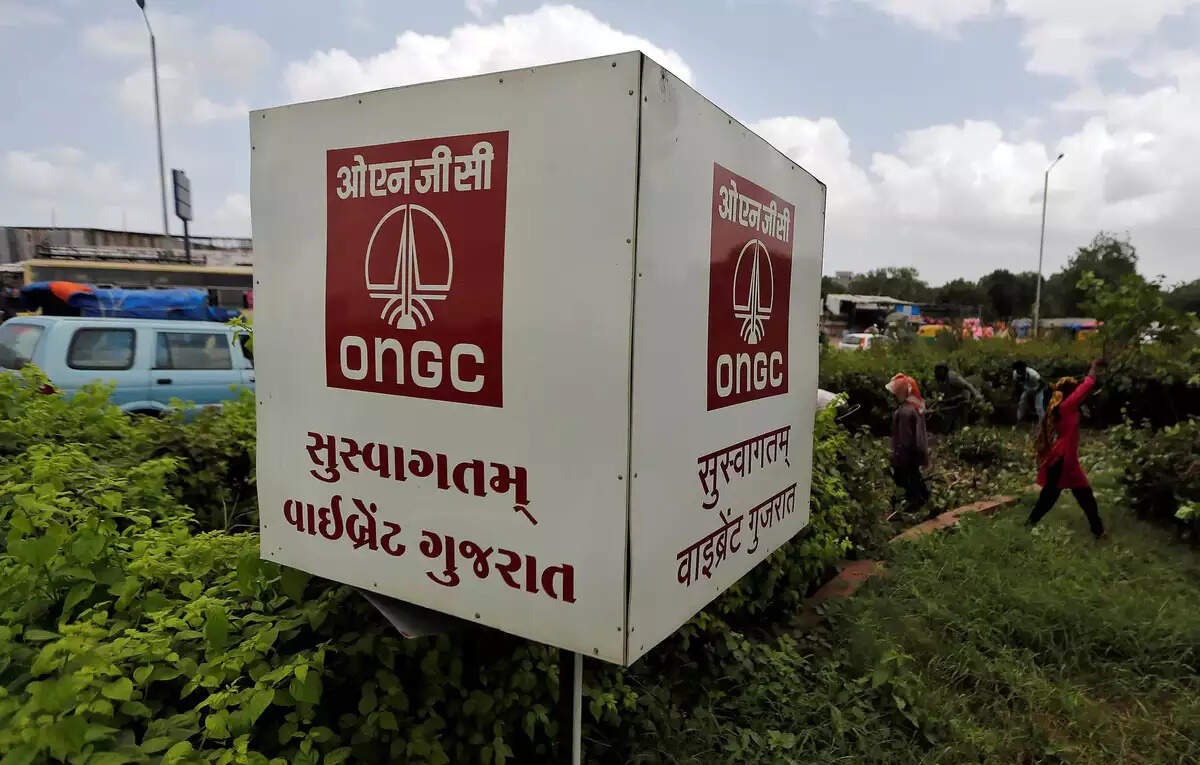
Oil and Natural Gas Corporation (ONGC) has presented a nuanced financial picture for FY25, revealing a significant divergence between robust operational expansion and a challenging profit landscape. While the Indian energy behemoth reported a commendable 0.9% increase in crude oil production and achieved its highest drilling activity in 35 years, its profitability metrics took a substantial hit. Standalone profit after tax (PAT) declined by 12.1% to ₹35,610 crore, and consolidated PAT saw a steeper 30.7% drop to ₹38,329 crore. This performance signals a complex interplay of upstream successes, downstream pressures, and strategic diversification efforts, demanding a deeper analytical dive for investors tracking the broader energy sector.
Navigating Profit Headwinds Amidst Production Gains
ONGC’s FY25 results highlight a critical disconnect between its core upstream achievements and its overall financial returns. The company successfully boosted crude oil production to 18.558 million metric tonnes (MMT) and natural gas production to 19.654 billion cubic metres (BCM), indicating sustained operational efficiency in its exploration and production (E&P) segment. This operational strength is further underscored by the drilling of 578 wells – a 35-year high – comprising 109 exploratory and 469 development wells, leading to nine hydrocarbon discoveries, eight of which were monetized. The successful tests in new fields, such as Yandapalli-1 in the Krishna Godavari basin and MBS202HAA-1 in Mumbai Offshore, demonstrate the ongoing potential for organic growth in its core assets.
However, the significant decline in consolidated PAT tells a story of broader market challenges, particularly impacting ONGC’s downstream subsidiaries. Hindustan Petroleum Corporation Ltd (HPCL) saw its standalone PAT plummet to ₹7,365 crore from ₹14,694 crore in the previous year, with gross refining margins (GRMs) shrinking from $9.08 per barrel to $5.74 per barrel. Similarly, Mangalore Refinery and Petrochemicals Ltd (MRPL) reported GRMs falling from $10.36 to $4.45 per barrel, resulting in a PAT of just ₹51 crore, down sharply from ₹3,596 crore. These figures reflect a challenging environment for refiners, where global product oversupply and fluctuating demand have compressed margins, a trend our readers have been actively tracking with questions around refinery utilization, particularly for Asian players. This downstream pressure effectively overshadowed the positive momentum from ONGC’s upstream production growth, underscoring the volatility inherent in integrated energy portfolios.
Strategic Investments and Future Growth Drivers
Despite the immediate profit squeeze, ONGC’s strategic capital allocation in FY25 signals a clear long-term vision. The company earmarked a substantial capital expenditure of approximately ₹62,000 crore, demonstrating a commitment to both bolstering its core E&P capabilities and diversifying into new energy segments. A significant portion of this capital is directed towards ONGC Petro additions Ltd (OPaL) and ONGC Green Ltd, which notably added 2.345 GW of renewable energy capacity and acquired stakes in key green energy ventures. This pivot towards renewables, alongside initiatives like ultra-deepwater drilling in the Andaman Basin and exploration in the Ganga Basin, positions ONGC to navigate the energy transition while capitalizing on its traditional strengths.
The consistent performance of ONGC Videsh Ltd (OVL), which reported a 1.2% increase in oil production to 7.265 MMT and a total production of 10.278 million tonnes of oil equivalent (MMTOE), adds an important layer of stability through international diversification. OVL’s ability to maintain and slightly grow its overseas oil output provides a valuable hedge against domestic operational challenges or policy shifts. These strategic investments, spanning traditional E&P, refining, petrochemicals, and renewable energy, are crucial for future value creation and mitigate the inherent risks of relying solely on a single segment of the energy value chain.
Market Dynamics and the Investor Outlook
The backdrop for ONGC’s mixed FY25 performance is a dynamic global oil market, which continues to present both opportunities and headwinds. As of today, Brent crude trades at $96.06 per barrel, showing a daily gain of 1.34%, with WTI crude following closely at $92.46 per barrel. This recent uptick marks a partial recovery from a noticeable dip, as Brent had trended down by nearly 9% over the past 14 days, falling from $102.22 on March 25th to $93.22 on April 14th. Such price volatility, while offering potential upside for upstream players, also introduces uncertainty for forecasting.
Investors are keenly asking for a base-case Brent price forecast for the next quarter, and our proprietary data indicates significant interest in understanding the consensus 2026 Brent forecast. While ONGC’s production gains are positive, the substantial decline in refining margins experienced by HPCL and MRPL underscores how susceptible integrated players are to the entire value chain’s health. The current market environment, with gasoline trading at $2.98 per gallon, suggests a degree of product demand stability, yet the pronounced GRM compression points to persistent overcapacity or intense competition in the refining sector. For an investor considering ONGC, the critical question revolves around whether the improving crude price environment can sufficiently offset continued pressure on downstream margins, and how effectively the company’s long-term diversification strategy will translate into resilient profitability.
Key Upcoming Catalysts and Forward-Looking Projections
The immediate spotlight for oil investors falls on the critical OPEC+ meetings scheduled for April 18th (JMMC) and April 20th (Full Ministerial). These gatherings are pivotal, as any decisions regarding current production cuts will directly influence global supply dynamics and, consequently, crude oil prices. A decision to maintain or even deepen cuts could provide further tailwinds for Brent, potentially pushing it higher than its current levels and benefiting ONGC’s upstream segment. Conversely, any indication of an increase in supply could exert downward pressure, challenging the base-case Brent forecast many investors are seeking for the coming quarter.
Beyond OPEC+, market participants will closely monitor the Baker Hughes Rig Count reports on April 17th and April 24th, which offer real-time insights into drilling activity and future supply potential, particularly in the US. Similarly, the API Weekly Crude Inventory (April 21st, April 28th) and EIA Weekly Petroleum Status Reports (April 22nd, April 29th) will provide crucial snapshots of supply-demand balances, influencing short-term price movements. For ONGC, a sustained period of higher crude prices, coupled with an eventual recovery in refining margins – perhaps driven by stronger global economic growth or a tightening of product markets – would be essential for a rebound in consolidated profitability in FY26. The company’s ongoing capital deployment in exploration and new energy initiatives suggests a proactive approach, but external market forces, particularly those dictated by OPEC+ and global refining economics, will heavily shape its near-term financial trajectory.


