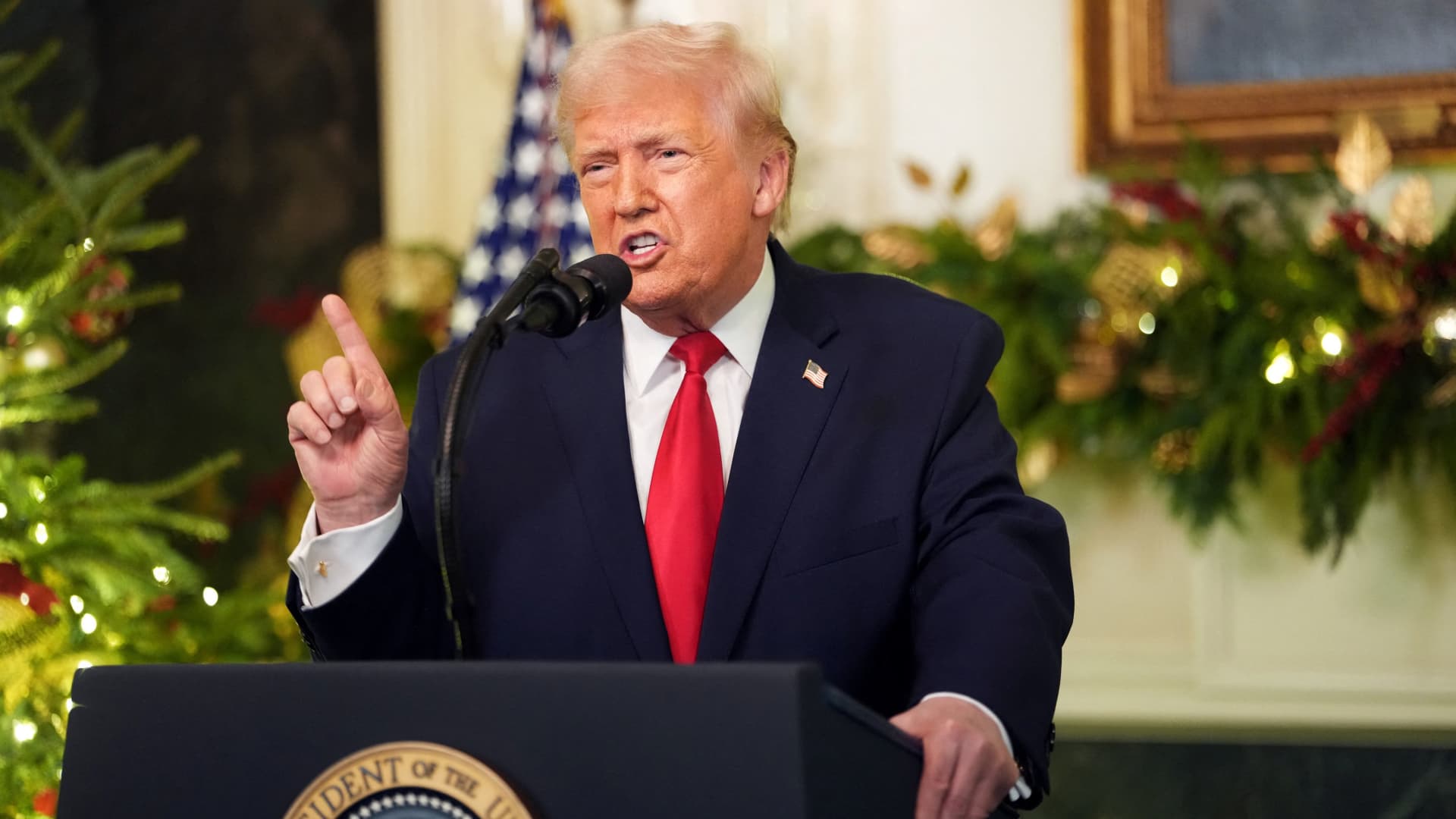
Despite headlines signaling heightened geopolitical tensions in Venezuela, with the U.S. President openly discussing the possibility of military action, the global oil market is currently navigating a far more complex landscape. While the prospect of conflict involving an OPEC founding member with the world’s largest proven oil reserves might typically trigger a sharp risk premium, our proprietary data indicates that broader macroeconomic concerns and supply-side fundamentals are currently dictating price action. OilMarketCap.com’s analysis delves into this apparent disconnect, leveraging real-time market data, upcoming calendar events, and direct insights from investor inquiries to provide a comprehensive outlook for discerning energy investors.
The Geopolitical Paradox: Venezuela’s Influence Dwindles Amidst Escalation
The U.S. President’s recent remarks, refusing to rule out military intervention in Venezuela, have certainly added a layer of geopolitical uncertainty to the global energy picture. Venezuela, a founding member of OPEC, historically commands significant attention due to its immense proven oil reserves. However, the market’s muted reaction to these specific threats underscores a critical shift: Venezuela’s practical influence on global supply has been severely diminished over recent years. Current data indicates Venezuela exports approximately 749,000 barrels per day this year, with roughly half of that volume directed to China and only about 132,000 bpd reaching the U.S. This significantly reduced output, a fraction of its historical capacity, is largely a consequence of extensive U.S. sanctions, infrastructure decay, and internal political strife that have crippled its oil sector. The market has, to a large extent, already priced in the absence of substantial Venezuelan crude on the open market. Even a full-scale conflict, while tragic, might not translate into a significant immediate supply shock given the country’s already constrained export volumes and the existing blockade of sanctions oil tankers off its coast. Investors appear to be looking past the immediate military rhetoric, recognizing that Venezuela’s role as a swing producer or major supply disruptor has been substantially eroded, making its geopolitical flashpoints less impactful on overall market balances than in decades past.
Current Market Reality: A Sharp Reversal Amidst Broader Pressures
While the Venezuela narrative suggests a stable market, OilMarketCap’s live data pipelines paint a different picture entirely, revealing a market under significant downward pressure. As of today, Brent Crude trades at $91.87 per barrel, marking a substantial 7.57% decline within the day, with its range fluctuating between $86.08 and $98.97. Similarly, West Texas Intermediate (WTI) Crude has seen an even sharper drop, currently at $84 per barrel, down 7.86% for the day, traversing a range of $78.97 to $90.34. This aggressive daily downturn is not an isolated event; our 14-day Brent trend analysis shows a steep descent from $112.78 on March 30th to today’s $91.87, representing an 18.5% contraction. Gasoline prices are also feeling the pinch, currently at $2.95, a 4.85% drop for the day. This data directly challenges the notion of market stability, indicating that broader forces are at play. Investors are clearly reacting to factors beyond the Venezuela situation, likely including persistent concerns over global economic slowdowns, potential demand destruction, and the ongoing assessment of global supply adequacy, possibly influenced by earlier speculation regarding increased Russian crude flows if a peace agreement in Ukraine were to materialize. The sharp correction suggests a market grappling with an oversupply narrative or weakening demand expectations, overshadowing localized geopolitical risks.
Navigating Uncertainty: Investor Questions and Upcoming Catalysts
The current volatility has naturally fueled a flurry of questions from our investor base, reflecting a pressing need for clarity amidst the price swings. We’ve observed a significant uptick in queries, such as “what do you predict the price of oil per barrel will be by end of 2026?” and “What are OPEC+ current production quotas?”. These questions underscore the market’s hunger for forward guidance in the face of rapid price depreciation. For investors seeking to position themselves strategically, the upcoming energy calendar holds several critical data releases and events. Foremost among these is the full OPEC+ Ministerial Meeting scheduled for April 18th. Given the recent steep decline in crude prices, all eyes will be on this meeting for any signals regarding production policy. Will the alliance maintain its current output cuts, or might it consider deeper reductions to stabilize the market? Any decision or even strong rhetoric from this meeting will undoubtedly be a primary driver for oil prices in the immediate term, directly impacting investor outlooks. Beyond OPEC+, the market will closely monitor the API Weekly Crude Inventory reports on April 21st and 28th, followed by the EIA Weekly Petroleum Status Reports on April 22nd and 29th. These weekly snapshots offer crucial insights into U.S. supply and demand dynamics, providing granular data on inventory levels that can sway short-term sentiment. Further insights into future supply will come from the Baker Hughes Rig Count reports on April 24th and May 1st, indicating drilling activity and potential production trends. Collectively, these events and data points are essential for investors seeking to answer fundamental questions about supply, demand, and future price trajectories.
Strategic Outlook: Beyond Headlines to Fundamental Drivers
For sophisticated energy investors, the current market environment demands a nuanced approach, looking beyond sensational headlines to the underlying fundamental drivers. While the U.S. stance on Venezuela injects a degree of geopolitical risk, our analysis indicates that its immediate impact on global oil supply is limited due to the country’s already reduced export capacity. Instead, the significant price correction observed this week reflects a market more attuned to broader macroeconomic signals and the delicate balance of global supply and demand. The potential for a global economic slowdown, persistent inflation challenges, and the trajectory of interest rates weigh heavily on demand forecasts. Simultaneously, the supply side continues to be influenced by OPEC+ decisions and the potential for increased crude flows from other regions, such as Russia, should geopolitical resolutions emerge. Investors asking about specific company performance, like “How well do you think Repsol will end in April 2026,” are rightly focusing on how individual entities navigate these macro and micro pressures. As we move forward, careful attention to the OPEC+ deliberations, the weekly inventory reports, and the Baker Hughes Rig Count will be paramount. These data points, coupled with a vigilant assessment of global economic indicators, will offer the most reliable insights for strategic positioning in a market where the loudest geopolitical threats do not always translate into the most significant price movements.