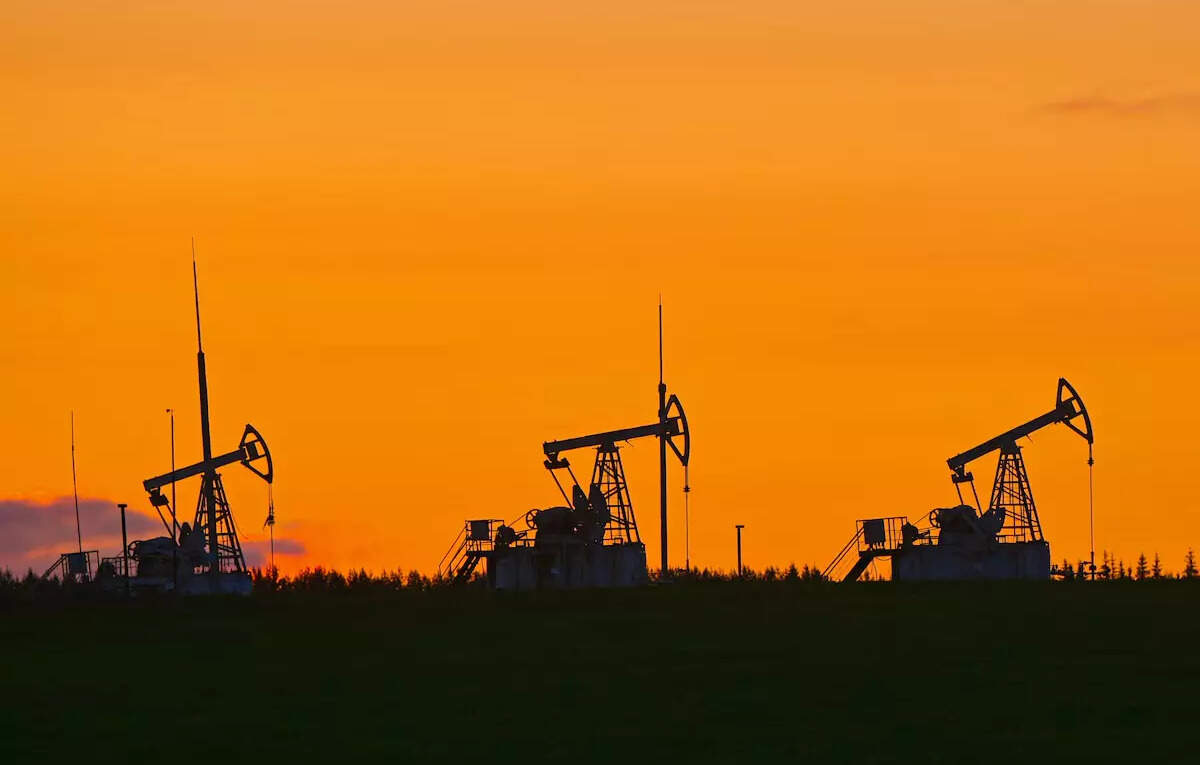
India’s energy landscape witnessed a significant stride forward with Oil India Ltd (OIL) commencing natural gas production from the Bakhritiba block in Rajasthan. This development, part of the Discovered Small Field (DSF) III bid round, marks a crucial step in the nation’s drive for enhanced energy security and self-reliance. Initially producing 67,200 standard cubic meters per day (SCMD), OIL has ambitious plans to swiftly escalate output to 100,000 SCMD (100 MSCMD). For investors, this isn’t just a production milestone; it’s a testament to the efficient monetization of domestic hydrocarbon reserves and a signal of robust growth opportunities within India’s evolving energy sector, particularly as global market dynamics continue to present both challenges and opportunities.
Bakhritiba’s Strategic Significance and Production Ramp-Up
The Bakhritiba block’s successful commissioning underscores the strategic importance of India’s DSF policy, designed to unlock value from smaller, previously undeveloped hydrocarbon discoveries. OIL’s achievement in bringing this field online, specifically within the stipulated development period and through the drilling of three MWP wells, sets a benchmark for rapid monetization. The initial gas output is already being supplied to key domestic players, GAIL (India) Ltd and Rajasthan Rajya Vidyut Utpadan Nigam Ltd (RRVUNL), ensuring immediate market uptake. The targeted increase to 100 MSCMD is not merely incremental; it represents a substantial boost to regional gas supply, supporting industrial growth and power generation in Western Rajasthan. This rapid progression from discovery to production highlights OIL’s operational capabilities and its critical role in bolstering India’s domestic energy portfolio, reducing reliance on often-volatile imports.
Navigating the Market: Gas Stability Amidst Crude Volatility
In the current global energy climate, the commencement of stable natural gas production offers a compelling investment narrative, particularly when viewed against the backdrop of fluctuating crude prices. As of today, Brent crude trades at $96.62, showing a robust 1.93% gain for the day, with its intra-day range stretching from $91 to $96.73. Similarly, WTI crude stands at $92.94, up 1.82%, having traded between $86.96 and $93.13. This daily rebound follows a notable period of market correction, where Brent saw a nearly 9% decline over the past 14 days, sliding from $102.22 on March 25th to $93.22 on April 14th. Gasoline prices are also reflecting this upward momentum, currently at $3, up 1.01%. This volatility in crude markets underscores the intrinsic value of natural gas assets like Bakhritiba. For investors, exposure to domestic gas production from a state-owned enterprise like OIL offers a degree of insulation from the geopolitical and supply-side shocks that frequently impact global oil benchmarks, providing a more predictable revenue stream crucial for long-term portfolio stability.
Forward-Looking Catalysts and Upcoming Market Events
Looking ahead, the successful ramp-up of Bakhritiba’s gas production to its 100 MSCMD target will serve as a key internal catalyst for OIL, potentially enhancing its revenue streams and strengthening its balance sheet. Beyond this project-specific milestone, the broader energy market calendar presents several upcoming events that could influence the investment thesis around both gas and oil. Investors will be closely watching the Baker Hughes Rig Count reports on April 17th and April 24th, which offer real-time insights into drilling activity and future supply trends across major basins. More critically, the OPEC+ Joint Ministerial Monitoring Committee (JMMC) meeting on April 18th, followed by the Full Ministerial meeting on April 20th, will be pivotal. Any decisions regarding production quotas could significantly impact global crude supply and prices, thereby indirectly influencing the relative attractiveness of stable domestic gas projects. These events, coupled with weekly API and EIA inventory reports on April 21st/22nd and April 28th/29th, will provide continuous data points for assessing global supply-demand balances, further highlighting the strategic importance of localized, consistent energy sources like OIL’s new gas output.
Addressing Investor Queries: Valuation, Returns, and Energy Security
Our proprietary reader intent data reveals a strong investor focus on understanding market drivers and forecasting future prices, with frequent queries around base-case Brent price forecasts for the next quarter and the consensus 2026 Brent outlook. There’s also keen interest in regional market dynamics, such as what’s driving Asian LNG spot prices this week. OIL’s Bakhritiba project directly addresses several of these concerns. By increasing domestic gas production, India reduces its reliance on high-priced and often volatile Asian LNG spot markets, thereby mitigating a significant input cost for its industrial and power sectors. For investors, this means a more stable domestic market for OIL’s gas output, which translates into more predictable earnings. While global crude prices remain a significant factor, the strategic diversification into natural gas strengthens OIL’s overall valuation proposition, offering a hedge against crude price volatility. This project represents a tangible step towards enhancing the company’s long-term financial resilience and delivering consistent returns, aligning with the broader national objective of securing India’s energy future through efficient domestic resource monetization.
In conclusion, Oil India’s commencement of gas production from the Bakhritiba block is more than just an operational update; it’s a clear signal of momentum in India’s energy transition and a compelling opportunity for investors. As the company works towards its 100 MSCMD target, its contribution to India’s energy independence, coupled with the stability offered by natural gas in a volatile global market, positions OIL as a key player in the nation’s energy investment landscape. Investors looking for exposure to India’s growing domestic energy story, particularly in the natural gas sector, should pay close attention to OIL’s continued progress and the unfolding strategic implications of the DSF policy.


