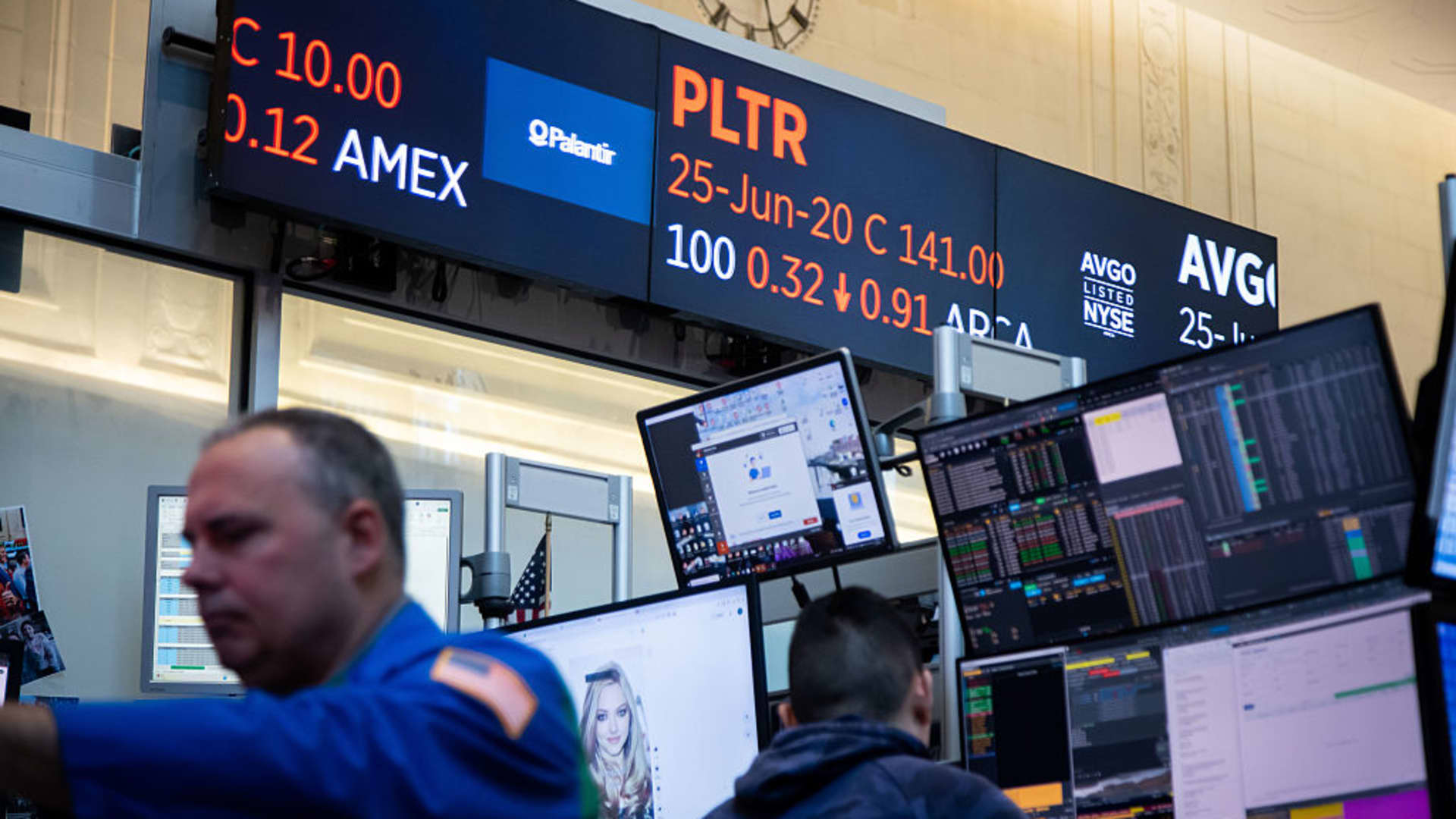
While the broader market grapples with significant turbulence in the technology sector, evidenced by multi-day slides in high-profile names and a general retreat from growth stocks, the oil and gas industry presents a distinct investment landscape. Amidst concerns over an “AI bubble” and profit-taking in previously high-flying tech giants like Palantir, Apple, and Amazon, energy markets operate on a different set of fundamentals. For investors seeking stability or uncorrelated opportunities, understanding these specific drivers and upcoming catalysts in the crude and natural gas space is paramount, especially as global economic signals remain mixed and geopolitical factors continue to influence supply dynamics.
Tech Sector Jitters vs. Energy’s Resilience
The recent sell-off in technology stocks has been pronounced, with the Nasdaq Composite slipping and major players experiencing significant declines. Palantir, a former S&P 500 standout, has endured its sixth consecutive day in the red, losing its position among the top U.S. companies by valuation. This broad pullback, partly fueled by short-seller reports and perhaps general profit-taking after an “incredibly strong run” for tech, highlights the inherent volatility in sectors driven by sentiment and future growth prospects. However, the oil and gas sector, while not immune to macro-economic shifts, often demonstrates a different kind of resilience. Its value is tied to tangible supply and demand, industrial activity, and geopolitical stability, rather than speculative growth narratives. This divergence is particularly relevant when considering the Federal Reserve’s ongoing dilemma, with officials divided over the pressing concerns of inflation versus potential labor market woes. Such macroeconomic uncertainty can amplify tech sector sensitivity, yet for energy, it often underscores the need for stable, essential resources regardless of broader market sentiment.
Crude Market Volatility and Investor Focus on Fundamentals
The energy market itself is experiencing its own unique brand of volatility. As of today, Brent Crude trades at $90.38, marking a significant 9.07% decline on the day, with prices fluctuating between $86.08 and $98.97. Similarly, WTI Crude has seen a sharp drop to $82.59, down 9.41%, having traded within a range of $78.97 to $90.34. Gasoline prices are also feeling the pressure, currently at $2.93, a 5.18% decrease. This sharp daily correction follows a notable downward trend over the past two weeks, where Brent has fallen from $112.78 on March 30th to $91.87 yesterday, representing an 18.5% decline. Our proprietary reader data indicates that investors are keenly focused on understanding these price dynamics, with many actively asking about the predicted price of oil per barrel by the end of 2026. This reflects a deep concern about future market direction and the sustainability of current price levels. Another dominant query revolves around OPEC+ current production quotas, highlighting the market’s reliance on supply-side management. The recent price drops make these questions even more pertinent, as investors seek clarity on whether current levels represent a new floor or a temporary correction.
Upcoming Events: Catalysts for Crude Price Direction
For energy investors, the immediate future is packed with critical events that could significantly influence crude price direction and provide answers to pressing questions about supply management. The most prominent on the horizon are the OPEC+ Joint Ministerial Monitoring Committee (JMMC) meeting on April 18th, followed by the Full Ministerial meeting on April 19th. These gatherings are crucial as the market anticipates whether the alliance will adjust its production quotas in response to recent price volatility and global demand outlooks. Any decision to maintain, cut, or even increase production could send ripples through the market, directly addressing investor concerns about OPEC+’s strategy. Further insights into market balance will come from the API and EIA weekly inventory reports, scheduled for April 21st and 22nd, and again on April 28th and 29th. These reports provide vital snapshots of U.S. crude, gasoline, and distillate stockpiles, offering tangible evidence of demand trends and supply levels. Given the current dip in gasoline prices, these inventory figures will be particularly scrutinized for signs of consumption strength or weakness. Additionally, the Baker Hughes Rig Count on April 24th and May 1st will offer an early indicator of future U.S. production activity, a critical factor for long-term supply projections and a key data point for those forecasting year-end oil prices.
Policy Shifts and Long-Term Energy Investment Horizons
Beyond immediate market movements and inventory data, the long-term investment horizon for oil and gas is increasingly shaped by policy decisions. President Trump’s recent declaration regarding the halting of new solar or wind power project approvals could signal a significant shift in U.S. energy policy. Such a move, following tightened federal permitting regulations last month, could create a more favorable regulatory environment for traditional fossil fuel projects domestically. This stands in contrast to the global push for renewable energy and could influence investment flows into U.S. oil and gas exploration and production. While the Federal Reserve remains divided on its dual mandate of controlling inflation and ensuring full employment, with some officials expressing greater concern about labor market woes, the broader macroeconomic environment plays a role. Goldman Sachs research suggests that Fed rate cuts coinciding with high market valuations present a unique scenario, though the direct impact on energy commodity prices might be secondary to the fundamental supply-demand dynamics discussed earlier. For energy investors, navigating these interwoven policy shifts, from domestic permitting to central bank interest rate decisions, requires a nuanced understanding of their potential to either bolster or constrain the sector’s growth trajectory.