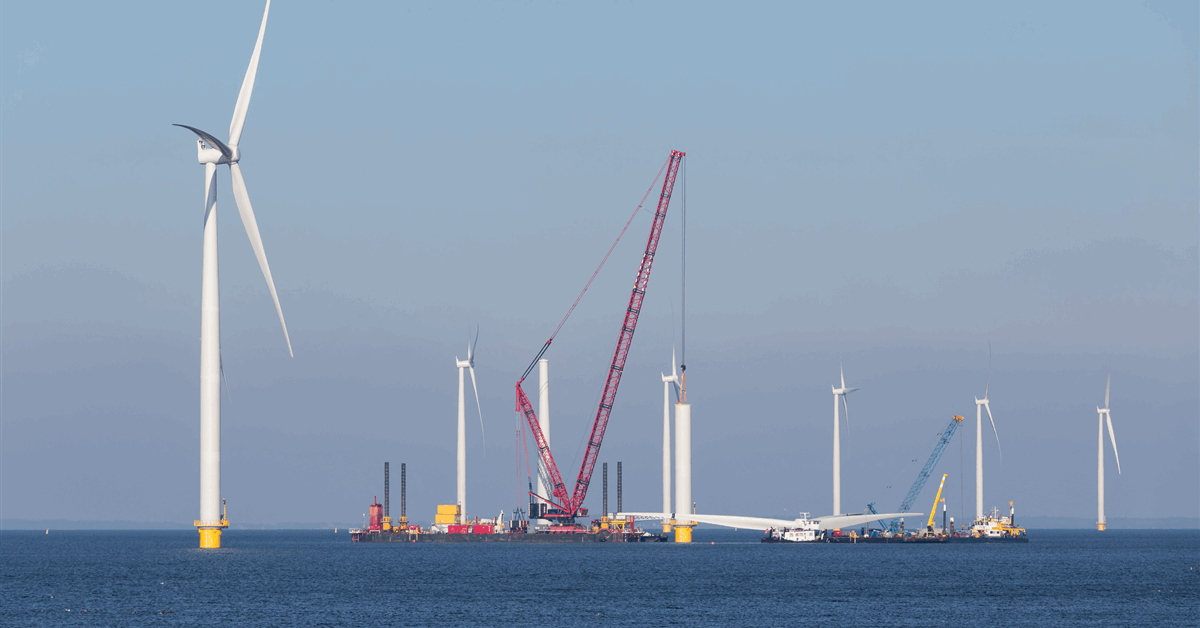
The recent retraction of a stop order against Equinor ASA’s Empire Wind project in New York signifies a critical juncture for the burgeoning offshore wind sector and offers valuable insights for energy investors. This development, allowing construction to resume on a project poised to power 500,000 homes, underscores the complex interplay of regulatory frameworks, political will, and long-term strategic vision in the energy transition. For an energy major like Equinor, navigating these waters to advance a $3 billion final investment decision (FID) highlights both the inherent challenges and the enduring potential of large-scale renewable energy ventures, particularly within a competitive market.
Navigating Regulatory Headwinds and Economic Recalibrations
The journey for Empire Wind, specifically the first phase, has been anything but smooth. The initial stop order from the Interior Department’s Bureau of Ocean Energy Management (BOEM) was rooted in feedback concerning environmental analyses, a common point of contention for large infrastructure projects. This action, stemming from a broader review initiated by a previous administration’s memorandum to scrutinize existing wind leases and halt new ones, created significant uncertainty. The eventual retraction of this order, following what Equinor’s leadership described as a collective campaign involving state officials, lawmakers, and labor groups, underscores the political sensitivity and multi-stakeholder engagement often required to de-risk such substantial investments.
Equinor’s immediate response to this regulatory clarity is an updated economic assessment of the project in the current quarter. This move is crucial for investors, as it will determine the project’s viability under current market conditions and factor in any impacts from the delay. With an ambition for offshore installation in 2025 and a commercial operation date in 2027, the long lead times for such projects mean that initial economic models are frequently subject to revision. The stability provided by the purchase and sale agreement with the New York State Energy Research and Development Authority (NYSERDA) for the 810 MW Empire Wind 1 offers a degree of revenue certainty, but the capital expenditure and operational costs remain dynamic variables that Equinor must carefully manage.
The Broader Energy Landscape: Offshore Wind Against Oil Volatility
While the focus is on a renewable project, an energy major like Equinor operates across the full spectrum of energy markets. The strategic rationale for significant investment in offshore wind must be viewed against the backdrop of the volatile crude oil market. As of today, Brent crude trades at $96.04 per barrel, reflecting a 1.32% uptick in intraday trading, with a daily range between $91 and $96.26. Similarly, WTI crude is at $92.4, up 1.23%, ranging from $86.96 to $92.5. This recent upward movement contrasts with a notable 14-day trend, where Brent shed approximately $9, or 8.8%, dropping from $102.22 on March 25th to $93.22 by April 14th.
This inherent price volatility in traditional oil and gas markets highlights a key driver for diversification strategies among integrated energy companies. Investing in long-term, contracted renewable energy projects like Empire Wind, which promises a total capacity of 2,076 megawatts across its phases, offers a hedge against the unpredictable swings of commodity prices. For investors, understanding this strategic balance is paramount: how do stable, regulated returns from renewables complement or compete with the often higher, but riskier, returns from upstream oil and gas production?
Addressing Investor Priorities: Long-Term Vision vs. Immediate Returns
Our proprietary reader intent data reveals a strong and consistent investor focus on the immediate drivers of the oil market. Frequent inquiries center on building base-case Brent price forecasts for the next quarter, understanding the consensus 2026 Brent outlook, and analyzing specific regional dynamics such as Chinese teapot refinery operations or Asian LNG spot prices. This highlights a prevalent investor appetite for short-to-medium term O&G market intelligence and potential trading opportunities.
Against this backdrop, Equinor’s multi-billion dollar commitment to Empire Wind represents a significant capital allocation towards a much longer-term investment horizon. For investors primarily driven by crude price movements, the strategic shift towards offshore wind necessitates a re-evaluation of how such diversified portfolios are valued. The question becomes: how effectively does a company like Equinor articulate the value proposition of projects with a 2027 commercial operation date when a significant portion of the investor base is intensely focused on the next OPEC+ meeting or weekly inventory data?
Upcoming Milestones and the Competitive Horizon
Looking ahead, the energy calendar is packed with events that will shape market sentiment. In the immediate future, industry watchers will closely monitor the Baker Hughes Rig Count reports on April 17th and April 24th, offering insights into North American drilling activity. More critically, the OPEC+ Joint Ministerial Monitoring Committee (JMMC) meeting on April 18th, followed by the Full Ministerial meeting on April 20th, could significantly impact global supply strategies and crude pricing. Concurrently, the API and EIA weekly crude inventory reports on April 21st/22nd and April 28th/29th will provide vital short-term supply-demand signals.
These near-term market catalysts contrast sharply with the long-term milestones of the Empire Wind project. Equinor’s ambition to execute planned offshore installation activities in 2025 and achieve commercial operation in 2027 represents a multi-year commitment. The successful retraction of the stop order not only de-risks this specific project but also signals New York’s continued commitment to its ambitious offshore wind targets. This clarity is likely to intensify competition in the region, attracting further investment and development proposals from other energy players. As Empire Wind 1, an 810 MW project, moves forward, it validates the viability of such large-scale renewable initiatives in the US Northeast, setting a precedent that will undoubtedly factor into future competitive solicitations for offshore wind capacity.


