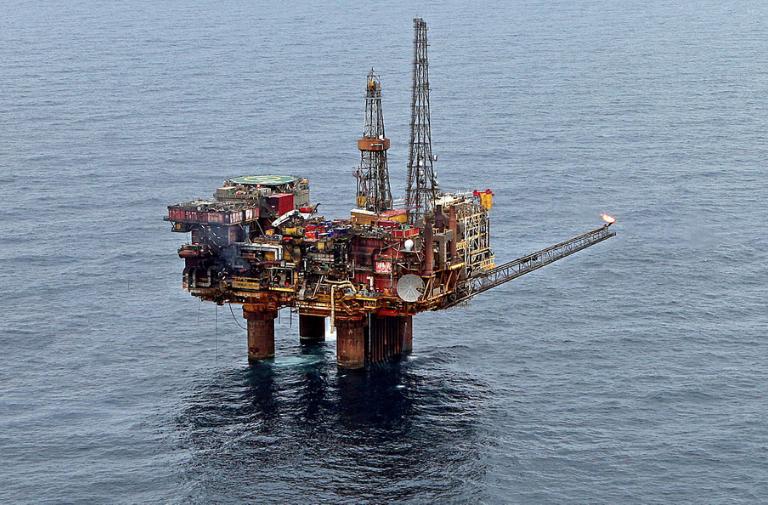
The North Sea’s energy landscape is undergoing a profound transformation, shifting from an exclusive focus on extraction to a critical emphasis on end-of-life asset management. A recent landmark development underscores this pivot: Allseas has awarded Able Group significant contracts for the dismantling, reuse, and recycling of TAQA UK’s iconic Cormorant Alpha and Tern platforms. This collaboration represents one of the most substantial decommissioning projects ever undertaken in the region, signaling a defining moment for the UK’s offshore infrastructure and presenting a compelling new frontier for energy investors.
Decommissioning’s Ascendance: A Strategic Imperative for the North Sea
The sheer scale of the Allseas and Able Group undertaking for TAQA’s North Sea assets highlights the burgeoning importance of the decommissioning sector. The Cormorant Alpha and Tern topsides alone comprise approximately 47,500 tonnes of material, destined for transport to Able Seaton Port (ASP) in Teesside from 2027 onward. This multi-year initiative is not merely about removal; it’s a testament to the industry’s commitment to sustainable practices. With an ambitious target of recovering and recycling up to 97% of materials, this project sets a high bar for environmental stewardship and circular economy principles within the energy sector. For investors, this demonstrates a growing, non-discretionary market driven by regulatory mandates and environmental commitments, offering long-term revenue visibility in a specialized segment of the energy value chain. The North Sea Transition Authority’s emphasis on utilizing UK-based facilities, as reinforced by this contract, further strengthens the domestic supply chain and creates a robust framework for future investments in the region’s decommissioning capabilities.
Navigating Volatility: Decommissioning as a Stable Investment Thesis
Oil and gas investors are acutely aware of the market’s inherent volatility. As of today, Brent crude trades at $91.8 per barrel, marking a 1.89% decline on the day. This price point represents a notable shift from just a month ago, when Brent was commanding $112.57, illustrating a sharp 12.4% drop over a 14-day period. WTI crude also mirrors this trend, currently at $88.88, down 2.51%. Such fluctuations often lead investors to question, “What is the current Brent crude price and what model powers this response?” and “What are OPEC+ current production quotas?” – indicating a natural focus on immediate commodity price drivers. However, the decommissioning market offers a compelling counter-narrative. Unlike exploration and production (E&P) activities, which are highly sensitive to daily price swings, decommissioning projects like TAQA’s Cormorant Alpha and Tern are long-term, contractually driven endeavors. Their execution timelines, stretching from 2027 onward, and their fixed-cost nature provide a degree of revenue stability and predictability that is often absent in the upstream segment. This makes investments in specialized offshore services, heavy lift, and recycling infrastructure a strategic hedge against commodity price volatility, appealing to those seeking stable returns in the broader energy complex.
Investor Focus: Diversifying Beyond Upstream Exposure
Our proprietary reader intent data reveals a consistent investor interest in understanding market fundamentals, particularly around crude prices and OPEC+ policies. While these remain critical for traditional oil and gas plays, there’s an increasing curiosity about investment opportunities that offer diversification. The Allseas-Able Group contract addresses this directly. It highlights a segment of the energy industry – late-life asset management and offshore recycling – that is less correlated with short-term crude price movements. Investors are looking for robust strategies that go beyond typical E&P cycles. The 97% recycling target and the long-term nature of these contracts underscore a shift towards industrial solutions for infrastructure end-of-life, rather than pure commodity plays. This project demonstrates how companies like Allseas with their single-lift removal technology, and Able Group with its proven recycling expertise and expanded infrastructure, are building sustainable business models independent of daily crude price headlines. For investors asking about new avenues for growth, the decommissioning sector offers a clear answer: a necessary, growing, and increasingly sophisticated market driven by asset maturity and environmental regulations.
Forward Outlook: Upcoming Events and the Decommissioning Trajectory
The energy calendar is packed with events that will undoubtedly influence market sentiment, though their direct impact on the decommissioning sector is more nuanced. This week, the OPEC+ Joint Ministerial Monitoring Committee (JMMC) and the full Ministerial Meeting are scheduled, followed by regular API and EIA weekly crude inventory reports and the Baker Hughes Rig Count in the coming weeks. While these events will dictate immediate crude supply-demand dynamics and sentiment for upstream operators, they also indirectly reinforce the strategic importance of decommissioning. Should OPEC+ decisions lead to sustained lower oil prices, the economic rationale for accelerating decommissioning of marginal or aging assets could strengthen, creating further demand for specialized services. Conversely, higher prices might incentivize extended production but won’t halt the inevitable need for decommissioning when assets reach their operational end. The multi-year commitment for TAQA’s platforms, spanning from 2027, signifies that this market operates on its own long-term drivers, largely independent of short-term commodity cycles. The success of this project will likely serve as a blueprint and confidence booster for other North Sea operators evaluating the future of their aging infrastructure, signaling a robust and expanding pipeline of opportunities for specialized decommissioning service providers in the years ahead.


