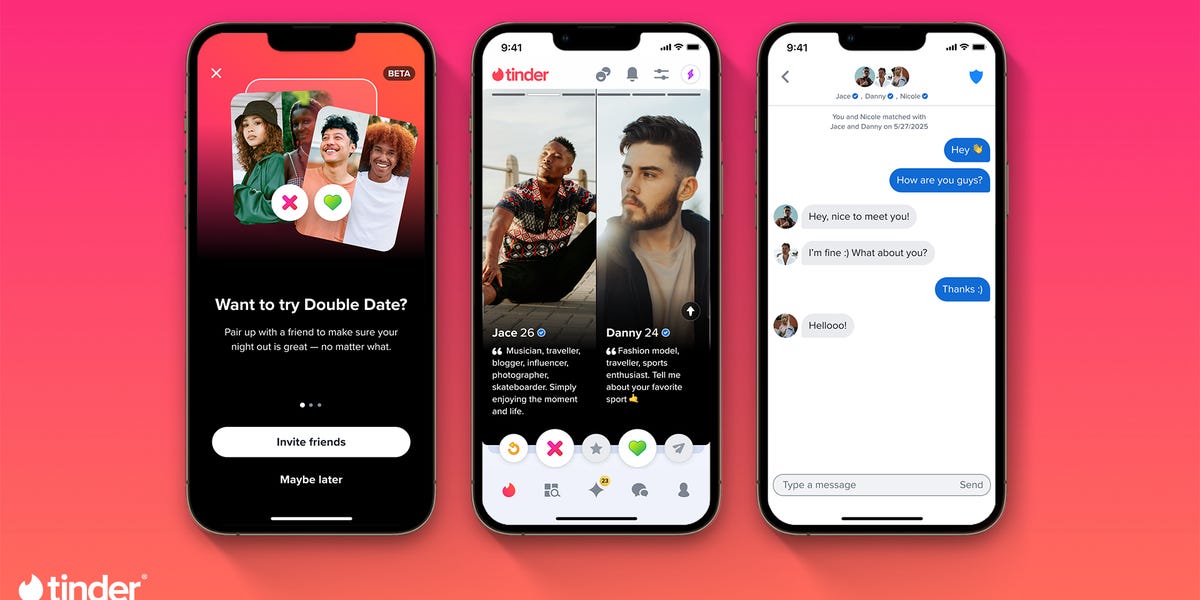
In the dynamic world of energy finance, where geopolitical shifts, supply chain disruptions, and global economic indicators constantly reshape investment strategies, it is crucial for market participants to discern significant catalysts from mere background noise. This week, a notable development in the social technology sphere, specifically within the online dating industry, has surfaced: Tinder’s introduction of a new feature called “Double Date.” For investors tracking the intricate fundamentals of crude oil, natural gas, and the broader energy complex, it is imperative to state unequivocally that this digital innovation carries absolutely no discernible impact on the trajectory of global oil and gas markets.
Deconstructing Tinder’s “Double Date” Feature
Tinder, a subsidiary of Match Group, recently rolled out “Double Date,” a novel functionality designed to facilitate group socializing. This feature allows users to establish a joint profile with a friend, enabling both individuals to collectively “swipe right” on other pairs for a group outing. The strategic intent behind this launch is to cater to the preferences of younger demographics, particularly Generation Z, which currently constitutes over half of Tinder’s worldwide user base. Internal testing conducted earlier this year revealed that approximately 90% of those utilizing the “Double Date” profiles were under 29 years old, underscoring its appeal to this specific age cohort.
Match Group’s new Chief Executive Officer, Spencer Rascoff, has openly acknowledged the critical importance of engaging Gen Z. During the company’s first-quarter earnings call in May, Rascoff highlighted that a primary challenge for dating applications like Tinder is a failure to adequately comprehend and address the evolving desires of younger generations. He emphasized the necessity of crafting lower-pressure avenues for Gen Z users to interact, suggesting that features such as “Double Date” could fundamentally alter user perceptions of the platform. The mechanics involve matching two pairs into a group chat, requiring only a single “like” from each duo to initiate a connection, thereby simplifying the initial interaction and fostering a more casual approach to meeting.
Gen Z’s Social Landscape and Digital Interaction
The push for such features by dating app giants like Tinder and Bumble is rooted in a broader understanding of Gen Z’s unique social dynamics. Studies consistently indicate that this generation, typically defined as individuals born between 1997 and 2012, experiences higher levels of loneliness. A September survey by the Pew Research Center, involving over 6,000 participants, found that nearly a quarter of U.S. adults aged 18 to 29 reported feeling lonely, a stark contrast to the 6% reported among adults aged 65 and older. Psychologist Jean Twenge, author of “Generations,” posits that growing up during the pandemic has contributed to fewer in-person interactions and a slower transition into traditional adult milestones, such as marriage and parenthood.
For Gen Z, the online dating experience has frequently been characterized by frustrating encounters, including the phenomenon of “ghosting” and the relentless, often unfulfilling, cycle of endless swiping. Bumble’s recently reinstated CEO, Whitney Wolfe Herd, articulated similar concerns in May, acknowledging that Gen Z users are feeling “rejected and judged” on existing platforms, leading to a diminished engagement. This widespread sentiment has spurred a trend towards alternative dating formats, including group-focused applications like Fourplay and a resurgence of in-person dating events, as users seek to mitigate app burnout and forge more authentic connections. However, these shifts in social behavior and digital interaction, while significant for the tech sector, remain isolated from the core drivers of energy commodity performance.
Zero Impact on Energy Market Fundamentals
While the intricacies of Gen Z’s social habits and the strategic maneuvers of global tech companies like Match Group provide fascinating insights into consumer psychology and digital trends, their relevance to oil and gas investment decisions is precisely nil. The energy sector operates on a completely different set of fundamental principles: global supply and demand dynamics, geopolitical stability, macroeconomic growth indicators, industrial output, transportation fuel consumption, and the evolving landscape of energy transition policies.
A new feature on a dating app, regardless of its success in attracting or retaining users, will not alter global crude oil inventories, influence OPEC+ production quotas, affect the utilization rates of refineries, or shift the demand for natural gas in power generation. It bears no weight on the profitability of upstream exploration and production companies, the infrastructure needs of midstream pipeline operators, or the margins of downstream petrochemical producers. Investors in energy equities and commodities focus on tangible factors such as drilling activity in key basins, strategic petroleum reserve movements, regional energy consumption statistics, and the impact of extreme weather events on supply and demand balances. The digital interactions of Gen Z, while culturally pertinent, do not register on this critical radar.
Maintaining Focus on True Market Movers
Savvy energy investors understand that market volatility and long-term trends are shaped by forces far more potent than social media innovations. These include, but are not limited to, the health of major economies like China and the United States, which directly correlate with industrial activity and fuel consumption; the efficacy of global climate policies on fossil fuel demand; technological advancements in carbon capture or renewable energy; and the stability of oil-producing regions. Even broad consumer spending trends, when significantly impactful, are filtered through their effect on transportation and industrial output, rather than specific recreational digital services.
In conclusion, while the business decisions of Match Group and the social behavior of Generation Z are intriguing subjects in their respective domains, they fall entirely outside the purview of factors influencing the oil and gas sector. Investors should remain steadfast in their analysis of genuine energy market fundamentals, global economic health, and geopolitical developments. Any notion that a dating app’s new feature could ripple through to crude oil prices or natural gas futures is simply a misdirection from the real drivers that dictate portfolio performance in the energy space.


