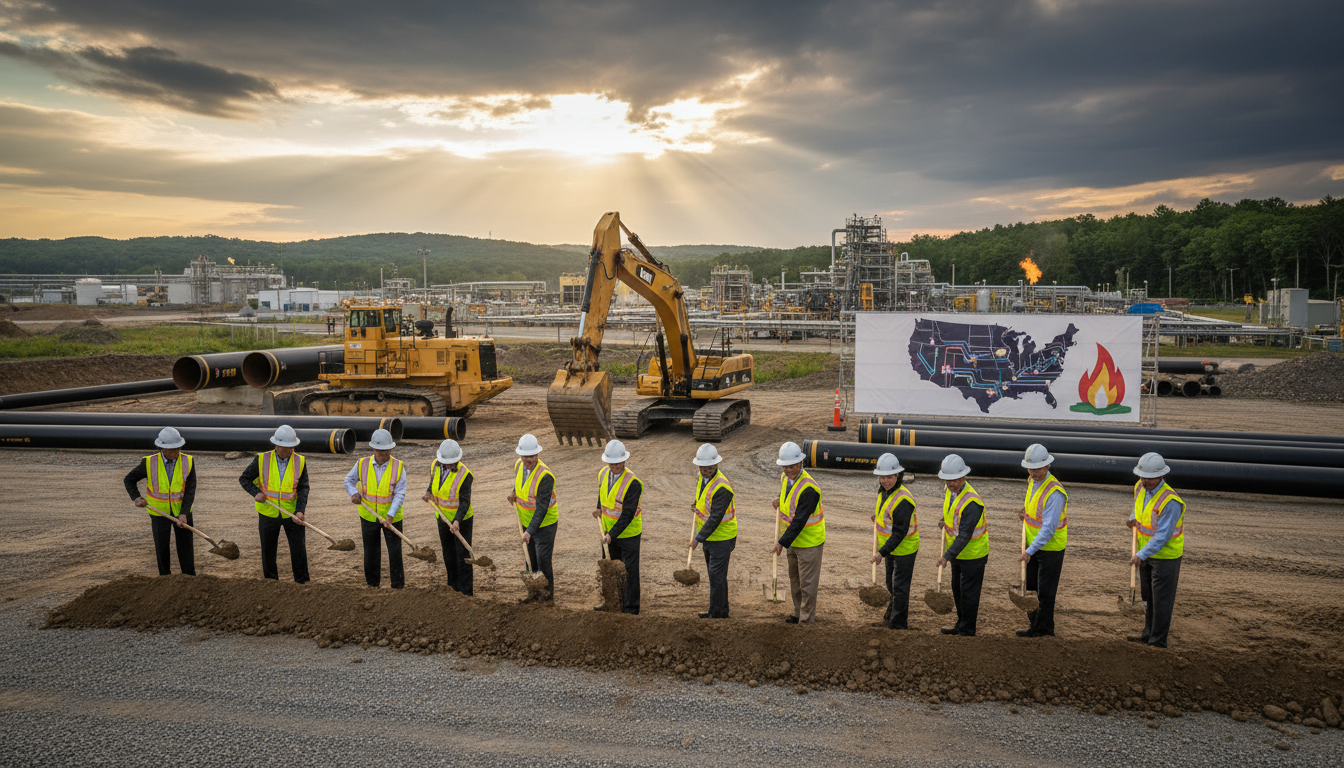
Williams’ NESE Pipeline Breaks Ground, Poised to Deliver Critical Natural Gas Capacity to Northeast Markets
The Northeast Supply Enhancement (NESE) Pipeline, a vital midstream infrastructure project by Williams Companies, officially broke ground today, signaling a significant advancement for natural gas supply and energy security in New York City and Long Island. This pivotal development, which saw participation from U.S. Secretary of Energy Chris Wright, U.S. Environmental Protection Agency Administrator Lee Zeldin, and U.S. Secretary of the Interior Doug Burgum, underscores a concerted effort to address the escalating energy demands of the region while simultaneously driving down consumer costs. Investors should recognize this as a key moment for regional energy market stability and Williams’ long-term asset value.
Boosting Regional Energy Resilience and Supply
The NESE pipeline is set to transport much-needed natural gas from Pennsylvania directly into the densely populated New York metropolitan area. This expansion of Williams’ extensive Transco pipeline system, traversing Pennsylvania, New Jersey, and New York, will introduce an impressive 400,000 dekatherms per day of new capacity. To put this into perspective, this volume is capable of serving the energy needs of approximately 2.3 million homes, providing a reliable and affordable energy source for millions of Americans. Williams anticipates the NESE project will achieve in-service status by the fourth quarter of 2027, a timeline that offers clear visibility for future revenue streams.
The project’s journey to groundbreaking has been marked by a collaborative effort, with President Trump’s National Energy Dominance Council instrumental in securing the necessary state permits from New York and New Jersey last fall. This cross-party cooperation highlights the recognized necessity of bolstering energy infrastructure, an increasingly critical factor for economic stability and growth.
Economic Impact and Consumer Savings: A Win for New York and Investors
The NESE pipeline is not merely an infrastructure development; it represents a substantial economic stimulus and a direct benefit to consumers. Secretary of Energy Chris Wright articulated the project’s importance, stating that historical infrastructure limitations have frequently translated into higher energy costs for millions of Americans. He emphasized NESE’s role in fulfilling President Trump’s promise to lower energy expenses and reignite American construction. Wright characterized the project as a “win-win,” touting natural gas as a dependable, cost-effective, and environmentally cleaner option for New Yorkers to power their residences and businesses. This perspective aligns with broader energy policy goals aimed at ensuring access to affordable, reliable, and secure domestic energy resources.
Echoing this sentiment, EPA Administrator Lee Zeldin lauded the groundbreaking as a monumental achievement for New Yorkers seeking consistent and affordable natural gas. Zeldin highlighted how delivering natural gas from Pennsylvania will reduce costs while satisfying the growing energy requirements across the region, a critical consideration for both residential and commercial sectors. The ability of such projects to stabilize and potentially lower utility bills directly translates into improved economic conditions for businesses and families alike.
Secretary of the Interior Doug Burgum further underscored the macro-economic significance. He contrasted past administrations’ regulatory hurdles with the current focus on unleashing American energy dominance. Burgum projected that the NESE pipeline alone is expected to slash electricity bills by an estimated $6 billion over the next 15 years, a colossal saving for consumers. Furthermore, the project is anticipated to stimulate up to $1.8 billion in broader economic development, creating jobs and fostering local prosperity. These figures present compelling data for investors evaluating the long-term societal and financial returns of large-scale energy infrastructure.
Williams’ Commitment and Future Horizons
Williams Companies’ CEO Chad Zamarin reinforced the collaborative spirit driving the project’s success. He emphasized that NESE represents a direct $1 billion investment in the American workforce, showcasing the significant job creation and economic activity generated by such ventures. This direct capital injection into the economy not only strengthens local communities but also underscores Williams’ strategic commitment to expanding its crucial midstream asset base.
Looking beyond NESE, the spotlight is already shifting to other critical infrastructure projects, notably the Constitution Pipeline. This proposed project aims to provide New England residents with access to similar abundant natural gas resources, particularly vital during the harsh winter months. Current regulatory obstacles, cited by officials as political opposition, have hindered this development, thereby restricting access to jobs, resources, and lower energy costs for many Americans. The progress of NESE could potentially set a precedent and build momentum for accelerating approvals for other essential pipelines like Constitution, further de-risking future energy infrastructure investments in the region.
Investment Outlook
For investors focused on the oil and gas sector, particularly midstream assets, the NESE pipeline groundbreaking is a clear indicator of sustained growth opportunities and a favorable regulatory environment for critical infrastructure. Williams Companies is positioning itself to capitalize on robust natural gas demand in the Northeast, enhancing its Transco system, a cornerstone asset. The project’s substantial capacity, significant economic benefits, and the strong governmental backing signal a positive trajectory for long-term value creation. As the project moves towards its 2027 in-service date, its contribution to regional energy security, consumer savings, and Williams’ revenue profile will be closely monitored by the market. This represents a tangible investment in the future of American energy supply and economic stability.
Source


