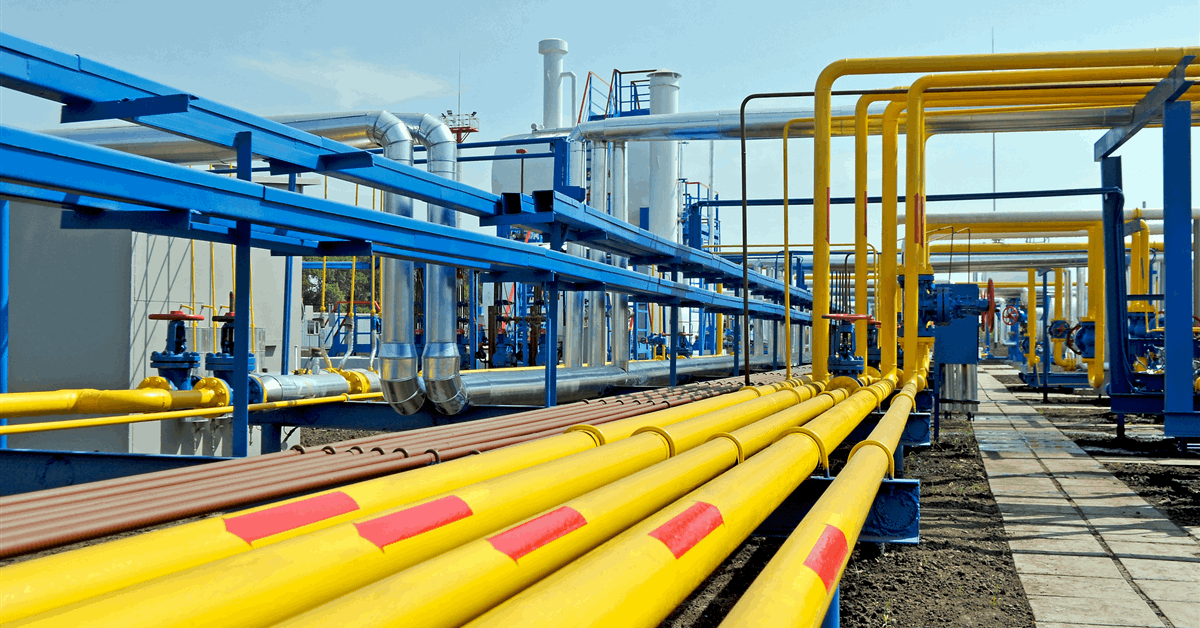
Naftogaz Group’s recent securing of significant financing — EUR 300 million from the European Investment Bank (EIB) and UAH 3 billion from Ukraine’s state-owned Oschadbank — marks a pivotal moment for the nation’s energy security and resilience. These liquidity injections, aimed at bolstering natural gas reserves ahead of the critical winter season, underscore the ongoing strategic importance of a stable energy supply amidst geopolitical complexities. For investors watching the European energy landscape, these developments are more than just financial transactions; they represent a concerted international effort to de-risk a vital energy consumer and signal a commitment to both immediate stability and long-term decarbonization goals. This analysis delves into the immediate and forward-looking implications of these financing packages, examining their role in Ukraine’s energy strategy and the broader impacts on the global oil and gas investment environment.
Bolstering Winter Resilience Amidst Market Volatility
The EUR 300 million EIB loan, a component of the broader Ukraine Energy Rescue Plan which allocates up to EUR 600 million for urgent and medium-term energy financing, directly addresses the immediate need for natural gas procurement. Complementing this, the UAH 3 billion loan from Oschadbank further enhances Naftogaz’s purchasing power. These funds are critical for ensuring hundreds of thousands of households and businesses have stable heat and power, particularly in a region facing persistent challenges.
This strategic gas procurement is set against a backdrop of fluctuating global energy prices. As of today, Brent Crude trades at $90.38, reflecting a significant -9.07% daily drop, within a day range of $86.08-$98.97. WTI Crude follows a similar trajectory at $82.59, down -9.41%, with a day range of $78.97-$90.34. Notably, the 14-day trend for Brent has seen a substantial decline of $-22.4, or -19.9%, from $112.78 on 2026-03-30. While lower crude prices can sometimes translate to reduced natural gas import costs, the volatility itself presents a challenge for long-term planning and budgeting. For Naftogaz, securing these loans during a period of downward price pressure could prove advantageous for purchasing gas, potentially stretching the value of the financing further. However, the underlying volatility also highlights the imperative for robust financial backing to navigate an unpredictable global energy market, ensuring that Ukraine can secure vital supplies regardless of short-term price swings.
Strategic Investment in Decarbonization and EU Integration
Beyond immediate crisis response, the EIB financing embodies a significant long-term strategic vision. EIB Vice President Teresa Czerwinska articulated this dual objective, emphasizing support for Ukraine’s “shift to cleaner, more sustainable energy — a cornerstone of the country’s recovery and EU integration.” Under the agreement, Naftogaz is mandated to reinvest an equivalent amount of the EIB loan into renewable energy projects and other decarbonization initiatives. This commitment is further bolstered by an earlier EIB pledge of EUR 400,000 in June 2024 for technical support, specifically to aid Naftogaz in developing its decarbonization strategy.
This focus on green transition aligns seamlessly with the European Union’s broader Ukraine Facility, a substantial platform designed to mobilize up to EUR 50 billion from 2024 to 2027, comprising EUR 33 billion in loans and EUR 17 billion in grants. The Ukraine Investment Framework (UIF), which guarantees the EIB loan, aims to mobilize an additional EUR 40 billion in investments for recovery, reconstruction, and modernization. For investors, this signals a robust, internationally supported pathway for Ukraine’s energy sector transformation. Companies active in renewable energy, energy efficiency, and sustainable infrastructure within Europe may find growing opportunities as Ukraine progressively integrates its energy policies with EU standards and leverages these significant funding mechanisms for a greener future. This long-term commitment mitigates some of the immediate risks associated with the region, offering a clearer trajectory for future investment returns.
The Expanding Web of International Financial Support
Naftogaz’s recent loans are not isolated incidents but rather integral parts of a broader, multi-faceted international financial support framework. The European Bank for Reconstruction and Development (EBRD) has also been a crucial partner, committing a two-year revolving loan of EUR 500 million, 90 percent of which is guaranteed by the European Commission through the UIF. This particular facility further enhances Naftogaz’s capacity for gas procurement and liquidity management. Since 2022, the EBRD has provided four distinct funding packages to Naftogaz, underscoring the sustained commitment from international financial institutions.
This extensive network of guarantees and loans is highly pertinent for investors, addressing a common question our readers ask: “How do these international guarantees impact the perceived risk of investing in companies operating in geopolitically sensitive regions?” The European Commission’s guarantee through the UIF significantly de-risks these loans, making it more feasible for institutions like EIB and EBRD to provide substantial capital. For private investors, this robust international backing acts as a confidence booster, signaling that the stability and operational continuity of key entities like Naftogaz are considered strategic priorities by major global financial players. This framework helps to stabilize the energy market within the region, indirectly influencing broader European energy prices and offering a degree of predictability that informs investor forecasts, including long-term oil price predictions that some investors are asking about for 2026.
Navigating Future Energy Demands and Market Signals
The timely securing of these financing packages positions Naftogaz favorably as it prepares for the upcoming winter season, a period of peak energy demand. However, the effectiveness of these loans and the broader stability of Ukraine’s energy supply will continue to be influenced by global market dynamics and geopolitical developments. Investors must keep a close eye on a series of upcoming energy events that could shape the landscape.
The **OPEC+ JMMC Meeting on April 19** and the subsequent **OPEC+ Ministerial Meeting on April 20** are critical dates. Any decisions regarding production quotas from these meetings could significantly impact crude oil prices, which often correlate with natural gas benchmarks, directly affecting Naftogaz’s procurement costs. Further insights into supply and demand balances will come from the **API Weekly Crude Inventory on April 21 and April 28**, followed by the **EIA Weekly Petroleum Status Reports on April 22 and April 29**. These reports provide granular data on U.S. petroleum inventories, refinery activity, and demand, offering vital signals for global energy price trajectories. Additionally, the **Baker Hughes Rig Count on April 24 and May 1** will offer an indication of future drilling activity and potential supply shifts. For investors asking about future oil price predictions for the end of 2026, these immediate market signals, combined with the strategic stability provided by Naftogaz’s financing, paint a complex but increasingly structured picture of the European energy market. While local challenges persist, the international financial community’s deep engagement aims to buffer against volatility and support a transition to a more resilient, sustainable energy future.


