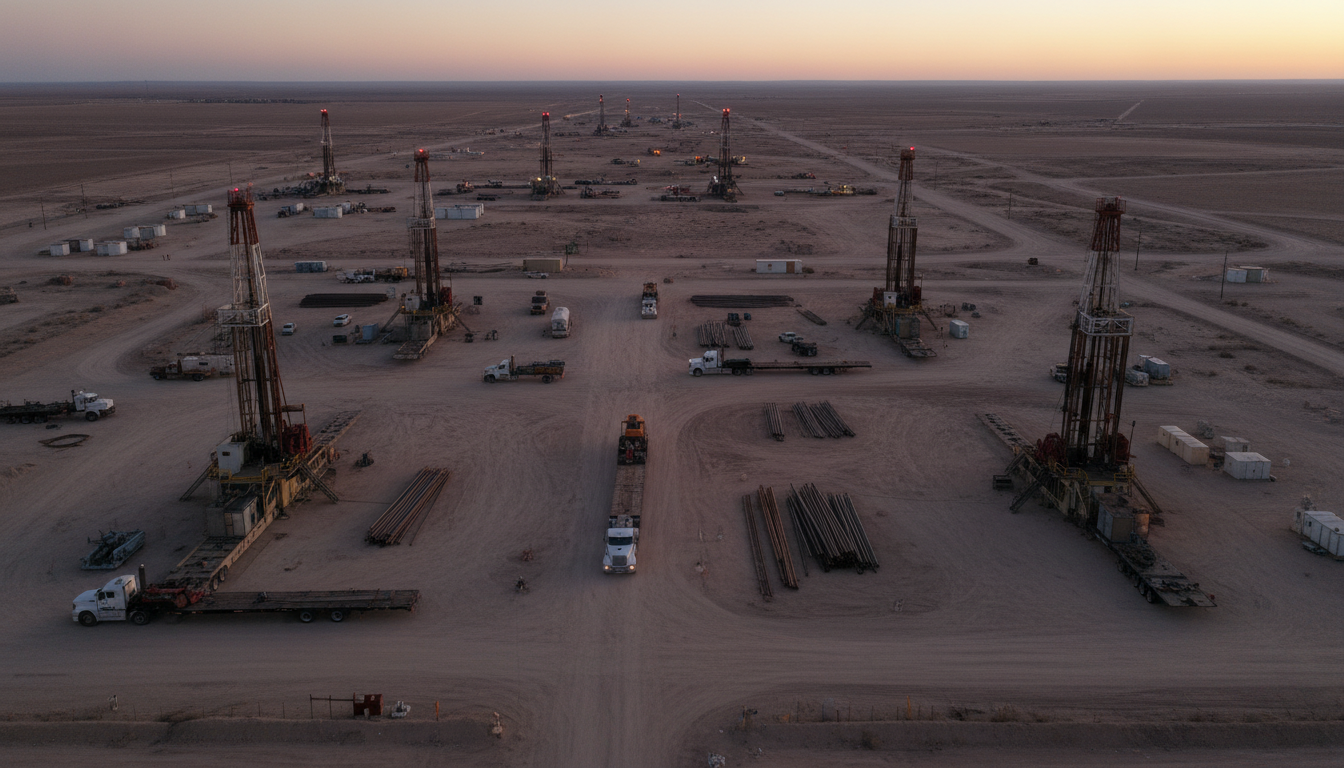
North American Drilling Activity Sees Modest Contraction Amidst Canadian Downturn
The latest drilling data reveals a slight overall reduction in North American upstream activity, with a notable decline in Canada overshadowing a modest uptick in U.S. operations. According to the most recent weekly rotary rig count, published on May 1, the continent registered a net loss of four rigs, settling at a combined total of 670 active units. This figure comprises 547 rigs operating across the United States and 123 in Canada, underscoring divergent trends in the region’s energy landscapes.
U.S. Rig Count: Targeted Growth and Shifting Dynamics
Despite the broader North American dip, the U.S. managed to add three rigs week-over-week, showcasing targeted increases in specific segments. Of the 547 American rigs, land-based operations remain dominant at 525 units, though this category saw a decrease of six rigs during the reporting period. Counterbalancing this, offshore drilling experienced a significant boost, adding eight rigs to reach a total of 19. Inland water operations also saw a marginal increase of one rig, bringing its total to three.
A deeper dive into U.S. rig types illustrates a nuanced shift. Oil-directed drilling units increased by one, stabilizing at 408 rigs, while gas-focused operations also edged up by one, reaching 130 rigs. Miscellaneous rigs added one, totaling nine. From a drilling trajectory perspective, horizontal rigs, often associated with shale plays, saw a four-rig reduction, now standing at 480. Conversely, directional drilling gained five units, totaling 50, and vertical drilling maintained its count at 12 rigs. These shifts suggest operators are adjusting strategies, possibly optimizing for specific reservoir characteristics or commodity price signals.
Regionally, key state variances highlight concentrated activity. Texas, a perennial leader, expanded its rig fleet by four units, while Louisiana added two, and Alaska saw an increase of one. Conversely, New Mexico reduced its count by three rigs, and Wyoming cut one. Within the major basins, the Haynesville shale added two rigs, and the Eagle Ford basin gained one, signaling renewed interest in these gas and liquids-rich plays. The Permian Basin, a cornerstone of U.S. crude production, registered a slight decrease of one rig, a point of interest for investors tracking capital deployment in the nation’s most prolific shale region.
Canadian Operations Contract Sharply
Canada experienced a more substantial contraction, losing seven rigs week-over-week. The nation’s total of 123 active rigs includes 74 oil-focused units and 49 gas-focused units. Both segments faced reductions, with oil rigs dropping by four and gas rigs declining by three. This more pronounced downturn in Canadian activity could reflect seasonal slowdowns or a cautious approach by operators in response to commodity price volatility or export capacity constraints.
Year-Over-Year Trends: A Decelerating Pace of Investment
Comparing current activity to levels from a year ago reveals a broader trend of decelerating investment across North America. The continent now operates 34 fewer rigs than it did at this time last year. The U.S. accounts for the majority of this decline, having reduced its active fleet by 37 rigs year-on-year. This U.S. contraction is largely attributable to a significant cut of 64 oil rigs, partially offset by an addition of 22 gas rigs and five miscellaneous rigs, reflecting an ongoing rebalancing of capital allocation between crude oil and natural gas production. In contrast, Canada has seen a marginal increase of three rigs over the past year, indicating a more stable, albeit modest, investment environment.
Weekly Rig Count Volatility and Historical Context
Reviewing recent weekly data underscores the fluctuating nature of drilling decisions. The current week’s dip follows a period where North America saw a one-rig increase in the report published on April 24, with the U.S. adding one rig and Canada remaining flat. Prior to that, the market witnessed a series of declines throughout March and early April, with weekly reductions ranging from six to a substantial 33 rigs, culminating in a cumulative loss of over 90 rigs across several weeks before a minor rebound in late February. This volatility highlights the sensitivity of drilling programs to short-term market signals and operational adjustments.
Long-Term Rig Count Trajectories: A Look Back
Examining monthly average rig counts provides crucial long-term perspective for investors. North American activity has trended downwards through the early part of 2026, with May registering 670 rigs, down from 679 in April and significantly below March’s 733. This follows a generally declining trend through late 2025 and early 2026, where monthly averages ranged from 718 in December 2025 to a peak of 773 in February 2026. A year earlier, in 2025, the continent saw higher activity, with figures like 836 in February and 791 in January, before gradually declining to 690 by May 2025.
Looking further back, 2024 sustained a relatively strong drilling pace, with monthly averages consistently above 700 rigs, reaching highs of 855 in February and 822 in March, demonstrating a more robust capital expenditure cycle compared to the current environment. The year 2023 stood out for its elevated activity, with monthly averages often exceeding 800 rigs, peaking at 1,006 in February and 998 in January, showcasing a period of aggressive post-pandemic expansion. This contrasts sharply with the depths of 2020, where the rig count plummeted, reaching a nadir of 288 in July before a gradual recovery towards 432 by December, reflecting the severe impact of global lockdowns and demand destruction on upstream investment.
Investment Implications: Gauging Industry Health
The rig count remains a critical barometer for the health and future production outlook of the petroleum industry. While the U.S. shows resilience and targeted growth in specific areas, the overall North American trend signals a more cautious approach to capital deployment. Investors should closely monitor these regional differences and the evolving mix of oil versus gas drilling, as they offer direct insights into future supply dynamics, commodity price sensitivities, and the strategic positioning of exploration and production companies. The long-term historical data reinforces the cyclical nature of the industry, emphasizing the importance of understanding these trends for informed investment decisions in the volatile energy market.


