

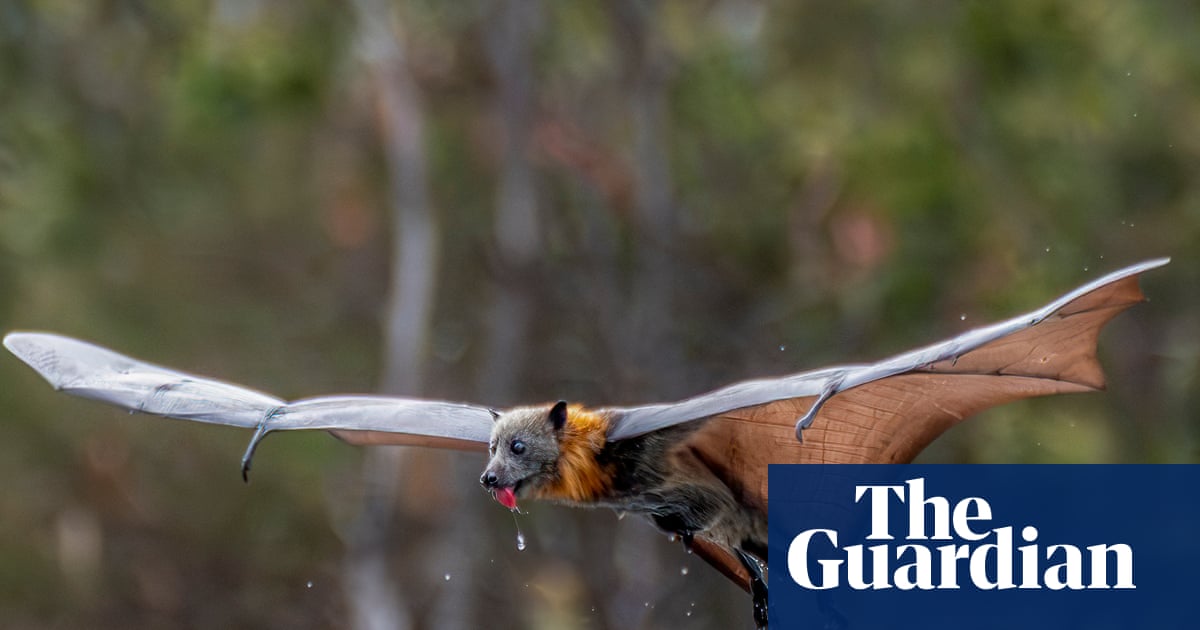
A colony of about 1,000 flying foxes in a South Australian town has been shattered by the intense heat that gripped south-eastern Australia last week, with more than 80% of the camp at Naracoorte wiped out.
“It’s a devastating loss of numbers,” said Judith Bemmer, a carer at Bat Rescue SA. Among the surviving 180 animals, about 34 underweight and dehydrated babies were rescued, and would face months of recovery.
The flying fox deaths came off the back of an earlier heatwave in January, which saw thousands perish in the largest mass mortality event for the animals since the 2019-20 black summer.
Reports from the second, more significant heatwave last week, were mixed – deaths were worse in some places, and fewer in others.
About 100 bats died at Brimbank Park in Melbourne’s north-west last week, after thousands perished earlier in January.
“Unfortunately this is likely due to most of the vulnerable and young passing away in the previous heat events,” said Tamsyn Hogarth, the director of the Fly by Night bat clinic in Melbourne.
Wildlife Victoria, which sent teams to nationally significant camps in northern Victoria, estimated more than 700 grey-headed flying foxes died at Tatura, from a camp of 5,000.
Temperatures above 42C are known to cause mortality in flying foxes. Thousands have died nationally since the start of January this year. In Victoria, a government wildlife update estimated 1,700 had died at a handful of monitored camps – nearly 5% of the state’s population.
Grey-headed flying foxes, listed as vulnerable under federal environment laws, continued to be most affected. A federal environment department spokesperson said heat stress was identified as a key threat in the species’ recovery plan, and the status of flying fox populations was being considered in the current review of the National Flying Fox Monitoring Program.
Strenuous efforts by volunteers, governments and parks authorities helped reduce the toll in some places.
Rodney Vile, the principal officer for wildlife emergencies in Victoria’s environment department, said: “Our focus is on reducing the risk of population collapse and supporting animal welfare wherever possible.”
Wildlife Victoria deployed volunteer and veterinary teams to Numurkah and Tatura, about 220km north of Melbourne, for seven days during the extreme heat, with Shepparton Council supplying a 1000-litre water trailer tank to assist.
“We have worked together to mist the canopies and bring down the ambient temperature,” said Wildlife Victoria CEO, Lisa Palma. “This work is incredibly hard. It’s physically demanding, it’s long days in extreme heat, and it can be emotionally challenging to witness animals suffering.”
In Adelaide’s Botanic park, a coordinated effort by park staff, wildlife vets and volunteers helped limit deaths to a few hundred, even as temperatures in the city climbed to 44.7C. Sprinklers were operating in trees and on the ground, with volunteers misting bats in distress to help them cool down. The park was closed to the public, preventing animals from lifting off into the air when frightened, thereby saving vital energy.
Bemmer said there had been no reports from the small camps near Port Pirie and Port Augusta, where flying foxes likely struggled as temperatures reached the high 40s, with Port Augusta reaching 50C on 30 January.
Caring for rescued animals came at a cost to carers, with bats needing up to about 350g of fruit per bat per day. It could take months for babies to be released to the wild. Bat Rescue SA would be cutting about 35kg of apples, pears, rockmelon and grapes a day, to feed bats in their care. “That’s a lot of fruit and a lot of money,” Bemmer said.
“That’s ongoing past the heat event,” she said. “Once the heat’s gone, the focus is off. That’s actually when the biggest struggle starts for us – the financial struggle.”
