While the immediate focus for many oil and gas investors remains firmly on traditional energy markets, the broader commodity landscape is flashing critical signals that hint at the next, potentially most explosive, phase of the ongoing supercycle. Specifically, the recent re-evaluation of industrial metals like Silver and Copper by policymakers and institutional capital suggests a fundamental shift in their investment profile, moving them from mere industrial inputs to strategic national assets. This reclassification, coupled with undeniable demand acceleration and persistent supply constraints, creates a compelling risk-reward profile for astute investors seeking to capitalize on a macro trend that transcends short-term market fluctuations.
The Strategic Revaluation of Critical Minerals
The investment thesis for Silver and Copper has been fundamentally reshaped by recent geopolitical and economic developments. The U.S. Department of the Interior’s decision to add both metals to its list of critical minerals is not merely an administrative update; it’s a powerful signal. This designation typically paves the way for federal incentives, preferential tariffs, and national security prioritization, effectively underwriting future demand and de-risking supply chains. For investors, this translates into a significant reduction in downside risk and a substantial increase in potential upside, marking these metals as strategically important for national interests. Silver demonstrated an immediate reaction to this reclassification, breaking out to fresh all-time highs. Copper, given its unparalleled centrality to global electrification, artificial intelligence infrastructure, and grid expansion, is widely anticipated by analysts to experience an even more profound institutional re-rating, solidifying its role as a bedrock commodity for the 21st century economy.
Demand Surges as Supply Constricts: An Unstoppable Force
The demand trajectory for both Copper and Silver is nothing short of extraordinary, driven by converging megatrends that are accelerating simultaneously. Copper currently faces an annual demand of approximately 25 million tonnes, yet achieving global net-zero emissions targets necessitates a doubling of this output. The primary catalysts are clear: the accelerating pace of electrification and electric vehicle (EV) adoption, where each EV requires up to 90 kg of copper – a twelve-fold increase compared to traditional internal combustion engine vehicles. Furthermore, the burgeoning energy hunger of AI data centers is poised to dramatically escalate power consumption, potentially surpassing 2,200 TWh by 2035. Estimates indicate that copper demand for essential grid upgrades alone could surge to 1.1 million tonnes per year by 2030, underscoring the metal’s indispensable role in the digital and green transitions.
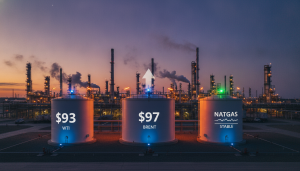
Silver’s narrative mirrors this intensity, if not surpasses it in dramatic flair. Global demand for silver has risen from 993 million ounces in 2016 to an estimated 1.16 billion ounces in 2024, while global supply has paradoxically declined. This imbalance has flipped the market from a historical surplus into a deep and entrenched structural deficit, signaling a profound shift in market fundamentals. Contrast this with the recent volatility in traditional energy markets: as of today, Brent crude trades at $91.87, representing a 7.57% decline from its daily high, with WTI crude at $84, down 7.86%. Over the past fortnight, Brent has seen a notable retreat, falling from $112.57 on March 27th to $98.57 on April 16th, a decline of over 12%. This divergence highlights the unique structural tailwinds propelling strategic metals, where chronic supply shortages due to falling mine grades, scarce new discoveries, and escalating geopolitical disruptions appear inevitable, irrespective of short-term macroeconomic headwinds.
Investor Sentiment and the Broadening Commodity Supercycle
Many of our readers are keenly asking about the future trajectory of energy prices, with questions like “what do you predict the price of oil per barrel will be by end of 2026?” and “What are OPEC+ current production quotas?” These queries underscore a broader interest in the durability of the current commodity upswing, extending beyond just crude oil. The performance of strategic metals like Silver and Copper provides crucial insights into the underlying forces driving this supercycle. Silver is now on track to record its first 12-month candlestick with a 100%+ gain since 1979 – an event that simply does not occur in “normal markets.” This extraordinary performance, alongside the fact that silver still trades nearly 80% below its CPI-adjusted 1980 peak, even with CPI itself arguably understating real inflation, suggests a profound “monetary reset” is underway. This isn’t just another cyclical upturn; it’s a fundamental re-pricing driven by financial repression, currency debasement, and accelerating demand for strategic materials essential to the global future.
Looking ahead, the next 14 days will offer critical data points for the traditional energy sector, with the OPEC+ JMMC and Full Ministerial meetings scheduled for April 17th and 18th. These will be followed by the API Weekly Crude Inventory report on April 21st and the EIA Weekly Petroleum Status Report on April 22nd, all providing near-term insights into oil supply and demand balances. However, for investors seeking to position themselves for longer-term, structural gains, the fundamental drivers behind strategic metals present a more robust and less susceptible narrative to immediate geopolitical or inventory fluctuations. The relentless demand from electrification and AI, coupled with a shrinking supply pipeline, creates an investment landscape distinct from the more volatile, geopolitically sensitive oil market.
The Narrowing Window of Opportunity for Asymmetric Returns
For value-oriented investors, the current environment for Silver and Copper presents a rare moment of asymmetric opportunity. Institutional investors are not waiting; they are quietly accumulating positions, anticipating what many expect to be the most explosive phase of the commodities supercycle. Once these metals transition into true price-discovery mode, characterized by broader market recognition and momentum, liquidity will inevitably compress, positioning will become crowded, and today’s compelling discount valuations will dissipate rapidly. If traditional energy investors felt they missed the significant rally in gold, Silver and Copper represent a potential second chance, and indeed, the structural tailwinds suggest the upside could be even more substantial. In an era defined by persistent inflationary pressures, the debasement of fiat currencies, and a surging global demand for strategic materials, these metals stand at the threshold of historic, multi-year advances, offering a compelling diversification and growth avenue within a broader energy and commodities investment strategy.