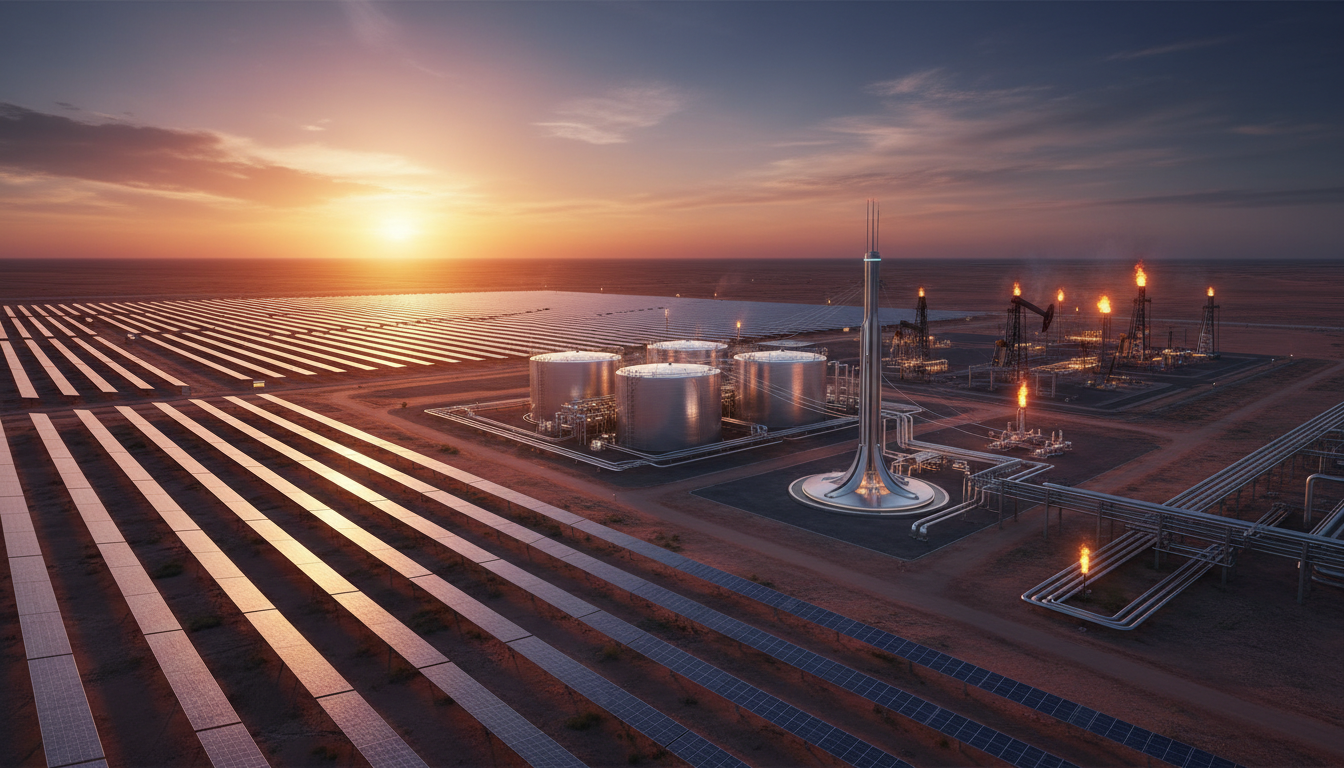
Abu Dhabi is strategically repositioning its energy landscape, signaling a clear mandate for massive investments in renewable power and advanced storage solutions. This pivot, critical for the emirate’s long-term economic strategy and industrial growth, has been cemented by a landmark agreement between the Emirates Water and Electricity Company (EWEC) and Masdar, the UAE’s clean energy powerhouse.
The newly signed Collaboration Framework Agreement outlines an aggressive roadmap to accelerate the deployment of utility-scale renewable energy projects across the UAE. For global investors eyeing the burgeoning clean energy sector, this pact unlocks a significant pipeline: EWEC anticipates over 30 gigawatts (GW) of solar photovoltaic (PV) capacity and more than 8 GW of battery energy storage under its planning by 2035. This monumental ambition underpins Abu Dhabi’s target to source 60% of its total energy demand from renewable and clean sources within the next decade and directly supports the UAE’s overarching Net Zero by 2050 Strategic Initiative.
This framework is not merely about capacity addition; it represents a comprehensive strategy to enhance energy security, drive down production costs, and foster local industrial capabilities. By streamlining engagement and project development from early stages through to financial close, the agreement aims to expedite project delivery while safeguarding EWEC’s commitment to transparent and independent competitive procurement processes.
Abu Dhabi’s Renewable Energy Blueprint: A Multi-Gigawatt Opportunity
The sheer scale of Abu Dhabi’s clean energy aspirations, now formalized through this framework, presents a compelling investment proposition. The projected 30 GW of solar PV and 8 GW of battery storage capacity by 2035 will require substantial capital and expertise, offering fertile ground for developers, technology providers, and financial institutions. EWEC’s role as the primary off-taker and Masdar’s track record as a leading developer create a stable and attractive environment for large-scale energy infrastructure investment.
Investors should note that this structured approach minimizes project execution risk by establishing clear guidelines and accelerating development timelines. The commitment to competitive procurement ensures fair market access and optimal pricing, which is crucial for long-term project viability and returns. This systematic expansion of renewable capacity, coupled with robust energy storage, positions the UAE grid for enhanced reliability and efficiency, critical factors for industrial end-users seeking stable, cost-effective power supply.
Building on Proven Success: Masdar’s Role in Scaling Clean Power
The collaboration between EWEC and Masdar is not new; it builds upon a history of successful ventures that have already put the UAE on the global map for large-scale solar deployment. Key projects like Al Dhafra Solar PV, Al Ajban Solar PV, Khazna Solar PV, and a pioneering gigascale round-the-clock solar and battery storage initiative stand as testament to their effective partnership. This new framework solidifies that synergy, promising improved delivery efficiency for an even larger portfolio of future renewable energy endeavors.
Beyond raw capacity, the agreement carries significant strategic depth, emphasizing “In-Country Value,” fostering Emirati talent development, and cultivating domestic clean energy expertise. This integrated approach aligns with broader national industrial policy, ensuring that the economic benefits of the energy transition circulate within the local economy. For foreign investors and partners, integrating local content and talent development into their proposals will be a key differentiator, reflecting Abu Dhabi’s holistic vision for its energy future. This focus on local value creation not only diversifies the UAE’s energy mix but also strengthens national energy security and provides a sustainable power source for industrial expansion.
Strategic Imperatives: Cost, Security, and Industrial Competitiveness
Ahmed Ali Alshamsi, CEO of EWEC, underscored the transformative nature of this initiative, highlighting EWEC’s position at the forefront of the UAE’s energy transition. He articulated that this framework is a pivotal strategic tool, empowering the company to meet Abu Dhabi’s ambitious target of deriving 60% of its energy demand from clean sources by 2035. The planned expansion to over 30 GW of solar PV and more than 8 GW of battery storage represents a fundamental reshaping of the energy sector, engineered to guarantee the long-term security of supply.
Alshamsi’s remarks also emphasized continuous optimization of processes and procedures to reduce costs and enhance operational efficiency. This relentless pursuit of cost leadership is vital for attracting and retaining industrial users, making clean power a competitive advantage for Abu Dhabi’s growing economy. Furthermore, the integration of battery storage is a game-changer for grid stability, transforming intermittent solar power into reliable, dispatchable electricity—a necessity for energy-intensive industries. The commitment to the UAE Net Zero by 2050 Strategic Initiative reinforces the long-term, decarbonization-driven investment certainty for the region.
Unlocking Value for Investors: A Predictable Pipeline
Mohamed Jameel Al Ramahi, CEO of Masdar, echoed the sentiment of enhanced collaboration, emphasizing the partnership’s role in advancing the UAE’s energy transformation. He pointed to the acceleration of “world-leading solutions,” including the innovative gigascale Round-the-Clock solar project, as evidence of their collective capability. Al Ramahi highlighted the framework’s contribution to diversifying the UAE’s energy mix, bolstering national energy security, and delivering reliable, affordable clean power to local industries.
For clean energy investors, this agreement translates into a more structured, transparent, and predictable project pipeline in one of the most dynamic renewable markets globally. It aligns seamlessly with the Abu Dhabi Department of Energy’s Clean Energy Strategic Target 2035 for Electricity Production and the broader UAE Net Zero by 2050 objectives. Moreover, EWEC’s complementary roadmap to achieve nearly emissions-free water production by 2030 underscores an integrated approach to decarbonization, recognizing the intrinsic link between power and water in the UAE.
The strategic value of this framework is undeniable. Abu Dhabi is leveraging clean power procurement not just as an environmental mandate but as a core pillar for industrial competitiveness, future energy cost management, and reduced carbon exposure. This robust move by a major Gulf energy player signals a decisive shift from pilot renewable energy projects to comprehensive, system-scale deployment, offering significant opportunities for global oil and gas investors looking to diversify into the accelerating energy transition within the MENA region.


