

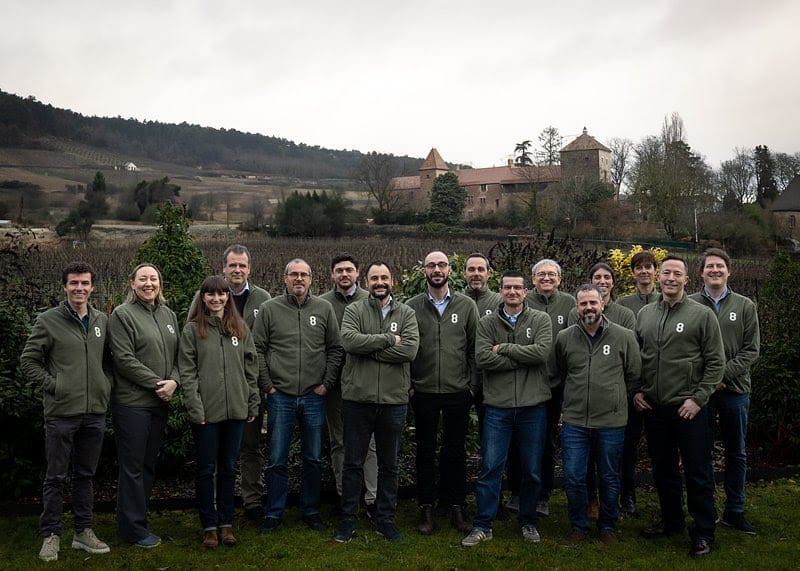
Mantle8 receives €2.06 million ($2.2 million) from the EU’s Just Transition Fund to advance natural hydrogen exploration technologies through 2028.
The grant supports a €4.84 million ($5.2 million) R&D program aimed at raising the Technology Readiness Level of four proprietary systems used to detect and model subsurface hydrogen.
The project strengthens Grenoble’s role as a European geoscience hub while advancing technologies that could accelerate development of natural hydrogen as a zero-carbon energy resource.
Mantle8, a European natural hydrogen exploration company, has secured €2.06 million ($2.2 million) from the European Union’s Just Transition Fund to accelerate development of its natural hydrogen technology platform.
The grant forms part of the FEDER/FSE+/JTF 2021–2027 program administered by the Région Auvergne-Rhône-Alpes and contributes to a broader €4.84 million ($5.2 million) research and innovation initiative. The program aims to increase the Technology Readiness Level of Mantle8’s core systems used to locate, analyze and model natural hydrogen reservoirs underground.
The funding agreement runs through 2028 and will support technology development activities anchored in Grenoble and the wider Auvergne-Rhône-Alpes region.
Natural hydrogen, sometimes called geologic hydrogen, has emerged as a potential low-cost, low-carbon energy source that could complement renewable power and reduce reliance on fossil fuels and industrial hydrogen derived from natural gas.
Scaling Exploration Technologies
The EU funding focuses primarily on strengthening the industrial capabilities behind Mantle8’s exploration platform rather than financing field drilling campaigns.
Key developments include expansion of the HOREX pilot project in Comminges, which the company says has already demonstrated strong imaging resolution and large scale applicability for subsurface hydrogen detection.
Mantle8 will also construct the APoGeH geochemistry laboratory at its Grenoble headquarters, allowing the company to conduct hydrogen system analyses internally rather than relying on external laboratories.
Additional investment will upgrade the GeoLogix platform through automation improvements designed to accelerate subsurface imaging while delivering higher-resolution geological data.
The research program also supports continued development of Simul8, Mantle8’s multiphysics digital twin and modeling engine used to simulate hydrogen formation, migration and storage processes underground.
Alongside technology upgrades, the funding will allow the company to recruit specialized scientific staff, including PhD researchers working in partnership with universities and Mantle8’s scientific advisory board. The initiative also includes techno economic studies with strategic partners aimed at preparing future industrial deployment pathways.
“These investments allow us to industrialise our technology stack and move toward scalable exploration,” the company said in outlining the program’s objectives.
Building Europe’s Natural Hydrogen Ecosystem
The grant comes as interest grows across Europe and North America in natural hydrogen resources, which occur when geological processes generate hydrogen gas in the Earth’s crust.
Unlike conventional hydrogen production methods that rely on fossil fuels or energy intensive electrolysis, natural hydrogen can potentially be extracted directly from underground reservoirs, offering a lower-emissions pathway for hydrogen supply.
Several exploration startups and research institutions are now investigating geological basins where natural hydrogen may accumulate at commercial scale.
Mantle8’s technology platform aims to address one of the sector’s main challenges: locating viable hydrogen deposits with sufficient accuracy to make exploration economically viable.
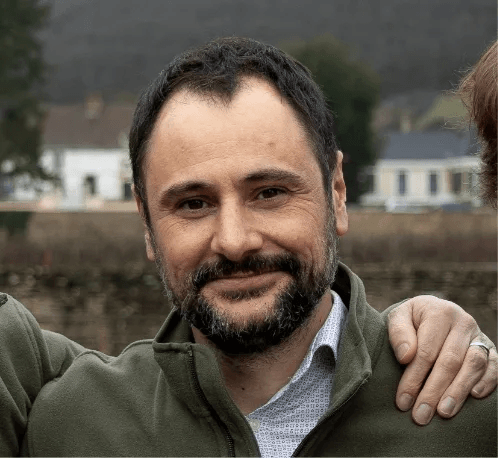
CEO and Founder Emmanuel Masini said the EU funding will help accelerate the company’s transition from research toward industrial deployment.
“This funding allows us to strengthen the core technologies that underpin our entire platform,” said Emmanuel Masini, CEO and Founder of Mantle8. “It gives us the means to scale our tools, improve their robustness and move closer to industrial deployment.”
Just Transition Fund Supports Industrial Innovation
The Just Transition Fund is a central component of the European Union’s strategy to help regions historically dependent on carbon intensive industries transition toward a low-carbon economy.
Beyond emissions reduction, the program focuses on economic diversification, workforce development and new industrial sectors capable of supporting long-term regional growth.
Mantle8’s project builds on Grenoble’s longstanding reputation as a European center for geoscience research, linking academic expertise with emerging clean-energy technologies.
By channeling EU funding into hydrogen exploration tools rather than direct production infrastructure, policymakers are effectively investing in the upstream capabilities needed to unlock new energy resources.
For executives and investors tracking the hydrogen economy, the development highlights a broader shift in Europe’s climate strategy: support for early-stage technologies that could expand the supply of clean energy inputs in the coming decades.
If successful, advances in natural hydrogen exploration could reshape the economics of hydrogen production and provide an additional pathway toward Europe’s long-term decarbonisation goals.
Follow ESG News on LinkedIn
