Green Manufacturing Investment Surges: A Crucial Signal for Oil and Gas Investors
The recent announcement of Makersite securing €60 million (USD$70 million) in Series B financing represents far more than just another venture capital success story in the tech world. This significant capital infusion into a company focused on supply chain data for greener, safer, and more affordable manufacturing is a potent signal of a profound, accelerating shift in global industry. For oil and gas investors, this trend is critical. It underscores the intensifying pressure on all sectors, including our own, to decarbonize operations, optimize resource use, and enhance supply chain resilience. The drivers behind this investment—regulatory mandates, cost management imperatives, and a push for sustainable product design—are forces that will undeniably shape future energy demand, operational strategies, and investment opportunities across the entire energy landscape.
The Imperative of Decarbonization and Supply Chain Resilience
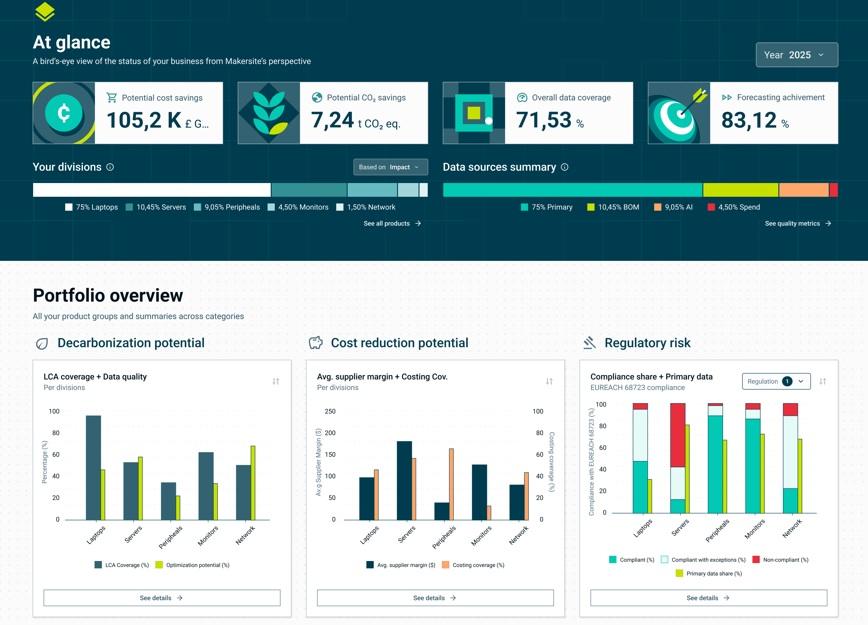
Makersite’s platform, which leverages AI to create digital twins of manufactured products, directly addresses the growing complexities of modern supply chains. Its ability to measure environmental impacts, identify mitigation strategies, and optimize sourcing speaks to a universal challenge: how to produce goods more sustainably and cost-effectively. The success stories, such as helping Microsoft reduce the carbon footprint of its Surface Pro 10 laptop by nearly 30% and aiding Schneider Electric in scaling eco-design across a vast product portfolio, demonstrate tangible value. This isn’t just about ticking a “green” box; it’s about operational efficiency, risk mitigation, and future-proofing business models. For oil and gas companies, this trend directly impacts their industrial customer base, who are increasingly demanding lower-carbon energy inputs and more transparent, sustainable supply chains from their suppliers. Furthermore, our own industry’s complex supply chains, from upstream exploration to refining and distribution, are equally ripe for similar data-driven optimization to meet evolving ESG expectations and regulatory scrutiny.
Navigating Volatility: Short-Term Swings vs. Structural Shifts
The timing of Makersite’s successful funding round, amidst what its CEO Neil D’Souza described as an “uncertain economic and geopolitical environment,” offers a stark contrast to the immediate concerns gripping the crude market. As of today, Brent crude trades at $90.38, reflecting a significant daily decline of over 9%, with its range touching $86.08. WTI crude mirrors this sentiment, currently at $82.59, down 9.41% on the day. This sharp correction continues a broader trend, with Brent having fallen from $112.78 just two weeks ago on March 30th to $91.87 yesterday, representing an 18.5% drop. Our proprietary reader intent data at OilMarketCap.com highlights investor anxiety surrounding these fluctuations, with frequent queries like “what do you predict the price of oil per barrel will be by end of 2026?” and detailed questions regarding “OPEC+ current production quotas.” While these immediate price movements and supply-side dynamics are crucial for short-term trading and portfolio management, the Makersite investment points to a powerful, underlying structural shift. Even as crude prices fluctuate, the fundamental imperative for industries to become greener, safer, and more efficient is only intensifying, driven by long-term regulatory frameworks and evolving consumer and investor expectations. This dual perspective—managing short-term market volatility while aligning with long-term decarbonization trends—is the tightrope oil and gas investors must walk.
Strategic Implications and Future Outlook for Energy Incumbents
The investment in Makersite by notable firms including Lightrock, Partech, and even Schneider Electric’s venture capital fund, underscores the mainstreaming of sustainability as a core business driver. For integrated energy companies, this trend has several profound implications. Firstly, it signals that the demand for traditional oil and gas products from industrial sectors will increasingly be scrutinized through a sustainability lens, pushing for lower-carbon energy solutions and enhanced efficiency. Secondly, it highlights the potential for energy companies to diversify and innovate. Investing in or partnering with advanced analytics and supply chain optimization firms could unlock new revenue streams or significantly enhance the ESG performance of their existing operations. Looking ahead, the upcoming OPEC+ Joint Ministerial Monitoring Committee (JMMC) and full Ministerial meetings, scheduled for April 18th and 19th respectively, will undoubtedly influence near-term crude market sentiment and potential supply adjustments. However, regardless of any short-term production decisions, the long-term trajectory indicated by investments like Makersite’s suggests that fundamental changes in industrial energy consumption and emissions management are here to stay. Energy incumbents must actively engage with these trends, not merely react, by investing in their own decarbonization efforts, exploring new energy technologies, and leveraging data-driven insights to build more resilient and sustainable value chains.
The Data Advantage: Unlocking Value in a Changing Energy Landscape
At its core, Makersite’s value proposition is built on data and artificial intelligence. By providing “Product Lifecycle Intelligence solutions,” it empowers manufacturers to make informed decisions. This emphasis on granular data analysis, from understanding material compositions to tracking carbon footprints, offers a template for the oil and gas sector itself. Our industry, with its complex operational data, environmental footprint, and supply chain intricacies, stands to benefit immensely from similar AI-powered intelligence. Whether it’s optimizing drilling operations for lower emissions, managing methane leaks across vast midstream networks, or enhancing the energy efficiency of refining processes, the ability to create a “digital twin” of operations and measure impacts with precision is invaluable. Investors are increasingly demanding transparency and verifiable ESG performance. Solutions like Makersite’s, while focused on manufacturing, exemplify the broader trend towards data-driven sustainability, a trend that will define success for energy companies looking to attract capital and thrive in a decarbonizing world. The ability to articulate and demonstrate tangible, measurable impact will be a key differentiator, moving beyond aspirational targets to concrete, data-backed achievements.


