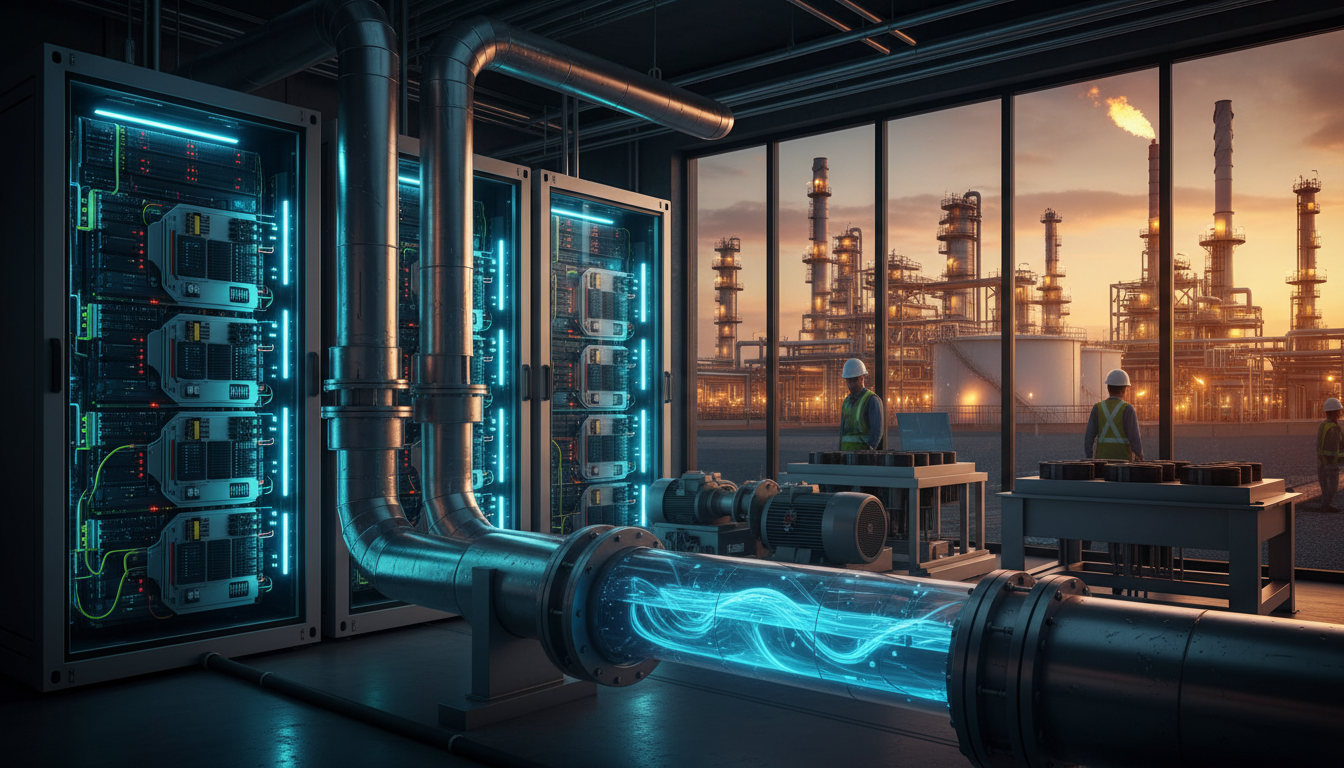
In the fiercely competitive landscape of the global energy sector, high-performance computing (HPC) stands as the bedrock of innovation, underpinning everything from complex reservoir simulations and seismic data processing to optimizing drilling operations and predictive analytics for infrastructure maintenance. Yet, within the sophisticated architectures designed to propel oil and gas companies forward, a critical component often receives insufficient attention: data storage. Historically viewed as a secondary consideration, the treatment of storage as a mere utility, rather than a strategic asset, is quickly becoming a significant impediment to both performance and financial efficiency as we look towards 2026 and beyond. Forward-thinking investors and operational leaders are now recognizing that how an organization manages its data infrastructure’s thermal profile is becoming the hidden key to unlocking scalable, resilient, and cost-effective operations in a data-intensive industry. Here’s why adopting liquid-cooled storage is a non-negotiable for future-proofed oil and gas investments.
Confronting the Thermal Imperative in HPC
The energy industry’s relentless pursuit of greater computational power for nuanced geological modeling and real-time operational insights has led us directly to what data center specialists term the “thermal wall.” Modern Graphics Processing Units (GPUs) – the workhorses of advanced oil and gas simulations – are now routinely exceeding power draws of 1,400 watts per chip. To put this in perspective, a single rack housing numerous such processors can generate heat equivalent to operating over a hundred full-sized microwave ovens within the confines of a refrigerator. With 2,000-watt-plus chips on the near horizon, relying solely on conventional air cooling is no longer a viable or financially prudent strategy. The sheer volume of heat generated overwhelms traditional cooling systems, leading to performance throttling, increased energy consumption, and premature hardware failure.
This escalating thermal challenge has already triggered a widespread adoption of liquid cooling solutions for GPU-centric systems. Whether through direct-to-chip (DTC) cooling or full immersion techniques where hardware is submerged in specialized dielectric fluids, liquid is remarkably efficient, boasting up to 3,000 times greater heat removal capacity than air. However, in the haste to upgrade the core processing power – the “brains” of the operation – many in the sector are overlooking a critical vulnerability: the storage arrays, particularly the local solid-state drives (SSDs) integrated within these powerful servers that continuously feed massive datasets to the hungry GPUs for processing.
Avoiding the Pitfalls of Hybrid Cooling
While cutting-edge GPUs have, by necessity, largely transitioned to liquid cooling, the comparatively lower power consumption of SSDs has often led data center architects to maintain traditional fan-based air cooling for their storage subsystems. This combination, known as a “hybrid” cooling approach, generates substantial operational inefficiencies and financial headaches. Running and maintaining two disparate cooling infrastructures simultaneously introduces unnecessary complexity, higher capital expenditures for redundant systems, and inflated operating costs.
The compelling advantages of a fully fan-less, liquid-cooled approach for storage are becoming increasingly evident to energy operators. Real-world deployments, particularly those by High Performance Computing infrastructure leaders like DUG Technology – a firm with deep roots in oil and gas geoscience – demonstrate that embracing a full immersion cooling strategy can dramatically cut overall system power consumption by over 50%. A significant portion of these savings comes from eliminating fans, which can account for up to 25% of a system’s total electrical demand. The Power Usage Effectiveness (PUE) metric, which quantifies a data center’s energy efficiency (a score of 1.0 indicates perfect efficiency where all energy powers IT equipment), highlights this stark contrast. By integrating storage into the more efficient liquid loop, organizations are achieving PUE ratings as low as 1.02, a stark improvement over the industry average of 1.55. Such efficiency gains translate directly into reduced operating expenses and enhanced ESG (Environmental, Social, and Governance) performance for energy companies.
Liquid Cooling: Extending Asset Lifespan and Mitigating Risk
Beyond immediate thermal management, liquid cooling delivers another profound benefit for investors: significantly extending hardware longevity. The intensive computational demands of oil and gas workloads are often characterized by “bursty” operations, leading to rapid and extreme temperature fluctuations. This phenomenon, known as thermal cycling stress, inflicts cumulative damage on components, substantially increasing the risk of premature failure. Companies like Hypertec have pioneered “immersion-born” server designs specifically engineered to thrive in these thermally demanding environments. The results are striking: servers operating within these advanced liquid setups have demonstrated smooth, continuous performance for up to nine years, nearly doubling the typical five-year lifespan anticipated from air-cooled hardware. This extended operational life directly translates into a more favorable return on capital expenditure (ROI) for energy companies, deferring costly hardware refreshes and bolstering long-term asset value.
We are rapidly approaching a pivotal juncture where liquid cooling transitions from an optional enhancement to a mandatory requirement for top-tier HPC. NVIDIA’s forthcoming 2026 Vera Rubin NVL72 rack-level architecture, for instance, explicitly mandates liquid cooling for every component within the system. This means that even if storage devices theoretically could be adequately cooled by air, fan-based solutions will no longer be compatible. Furthermore, NVIDIA’s planned 2027 rack designs are projected to demand quadruple the power within the same physical footprint, rendering air cooling entirely obsolete for such high-density deployments. Recognizing this impending industry standard, the Solidigm team, in collaboration with NVIDIA, spearheaded the development of the industry’s inaugural liquid-cooled, fully hot-swap serviceable eSSD designed for Direct Attach Storage (DAS) configurations, ensuring storage keeps pace with compute advancements.
Unlocking Unprecedented Scale for Geoscience Data
True operational scalability for oil and gas firms hinges on a unified infrastructure strategy where storage and compute resources operate seamlessly within a synchronized, liquid-cooled ecosystem. Collaborative efforts between industry leaders like Solidigm, DUG Technology, and Hypertec have already demonstrated the feasibility of achieving this at massive scale. Leveraging high-performance NVMe storage, a single 1U liquid-cooled storage node can now comfortably house up to 320 terabytes (TB) of data, with the potential to scale to an astounding 1.9 petabytes (PB). This level of data density is transformative for the energy sector.
Such dense storage configurations don’t just conserve valuable data center floor space; they crucially keep vast reservoirs of critical geoscience, exploration, and production data in immediate proximity to the revenue-generating compute engines. This tight integration empowers real-time data analytics and AI-driven decision-making, accelerating insights from seismic surveys, optimizing drilling parameters, and enhancing reservoir management strategies. For oil and gas investors, this translates into faster exploration cycles, optimized production yields, and a tangible competitive edge in a global market increasingly driven by rapid, data-informed choices.
It is imperative for energy sector investors and executives to shift perspective, viewing storage not as a peripheral cost center, but as a strategic enabler of core business value. By embracing a “liquid-first” approach across the entire HPC stack, oil and gas companies can transcend the inherent limitations of air cooling, constructing an operational future that is as environmentally sustainable and fiscally responsible as it is computationally powerful. This paradigm shift will be crucial for maintaining leadership and profitability in an evolving energy landscape.