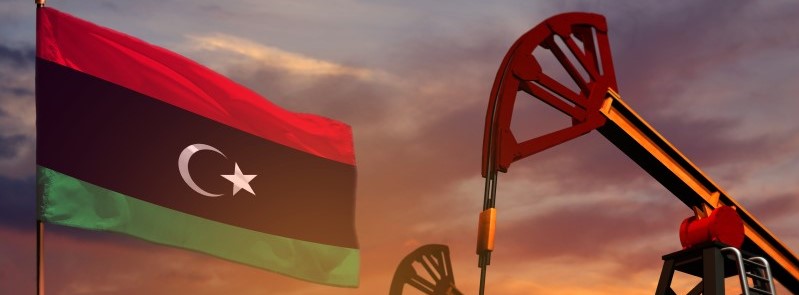
Libya’s energy sector stands at a pivotal juncture, with the nation’s state-run oil firm launching its first energy exploration tender since the 2011 conflict. This significant move signals a determined effort to leverage the country’s vast hydrocarbon wealth, attracting major international players and setting ambitious targets for production growth. For investors, this development represents a complex blend of opportunity and risk, demanding careful consideration of geopolitical stability, operational challenges, and the long-term trajectory of global oil markets. As the OPEC member seeks to ramp up output to record levels, the stakes are high for both Libya and the global energy landscape.
The Lure of Libya: Unlocking Africa’s Largest Reserves
The current tender has drawn considerable interest, with 37 companies, including industry giants such as Chevron Corp., TotalEnergies SE, Eni SpA, and Exxon Mobil Corp., vying for 22 offshore and onshore blocks. This strong participation underscores the appeal of Libya, home to Africa’s largest proven oil reserves. The National Oil Corp (NOC) aims to sign contracts with successful bidders by the end of 2025, marking a crucial step in the country’s recovery and energy expansion plans.
Libya’s ambition is clear: to achieve daily oil output of 2 million barrels before 2030, significantly surpassing its current production of approximately 1.4 million barrels per day (bpd) and even exceeding the 2006 peak of 1.75 million bpd under Muammar Qaddafi. This expansion relies not only on new exploration but also on revitalizing existing infrastructure. The NOC is awaiting approval for a substantial $3 billion development budget, projected to boost output to 1.6 million bpd within a year. This funding will support key operations, including the development of companies like Akakus, which operates the Sharara field, and Waha Oil Co., targeted to increase its production capacity from 300,000 bpd to 800,000 bpd, with the North Jalo field alone expected to contribute an additional 100,000 bpd. The financial commitment from international firms, bearing initial seismic survey and exploration costs, highlights the long-term potential perceived in these frontier blocks.
Navigating Volatility: Market Context for Libyan Expansion
Libya’s push for increased production comes amidst a dynamic and often volatile global crude market. As of today, Brent crude trades at $90.38 per barrel, experiencing a notable daily decline of 9.07% from its range high, while WTI crude sits at $82.59, down 9.41%. This current fluctuation follows a significant downward trend over the past 14 days, with Brent prices falling by 18.5% from $112.78 on March 30th to $91.87 just yesterday. Such price movements naturally influence the investment calculus for multi-year projects like those in Libya.
While short-term price dips can add a layer of caution, major oil and gas companies typically evaluate exploration opportunities through a long-term lens, focusing on resource security, diversification, and strategic positioning. The current market environment, characterized by persistent geopolitical tensions and evolving supply-demand dynamics, reinforces the value of diverse and accessible crude sources. Libya, with its low lifting costs and proximity to European markets, presents an attractive proposition for mitigating future supply risks, despite its historical instability. The long lead times for exploration and development mean that today’s market prices, while indicative of sentiment, are less critical than the projected long-term price deck against which these multi-billion dollar investments are ultimately sanctioned.
Investor Outlook: Weighing Risk and Reward in Frontier Markets
The renewed interest in Libya underscores a complex risk-reward profile that is top of mind for energy investors. Our proprietary data indicates a strong focus on individual company performance and the broader market outlook. Investors are keenly observing specific company performance, with questions like “How well do you think Repsol will end in April 2026?” frequently surfacing. Repsol, for instance, resumed exploration in the Marzuq basin in January, joining other companies like Eni, OMV, and bp Plc who restarted drilling last year after a decade-long hiatus. This return of majors signals a growing confidence in Libya’s operational environment, yet underlying political fragmentation and sporadic disruptions remain key considerations.
The recurring inquiry, “What do you predict the price of oil per barrel will be by end of 2026?”, underscores the market’s uncertainty about future demand and supply dynamics. For companies investing in Libya, the strategic rationale extends beyond immediate returns to securing long-term reserves and leveraging existing partnerships. TotalEnergies, already involved in the Sharara field, exemplifies how established presence can facilitate expansion. The potential for substantial production increases, from a relatively low base, offers significant upside for companies willing to navigate the unique challenges of a post-conflict environment. Investors must weigh the geopolitical risks against the substantial reserve potential and the strategic importance of diversifying supply sources in a tight global market.
The Road Ahead: Upcoming Events and Libya’s Role in Global Supply
The timeline for Libya’s tender, with contracts due by the end of 2025, positions these developments as a medium-to-long-term influence on global supply. However, the immediate market will continue to be shaped by a series of critical events. The upcoming OPEC+ Joint Ministerial Monitoring Committee (JMMC) meeting this Saturday, followed by the Full Ministerial meeting on Sunday, will be critical in setting the near-term global supply narrative. Investors are actively seeking clarity on production quotas, a question frequently asked by our readers, highlighting the sensitivity of the market to OPEC+ decisions.
Libya, often exempt from OPEC+ production cuts due to its internal instability, could see its increased output ambitions eventually factor into broader discussions within the alliance as its stability improves. Beyond OPEC+, weekly data releases, such as the API Weekly Crude Inventory and the EIA Weekly Petroleum Status Report, scheduled for Tuesday and Wednesday respectively, will provide ongoing snapshots of US supply and demand. The bi-weekly Baker Hughes Rig Count, next due on Friday, also offers insights into drilling activity. While these events capture the immediate pulse of the market, Libya’s tender represents a multi-year shift that could fundamentally alter the long-term supply curve, offering a new dimension to global energy security and investment opportunities well into the next decade.