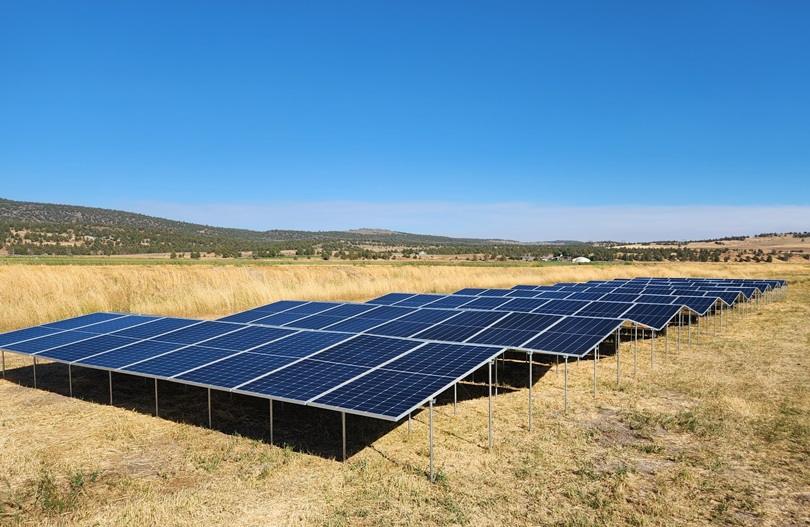
The energy landscape is undergoing a profound transformation, and while headlines often focus on the grand narratives of climate change and global policy, the real story for investors unfolds in the granular details of technological innovation and market dynamics. A recent $12 million funding round for Planted Solar, a provider of advanced solar deployment solutions, serves as a potent reminder that the energy transition is not a distant aspiration but a present-day economic force reshaping investment opportunities and risks across the board. For oil and gas investors, understanding these shifts is no longer optional; it is fundamental to navigating a volatile market where traditional energy dominance is increasingly challenged by rapidly evolving, cost-effective alternatives.
Solar’s New Frontier: Efficiency and Economics Drive Investment
The capital infusion into Planted Solar, spearheaded by Piva Capital with continued backing from Breakthrough Energy Ventures and Khosla Ventures, is more than just another venture capital story. It signifies a critical inflection point in the economics of renewable energy. Planted Solar’s platform addresses some of the most persistent bottlenecks in solar project development: land use, deployment speed, and overall cost. Their innovations, including integrated software for optimized layouts, terrain-following hardware that eliminates the need for extensive site grading, and rapid installation tools, promise substantial gains.
Specifically, the company claims a remarkable 50% reduction in land use compared to conventional solar farms, enabling deployment on challenging terrains with slopes up to 27% – previously deemed infeasible. Furthermore, they project a 70% reduction in steel requirements and a 30% lower cost of energy. These are not incremental improvements; they represent a step-change in efficiency that significantly enhances the competitiveness of solar power. For investors tracking the long-term demand for hydrocarbons, such advancements in renewable deployment capabilities signal a continued acceleration of substitution, particularly in the power generation sector. The implications for future oil, gas, and even coal demand are clear: as solar becomes cheaper, faster to deploy, and more adaptable to diverse geographies, it exerts increasing pressure on the market share of fossil fuels, compelling traditional energy companies to reassess their strategic long-term outlooks and investment portfolios.
Current Market Volatility: A Stark Contrast to Renewable Momentum
While the renewable sector attracts capital for efficiency-driven growth, the traditional oil and gas market continues to grapple with significant volatility. As of today, Brent Crude trades at $90.38, reflecting a significant daily decline of 9.07%, while WTI Crude mirrors this trend at $82.59, down 9.41%. This steep intraday drop is part of a broader trend; Brent has shed over $20, or 18.5%, since late March, moving from $112.78 to $91.87 just yesterday. Gasoline prices have also seen a substantial retreat, currently at $2.93, down 5.18% on the day. This swift depreciation in crude values underscores the inherent instability of a market influenced by geopolitical tensions, economic forecasts, and supply-demand imbalances.
For oil and gas companies, such price swings directly impact revenue, profitability, and the viability of future capital expenditures. Periods of sustained lower prices can lead to project delays, reduced exploration budgets, and increased pressure on shareholder returns. This stark contrast between the stable, efficiency-driven growth narrative in advanced solar and the whipsaw movements in crude highlights a critical divergence for investors. While traditional energy producers navigate a landscape of price uncertainty and demand erosion fears, innovative renewable companies are attracting capital based on demonstrable improvements in cost and deployment, effectively lowering the risk profile for new clean energy projects and accelerating their market penetration. The investment community is increasingly weighing this divergence, scrutinizing the long-term resilience of traditional energy assets against the rising tide of cost-effective renewables.
Addressing Investor Concerns: The Future of Oil and Strategic Adaptations
Our proprietary reader intent data reveals a consistent theme among investors: a keen interest in long-term oil price predictions and the sustainability of traditional energy companies in a changing world. Many are asking, “what do you predict the price of oil per barrel will be by end of 2026?” and closely following individual company performance, such as Repsol’s potential trajectory. These questions underscore a pervasive anxiety about the future value proposition of oil & gas investments. The advancements in solar deployment, as exemplified by Planted Solar, directly influence these long-term outlooks by offering increasingly viable alternatives that could cap future demand growth for oil, particularly in sectors where electrification is feasible.
Investors are not merely seeking short-term trading signals; they are looking for fundamental shifts. The question of “What are OPEC+ current production quotas?” further illustrates this, indicating a focus on supply-side management strategies in a market where demand growth is no longer a given. As solar power becomes cheaper and easier to integrate, the long-term demand curve for crude oil faces downward pressure. This forces oil and gas majors to adapt, either by diversifying into new energy ventures, optimizing existing assets for maximum efficiency, or strategically managing their decline curves. The capital flowing into innovative solar solutions is a strong signal that the market believes these technologies will play a significant role in shaping the energy mix, thereby influencing the very price forecasts and company valuations that our readers are so eager to understand.
Navigating Upcoming Events: Short-Term Catalysts Amidst Long-Term Trends
The coming fortnight presents several critical junctures for crude price discovery, commencing with the OPEC+ Joint Ministerial Monitoring Committee (JMMC) meeting on April 18th, followed by the full Ministerial meeting on April 19th. These meetings are paramount as investors seek clarity on production quotas and any potential policy shifts that could either stabilize or further destabilize an already volatile market. Any surprise moves from OPEC+ could trigger significant price reactions, impacting the financial performance of oil and gas producers in the near term.
Further insights into market fundamentals will come from the API Weekly Crude Inventory report on April 21st, and the EIA Weekly Petroleum Status Report on April 22nd, with subsequent releases on April 28th and 29th, respectively. These reports provide crucial data on U.S. crude stockpiles, refinery activity, and product demand, offering a snapshot of the immediate supply-demand balance. The Baker Hughes Rig Count on April 24th and May 1st will also be closely watched for signals on North American drilling activity and future production trends. While these upcoming events will undoubtedly dictate short-term market movements and present trading opportunities, it is crucial for long-term investors to contextualize them within the broader energy transition. The strategic decisions made by OPEC+ and the drilling activity reported by Baker Hughes will operate within an increasingly competitive energy landscape, where advancements in renewable technologies, like those championed by Planted Solar, continually reshape the ceiling for future oil demand and the floor for renewable energy adoption. Prudent investment in oil and gas must now factor in both the immediate catalysts and the accelerating momentum of disruptive clean energy innovation.


