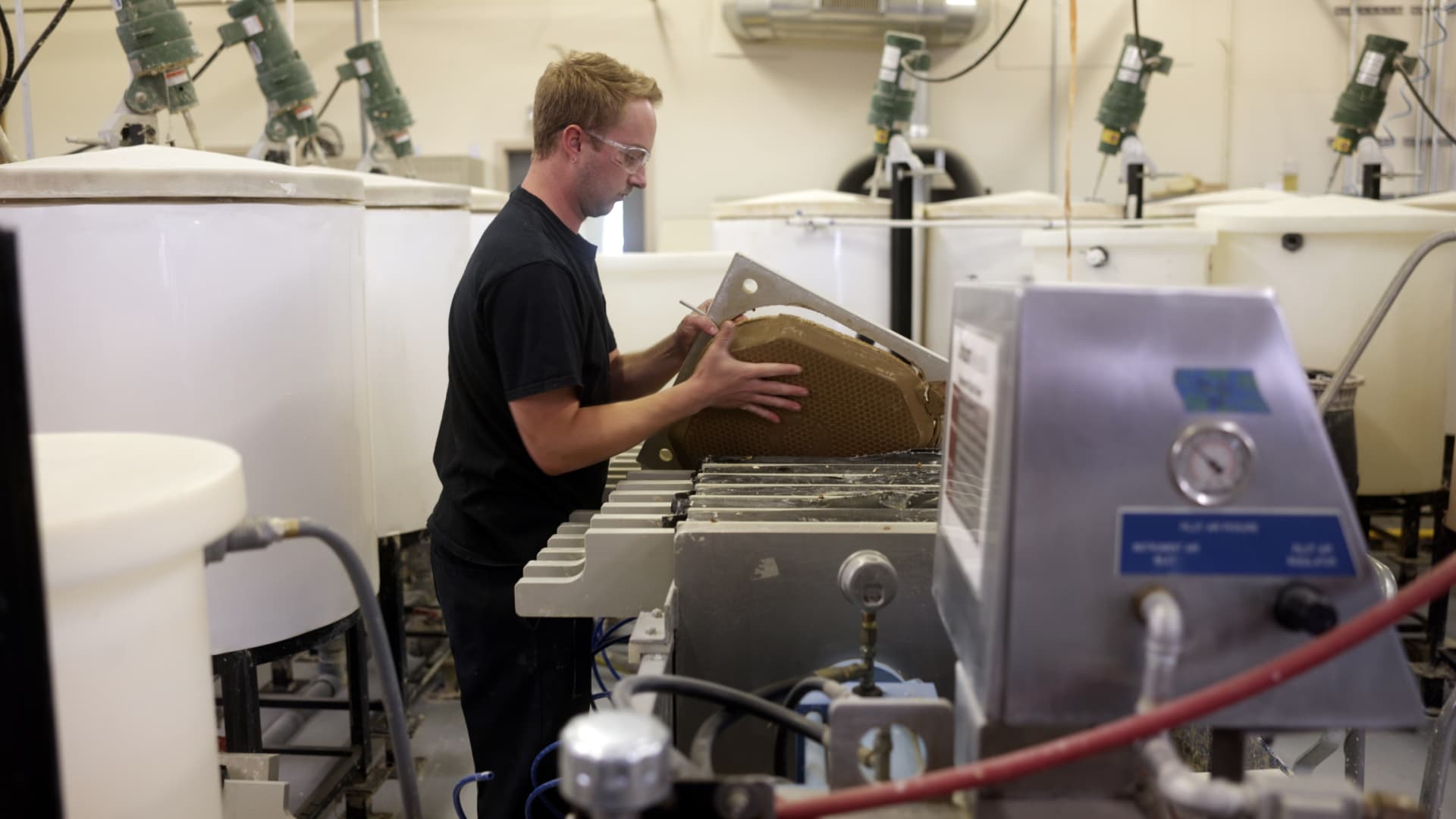
The proposed equity stake by the Trump administration in Lithium Americas (LAC), a Vancouver-based company, marks a significant moment in the evolving landscape of strategic resource investments. This move, centered around LAC’s pivotal Thacker Pass lithium mine in northern Nevada, signals a deepening commitment by the U.S. government to secure critical mineral supply chains. As global energy transitions accelerate and geopolitical tensions simmer, understanding the implications of such direct governmental involvement becomes paramount for investors navigating the complex interplay of resource security, market dynamics, and policy shifts. This analysis delves into the strategic rationale, market context, investor sentiment, and forward-looking catalysts surrounding this groundbreaking development.
The Strategic Imperative: Securing Critical Mineral Supply Chains
The Trump administration’s proposal to acquire a small equity stake in Lithium Americas is not merely a financial transaction; it represents a strategic pivot towards fortifying domestic critical mineral supply chains. The backdrop to this move is the renegotiation of a $2.2 billion loan from the Department of Energy for the Thacker Pass project. Lithium Americas reportedly sought to defer parts of its loan repayment into later years, prompting the administration to request a small ownership interest. An official indicated this stake would serve as a crucial cash buffer, mitigating risk for taxpayers and ensuring the viability of a project deemed vital for national interests. The Thacker Pass mine is slated to become one of North America’s largest lithium sources, with General Motors already securing an off-take agreement for its output, underscoring its importance to the burgeoning electric vehicle sector.
This initiative follows a precedent set by the Department of Defense, which acquired a 15% equity stake in rare earth miner MP Materials in July, a move that saw the Las Vegas-based company’s shares more than double. The push for direct government ownership reflects a broader policy objective articulated by Interior Secretary Doug Burgum in April: to bolster domestic miners against formidable state-sponsored competition, particularly from China. While Lithium Americas is incorporated and domiciled in Canada, its dual listing on the Toronto Stock Exchange and NYSE, combined with the strategic importance of its Nevada asset, positions it squarely within the U.S. critical minerals strategy. The discussions are reported to be positive, though Canadian approval may also be required for a finalized deal.
Navigating Market Volatility: A Contrast in Commodity Fortunes
The strategic focus on critical minerals like lithium emerges against a backdrop of considerable volatility in traditional energy markets. As of today, Brent crude trades at $90.38, reflecting a significant daily decline of 9.07%, while WTI crude sits at $82.59, down 9.41%. This sharp downturn follows a broader trend, with Brent having shed $20.91, or 18.5%, from $112.78 just two weeks ago. Gasoline prices have also seen a notable dip, currently at $2.93, a 5.18% decrease. This market instability underscores the compelling need for diversification and strategic investment in resources perceived to offer long-term stability and national security benefits, especially those integral to the global energy transition.
While the traditional oil and gas sector grapples with demand fluctuations, geopolitical uncertainties, and shifting production policies, the critical minerals sector, particularly lithium, benefits from a robust long-term demand outlook driven by electric vehicles and renewable energy storage. Government backing, as seen with the Lithium Americas proposal, effectively de-risks these projects, making them more attractive to investors seeking insulation from the cyclical and often unpredictable nature of fossil fuel markets. The 70% premarket surge in Lithium Americas shares upon the news highlights the market’s positive reception to such governmental endorsement, contrasting sharply with the recent declines observed across the crude complex.
Investor Outlook: Seeking Stability Amidst Geopolitical Shifts
Our proprietary reader intent data reveals that a significant portion of investors are actively seeking clarity on the future trajectory of energy markets, with questions like “what do you predict the price of oil per barrel will be by end of 2026?” dominating discussions. This quest for long-term price predictability and market stability is a recurring theme, particularly in an environment marked by pronounced commodity price swings. Furthermore, investors are keenly focused on the underlying drivers of supply and demand, frequently inquiring about “OPEC+ current production quotas” to gauge potential impacts on crude prices.
The proposed equity stake in Lithium Americas directly addresses this investor appetite for de-risked, strategically important assets. While traditional energy investors grapple with the uncertainties surrounding OPEC+ decisions and weekly inventory reports, the government’s direct involvement in critical minerals offers a different kind of long-term visibility and policy support. This move signals that certain resource plays are now considered national security imperatives, potentially offering a more stable investment thesis compared to the often-volatile hydrocarbon sector. For those looking to diversify beyond conventional oil and gas, investments in companies like Lithium Americas, particularly with strong governmental backing, represent a compelling avenue to participate in the energy transition with a perceived lower risk profile.
Forward Implications and Upcoming Catalysts
While the immediate future is packed with crucial traditional energy events – including the OPEC+ Joint Ministerial Monitoring Committee (JMMC) meeting on April 18th and the full Ministerial meeting on April 19th, followed by weekly API and EIA inventory reports – the Lithium Americas situation presents its own set of forward-looking catalysts. The finalization of the equity stake deal, which remains under negotiation and may require Canadian government approval, is a primary near-term event that could further solidify investor confidence and provide a blueprint for similar future collaborations between government and critical mineral producers.
Beyond the immediate deal, the progress of the Thacker Pass mine towards operational status will be a key performance indicator, with General Motors’ off-take agreement providing a strong demand anchor. Moreover, investors should closely monitor any further announcements from the Trump administration regarding its broader strategy for critical minerals, especially in light of past statements about considering equity stakes to counter state-sponsored competition. Any expansion of this policy to other strategic resources or companies could unlock new investment opportunities. The ongoing dialogue around energy security, supply chain resilience, and the accelerating pace of the global energy transition ensures that such strategic resource plays will remain a central theme for sophisticated investors seeking exposure to the future of energy beyond traditional hydrocarbons.