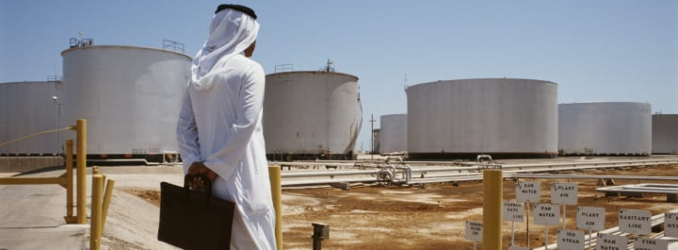
The global oil market is grappling with an unexpected surge in supply, spearheaded by Saudi Arabia, a move that starkly challenges the very discipline OPEC+ has long strived to maintain. Last month, the Kingdom significantly ramped up crude output, surpassing its agreed-upon quota alongside other key producers like Iraq, Kuwait, and the United Arab Emirates. This uncharacteristic breach by Riyadh, historically a vocal enforcer of production limits, comes at a critical juncture as the market confronts a looming supply surplus and decelerating demand growth. For investors, understanding the motivations behind this shift and its potential ramifications for OPEC+ cohesion is paramount to navigating the evolving energy landscape.
Saudi Arabia’s Unprecedented Production Hike and its Implications
Saudi Arabia’s decision to increase crude production by approximately 700,000 barrels per day, reaching 9.8 million bpd, has sent ripples across the oil market. Roughly 70% of this additional supply was immediately exported, signaling a deliberate effort to push more crude into global channels. This surge placed Saudi output an estimated 400,000 bpd above its OPEC+ quota. The move is particularly noteworthy given Riyadh’s consistent stance on upholding production agreements and its past admonishments of other members for overproducing. This shift wasn’t isolated; Iraq, Kuwait, and the UAE also exceeded their respective quotas, collectively adding to the supply influx. In contrast, Iran experienced a notable decline of 400,000 barrels per day, bringing its output down to 3.08 million bpd, despite its oil infrastructure largely escaping significant impact from regional hostilities.
Several motives have been floated for this dramatic pivot. Some analysts suggest it could be a strategic maneuver by Riyadh to discipline other OPEC+ nations that have historically flouted their quotas. Another perspective posits a desire to recapture market share relinquished during years of production cutbacks, reasserting dominance in a competitive environment. Furthermore, during a period of heightened geopolitical tensions, there was speculation that Gulf nations aimed to reposition supplies outside the immediate region. Regardless of the primary driver, Saudi Arabia’s recent actions directly test the cooperative framework of OPEC+, potentially setting a new precedent for how individual members interpret and adhere to collective agreements.
Navigating a Market Bracing for Surplus Amidst Shifting Demand
The increased crude flow arrives as global oil markets are demonstrably heading towards a substantial surplus. The International Energy Agency projects world oil consumption to grow by just 700,000 bpd this year, marking the slowest pace in 16 years, excluding the pandemic-induced slump of 2020. This forecast, a modest downgrade from the previous month, underscores a significant slowdown in demand, particularly within developing economies. Compounding this outlook, production from outside the OPEC+ cartel is booming, growing at twice the pace of global demand. Non-OPEC+ powerhouses like the United States, Guyana, Brazil, and Canada continue to expand their output, adding further pressure to an already well-supplied market.
This evolving supply-demand dynamic has already begun to manifest in price action. As of today, Brent crude trades at $94.93, while West Texas Intermediate (WTI) hovers at $91.39. This current pricing reflects a notable market recalibration; over the past 14 days, Brent crude experienced an 8.8% decline, falling from $102.22 to $93.22. Such a sharp downward trend indicates that market participants are actively pricing in concerns of oversupply and weaker demand, largely shrugging off geopolitical developments that might otherwise provide price support. The confluence of increased OPEC+ supply and robust non-OPEC+ output, set against a backdrop of slowing consumption, creates a challenging environment for price appreciation in the near term.
Investor Focus: Pricing in Uncertainty and Future Forecasts
The recent deviation from OPEC+ quotas by Saudi Arabia and others has naturally fueled uncertainty among investors, prompting a surge in questions regarding future price stability. Our proprietary reader intent data from the past week clearly highlights this concern, with a significant number of investors actively seeking a base-case Brent price forecast for the next quarter and inquiring about the broader consensus 2026 Brent forecast. This intensified focus on forward price trajectories underscores the market’s attempt to quantify the impact of current supply dynamics on long-term valuations. The core question for many remains whether OPEC+’s ability to manage supply will be compromised, leading to a more volatile and potentially lower-priced environment.
Historically, OPEC+ discipline has been a cornerstone of price stability, providing a floor for crude benchmarks. Saudi Arabia’s recent actions, whether intended as a strategic flex or a punitive measure, introduce a new layer of complexity to this equation. Investors are now keenly evaluating how this episode might influence the group’s future decisions and their collective commitment to market rebalancing. The potential for a sustained period of oversupply, if not addressed effectively, could erode confidence in OPEC+’s ability to act as a unified market moderator, thereby impacting investment strategies across the energy sector. The coming months will be crucial in determining whether this is a temporary deviation or a signal of a more fundamental shift in producer behavior.
Key Upcoming Events to Shape OPEC+ Strategy and Market Direction
Looking ahead, the market’s attention will squarely turn to upcoming events that could dictate the future direction of OPEC+ policy and, by extension, global oil prices. The immediate focus is on the upcoming OPEC+ Joint Ministerial Monitoring Committee (JMMC) meeting on April 18th, followed closely by the Full Ministerial Meeting on April 20th. These high-stakes gatherings will provide the first official platform for delegates to address the recent overproduction by several members, including Saudi Arabia’s significant quota breach, amidst a market clearly signaling oversupply.
These crucial discussions will also occur against a backdrop of fresh market intelligence. Ahead of the ministerial meetings, investors will be closely monitoring the Baker Hughes Rig Count reports on April 17th and April 24th, offering insights into drilling activity and potential future non-OPEC+ supply. Additionally, the EIA Weekly Petroleum Status Reports on April 22nd and April 29th will provide vital data on crude inventories and demand trends in the critical U.S. market. Delegates will need to reconcile the current production excesses with the group’s tentative plan to restart another 548,000 barrels per day in September, which would complete the return of a 2.2 million-barrel tranche of halted supplies. The planned “pause” in October before deciding on further supply adjustments adds another layer of anticipation. How OPEC+ navigates these immediate challenges and reasserts its market influence will be a defining factor for crude price stability through the remainder of the year and into 2026.