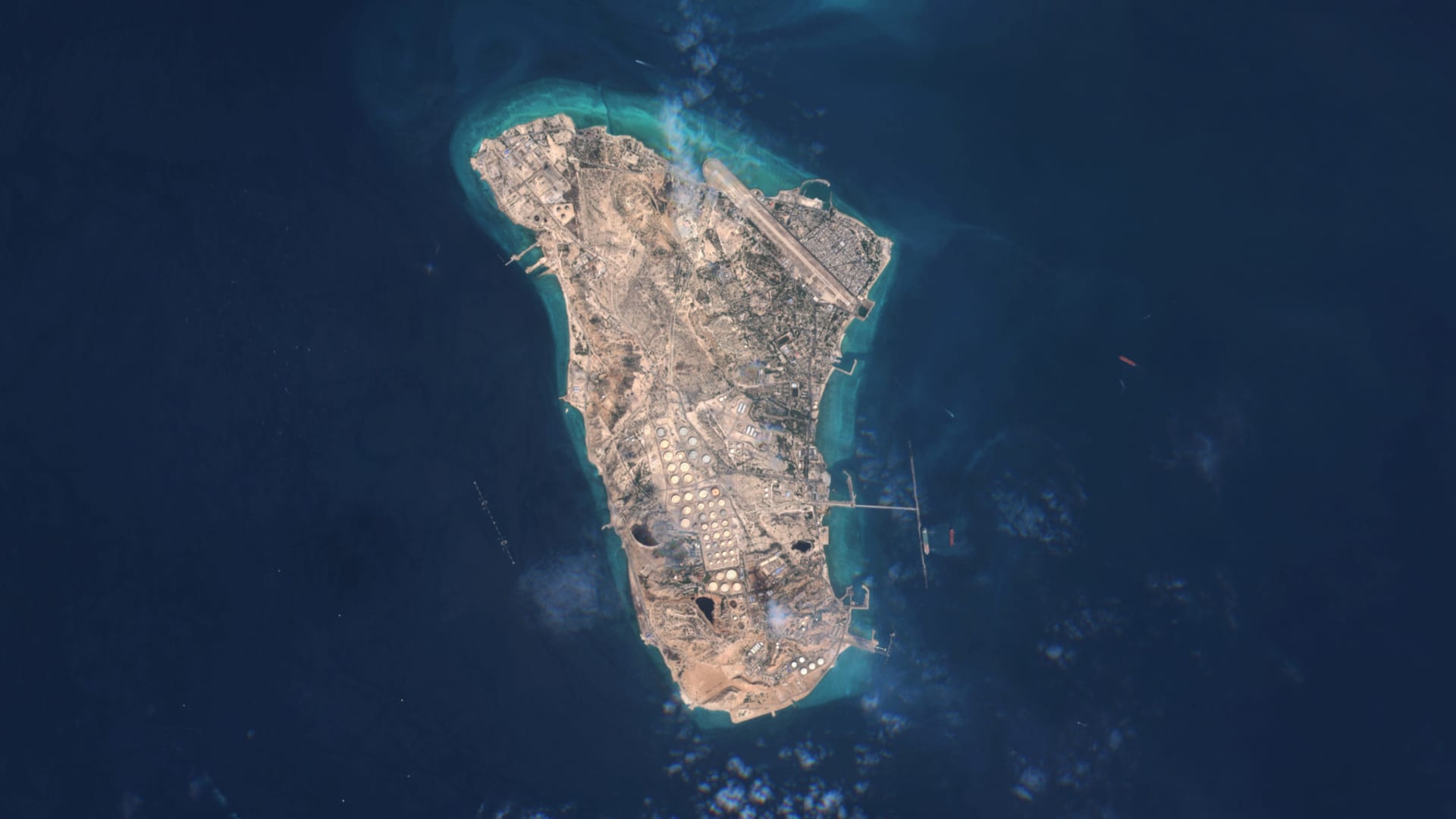
Kharg Island, a small landmass strategically positioned in the northern Persian Gulf, holds an outsized significance for global oil markets and Iran’s economic lifeline. This unassuming coral island serves as the central artery for nearly 90% of Iran’s crude oil exports, making it an indispensable asset for the nation’s revenue generation and a critical choke point in the volatile Middle East energy landscape. For investors navigating the complexities of oil and gas, understanding Kharg Island’s role, its inherent vulnerabilities, and the broader geopolitical implications is paramount for assessing future market stability and potential disruptions.
Kharg Island: Iran’s Unrivaled Export Nexus
The strategic importance of Kharg Island cannot be overstated. Located approximately 15 miles off the Iranian mainland, this facility boasts an impressive loading capacity of roughly 7 million barrels per day, positioning it as a pivotal hub for crude oil tankers bound for international markets. Its function as the primary egress for Iranian crude means that any disruption to operations here would immediately ripple through global supply chains. Tankers departing Kharg must then navigate the narrow Strait of Hormuz, further amplifying the geopolitical sensitivity of this export route. Investors recognize that while Iran may possess vast oil reserves, the ability to efficiently and securely export that crude is entirely dependent on the continuous, unimpeded operation of facilities like Kharg Island. This concentration of export capability in a single, geographically confined location presents both efficiency for Iran and a significant point of vulnerability for global energy security.
Geopolitical Tensions and Crude Market Dynamics
The ongoing geopolitical landscape in the Middle East casts a long shadow over energy markets, with Kharg Island frequently highlighted as a potential flashpoint. As of today, Brent crude trades at $92.78, reflecting a slight downturn of 0.49% within a daily range of $92.57 to $94.21. Similarly, U.S. West Texas Intermediate (WTI) crude is priced at $89.40, down 0.3%. This current market snapshot reveals a nuanced sentiment; while geopolitical tensions remain elevated, a recent easing is evident in the 14-day trend for Brent, which has shed over 7% from its $101.16 peak on April 1st to $94.09 yesterday. However, any escalation involving critical infrastructure like Kharg Island could swiftly reverse this trend. Analysts note that a direct military action, particularly one requiring ground troops to seize the island, would be an extreme measure with profound implications for oil prices, likely sending them well above current levels. Such a scenario would effectively “cut off Iran’s oil lifeline,” leading to immediate supply shocks and unprecedented market volatility, dwarfing the current daily fluctuations.
Investor Focus: Anticipating Future Movements and Key Events
Our proprietary reader intent data reveals a clear investor focus on market direction and future price predictions, with questions like “is WTI going up or down?” and “what do you predict the price of oil per barrel will be by end of 2026?” dominating discussions. These inquiries underscore the need for forward-looking analysis, especially when considering the potential impacts of geopolitical flashpoints like Kharg Island. Investors are keenly awaiting signals that could stabilize or further destabilize the market. Upcoming energy events will provide crucial data points. The EIA Weekly Petroleum Status Report, scheduled for release on April 22nd and again on April 29th, will offer timely insights into U.S. crude inventories, refinery activity, and demand indicators. Further supply-side intelligence will come from the Baker Hughes Rig Count on April 24th and May 1st, reflecting drilling activity and future production potential. For those looking beyond the immediate horizon, the EIA Short-Term Energy Outlook on May 2nd will be a critical publication, providing updated forecasts for global supply and demand that will directly inform longer-term price expectations and potentially address the end-of-year price questions our readers are asking. These events, combined with any geopolitical developments impacting key export hubs, will collectively shape the trajectory of crude prices in the coming weeks and months.
Strategic Implications of Kharg Island for Global Energy Security
The strategic value of Kharg Island extends beyond its immediate economic importance to Iran; it represents a nexus of global energy security. The island’s potential vulnerability to military action, while considered a high-risk undertaking, remains a hypothetical scenario that underpins much of the geopolitical premium in oil prices. Should Iran’s primary export route be compromised, the world would face a massive supply deficit. For investors, this risk translates into a constant need to monitor the geopolitical temperature of the Persian Gulf. Any move to disrupt Kharg’s operations would not only sever Iran’s revenue stream but also grant significant leverage in future international negotiations. While direct intervention is fraught with peril and has been largely avoided, the mere existence of this vulnerability underscores the fragility of global oil supply chains heavily reliant on a few key chokepoints. Diversification of supply sources and strategic petroleum reserves become even more critical considerations in an investment landscape where the operational status of a single island can dictate global oil prices.