Newfoundland & Labrador (NL) finds itself at a pivotal juncture, offering investors a unique, albeit complex, energy proposition. The province’s vast offshore potential is undeniable, yet the path to unlocking it is shaped by a delicate interplay of provincial ambition, federal policy hurdles, and dynamic global market conditions. For investors keen on the Canadian offshore, understanding these forces is critical to assessing the true risk and reward profile of projects in the region.
Bay du Nord: The Flagship Project at a Crossroads
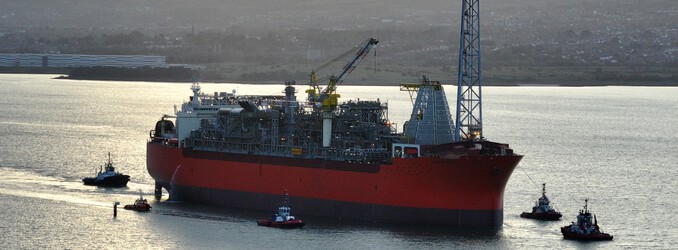
Central to NL’s immediate energy future is the Bay du Nord development. Discovered over a decade ago, this project is now approaching a critical “decision gate two” scheduled for December of this year. Equinor, the project operator, has expressed cautious optimism, a sentiment that resonates through the local energy sector. Should Bay du Nord proceed, its economic impact for the province would be substantial, with projections indicating a GDP contribution exceeding $80 billion and the creation of thousands of jobs. This flagship development is expected to not only provide a significant boost to the local supply chain, evidenced by Equinor’s ongoing engagement and planned supplier development sessions this fall, but also to stimulate broader interest and further exploration in the NL offshore. For investors, the December decision represents a key signal for the overall health and future direction of large-scale, long-cycle energy investments in the region.
Policy Paradox: Provincial Incentives vs. Federal Hurdles
The investment landscape in NL is characterized by a stark contrast in policy approaches. On one hand, the provincial government recently demonstrated its commitment to attracting capital by announcing a new $90 million exploration incentive fund. While the specific parameters are still being finalized, this fund is designed to offset the significant costs associated with offshore well drilling, directly addressing a key financial barrier for exploration companies. This proactive measure signals a clear desire from the province to foster growth and attract new ventures. However, this provincial push is simultaneously challenged by federal government policies, particularly the proposed emissions cap, which the local industry widely interprets as a de facto production cap. This creates a significant dilemma for potential investors: committing hundreds of millions to exploration, followed by billions more for infrastructure development ($10 billion to $12 billion), becomes inherently risky if future production volumes are uncertain due to federal limits. The lack of clarity and the perceived disincentive from federal policy introduce a layer of uncertainty that can deter long-term capital commitments, despite the promising geology and provincial support.
Market Volatility and Investor Sentiment
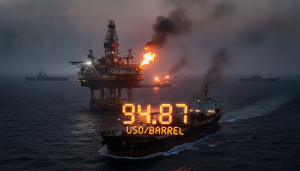
Global crude oil markets remain dynamic, a factor that heavily influences investment decisions in capital-intensive offshore projects. As of today, Brent crude trades at $94.92 per barrel, reflecting a modest daily uptick after a more significant downward trend over the past two weeks, during which prices softened by 8.8% from $102.22. This inherent price volatility, evident in a daily range of $91-$96.89, underscores the need for robust project economics and clear policy frameworks. Our proprietary reader intent data reveals that investors are actively seeking guidance, frequently asking for a “base-case Brent price forecast for next quarter” and the “consensus 2026 Brent forecast.” This highlights a pervasive need for certainty regarding future price environments. In such a fluctuating market, the policy stability offered by governments becomes even more critical. When investors face both market volatility and regulatory uncertainty, the hurdle for approving multi-decade projects like Bay du Nord significantly rises. The long-term nature of offshore developments demands a predictable investment climate, making the ongoing federal policy debate a central concern for those evaluating NL’s potential.
Navigating Upcoming Catalysts and Future Outlook
Looking ahead, several key events on the energy calendar will shape the backdrop for investment decisions in NL and beyond. This week brings the critical OPEC+ Joint Ministerial Monitoring Committee (JMMC) meeting on April 18th, followed by the full OPEC+ Ministerial Meeting on April 20th. Decisions from these gatherings regarding production quotas will directly impact global crude supply and demand balances, influencing price stability and investor confidence in the near to medium term. These events, alongside ongoing indicators like the Baker Hughes Rig Count and weekly API and EIA inventory reports, provide continuous signals that investors monitor to gauge market health. For NL, the successful progression of Bay du Nord and the effective implementation of the provincial exploration incentive will depend heavily on a combination of favorable market conditions and, crucially, a resolution to the federal policy uncertainty. Without clear, consistent regulatory signals that support long-term development, NL’s significant offshore potential risks remaining constrained, regardless of provincial efforts or project-specific merits. The coming months will be telling, as investors weigh the promise of NL’s resources against the prevailing policy headwinds and evolving global market dynamics.