Japan’s Strategic LNG Play: A Bullish Signal Amidst Crude Volatility
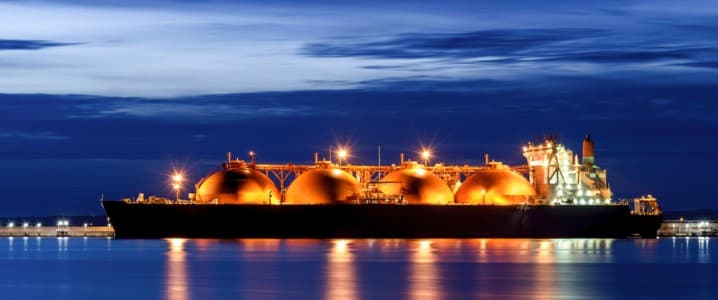
Japan, the world’s second-largest importer of liquefied natural gas, is embarking on a significant expansion of its Strategic Buffer LNG program, a move poised to reshape global gas market dynamics. Commencing in January of next year, the nation will boost its emergency reserve purchases to a monthly rate of at least 70,000 tons. This marks a substantial fourfold increase from its previous annual buying rate of 210,000 tons, targeting a total of at least 840,000 tons for 2026. This aggressive procurement strategy underscores Japan’s deep-seated energy scarcity and its proactive stance on bolstering energy security in an increasingly unpredictable global landscape. For oil and gas investors, this strategic pivot signals a tightening of the LNG market, even as broader crude oil prices currently grapple with significant headwinds.
The New Reality for Global LNG Demand and Supply
Japan’s decision to dramatically scale up its LNG reserve program is a clear response to the lessons learned from recent geopolitical and supply chain disruptions. While officials state the shift to monthly purchases is not directly tied to Russian energy issues, it undeniably offers a robust hedge against future supply shocks, including the potential cessation of imports from the Sakhalin-2 project where Japanese firms Mitsui and Mitsubishi hold stakes. Major utility JERA, with contracts expiring in 2026 and 2029, has already expressed confidence in securing alternative supplies, emphasizing the readiness of Japanese buyers to diversify. This increased, consistent demand for a strategic buffer – totaling 840,000 tons annually – will absorb a considerable volume from the global LNG market, tightening available spot cargoes and potentially influencing long-term contract pricing. The flexibility to either use unused cargoes domestically or resell them also introduces a dynamic element, allowing Japan to act as a swing supplier during periods of oversupply, or to further secure its own needs during shortages, thereby adding another layer of complexity for market participants.
Decoding Market Signals: LNG Demand vs. Crude Volatility
Despite the bullish long-term signal emanating from Japan’s substantial LNG procurement plans, the broader energy market, particularly crude oil, is currently experiencing significant downward pressure. As of today, Brent crude trades at $90.38, reflecting a notable 9.07% decline, with an intraday range spanning from $86.08 to $98.97. Similarly, WTI crude is down 9.41% to $82.59. This recent sell-off extends a clear trend; Brent has shed a striking $22.4, or 19.9%, from its $112.78 high recorded just two weeks ago on March 30th. The price of gasoline, often a proxy for consumer demand, also reflects this bearish sentiment, trading at $2.93, a 5.18% drop. This divergence highlights that while specific commodity markets like LNG may see structural tightening due to strategic national policies, the overarching crude market remains highly sensitive to macro-economic concerns, including global growth forecasts, interest rate trajectories, and the potential for demand destruction that appear to be currently dominating investor sentiment.
Investor Focus: Navigating Price Outlooks and Supply Dynamics
Many investors are actively grappling with the future trajectory of oil and gas prices, seeking clarity amidst conflicting signals. Japan’s move to secure substantial LNG reserves provides a foundational demand floor for natural gas, which in turn offers indirect support to the broader energy complex. This sustained demand will likely benefit LNG producers and developers globally, particularly those in the US, Qatar, and Australia, as it underpins the rationale for final investment decisions (FIDs) on new export facilities. While investors are also keen to understand OPEC+’s current production quotas and their impact on crude supply, Japan’s energy security strategy underscores a parallel, equally vital factor: diversified and resilient energy supply. The strategic nature of Japan’s purchases, with the option to resell unused cargoes, also means that while the baseline demand increases, there is an inherent flexibility that could mitigate extreme price spikes in the short term, acting as both a buyer of last resort and a potential marginal supplier. This dynamic demands careful monitoring by investors assessing long-term natural gas exposure.
Upcoming Catalysts and Long-Term Strategic Plays
The coming weeks present a series of critical data points that will further inform the market’s direction and the impact of strategic moves like Japan’s. The **OPEC+ JMMC and Ministerial Meetings on April 19th and 20th**, respectively, will be paramount. Any decisions regarding production quotas will directly influence crude supply, potentially counteracting or exacerbating the current bearish trend, even as the global LNG market tightens. Furthermore, the **API and EIA Weekly Petroleum Status Reports on April 21st-22nd and April 28th-29th** will provide crucial insights into US inventory levels and demand trends, which are key drivers for WTI and global crude benchmarks. Finally, the **Baker Hughes Rig Count on April 24th and May 1st** will offer a look into future production capacity. For investors, Japan’s long-term LNG strategy signals a clear commitment to energy security that transcends short-term market volatility. While crude markets may remain turbulent, the structural increase in LNG demand provides a robust long-term tailwind for natural gas-focused investments, urging a strategic differentiation between the immediate macro pressures on crude and the foundational shifts occurring in global gas markets.


