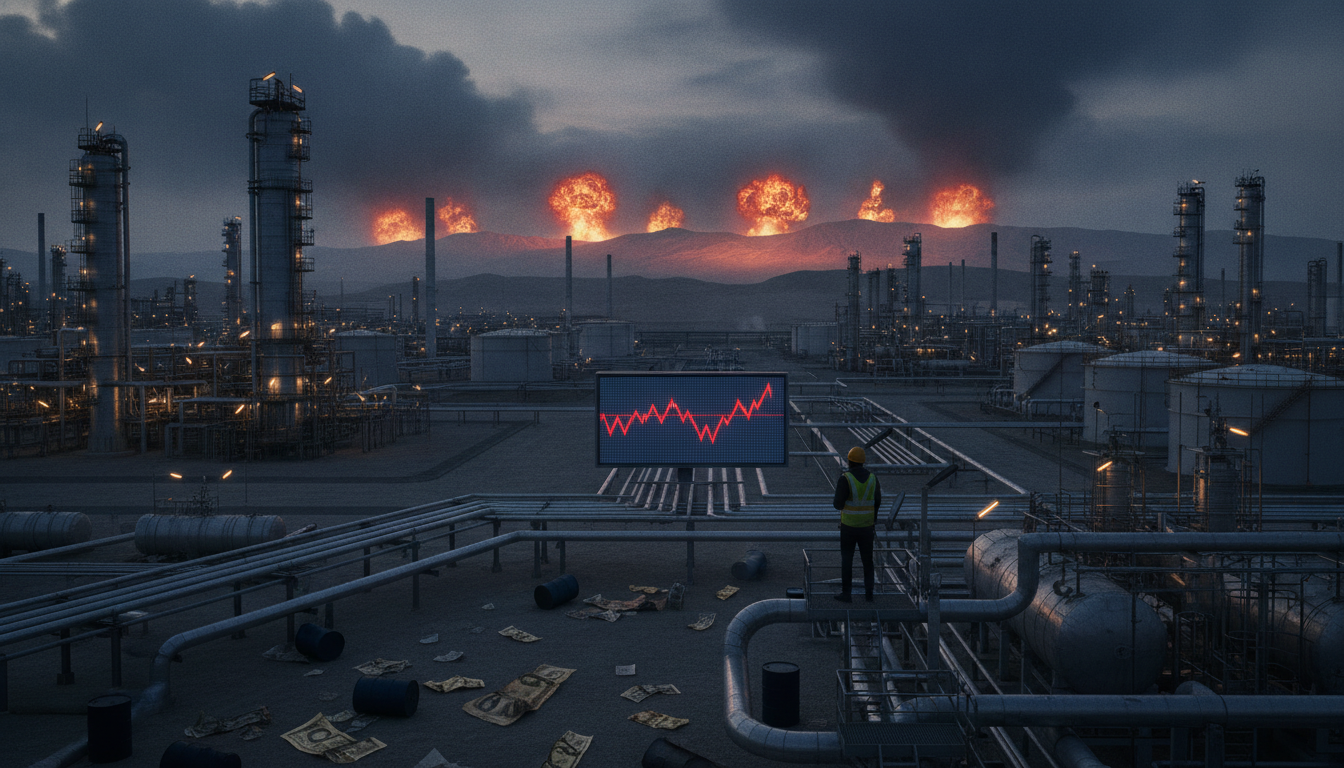
Middle East Tensions Ignite Oil Prices: Brent Surges Past $96 Amid Escalating Geopolitical Risk
The geopolitical landscape of the Middle East has once again sent shockwaves through global energy markets, propelling Brent crude futures to over $96 a barrel, marking a significant 3% jump. This sharp ascent follows Israel’s targeted military strikes against various Iranian military installations, a direct retaliation for recent missile attacks launched by Tehran. The incident underscores the extreme fragility of regional stability and injects a fresh layer of uncertainty into the global oil supply outlook, demanding immediate attention from energy investors.
Reports from the Israel Defense Forces confirmed operations against sites in western and central Iran, with Iranian state media corroborating multiple explosions in major cities including Tehran and Karaj. While a U.S. official characterized the Israeli strikes as “relatively limited” in scope, the very act of direct engagement between these two regional powers signals a dangerous escalation. Israel also reported successfully intercepting missiles fired from Iran, thankfully with no casualties reported on its side, but the exchange itself represents a perilous testing of the April 8 ceasefire agreement intended to de-escalate hostilities involving the U.S., Israel, and Iran.
Market Reacts: Oil’s Geopolitical Premium Soars, Dollar Strengthens
The immediate market response was decisive. Brent crude’s climb above $96/barrel highlights the market’s acute sensitivity to Middle East instability. Investors are rapidly pricing in a heightened geopolitical risk premium, reflecting concerns over potential disruptions to vital oil shipping lanes, particularly through the Strait of Hormuz, and the broader impact on regional oil production. Any threat to the flow of crude from this critical region reverberates globally, directly influencing supply-demand balances and prompting speculative buying.
In parallel, the U.S. dollar, traditionally viewed as a safe-haven asset during times of global uncertainty, strengthened against all its Group-of-10 peers. This flight to safety into the greenback often correlates with a sell-off in riskier assets and reflects investor apprehension about the trajectory of the ongoing conflict. For oil investors, a stronger dollar can, in other circumstances, make dollar-denominated commodities more expensive for holders of other currencies. However, in this scenario, the overwhelming geopolitical risk factor is the primary driver of oil prices, superseding typical currency effects.
Diplomatic Tightrope: Trump’s Stance and Stalled Negotiations
The recent military actions unfold against a backdrop of complex and often contradictory diplomatic efforts. U.S. President Donald Trump reportedly urged Israeli Prime Minister Benjamin Netanyahu to refrain from retaliatory strikes, advocating for more time for diplomatic solutions. Yet, simultaneously, President Trump asserted his authority over any potential U.S.-Iran accord, stating, “I call the shots. I call all the shots,” implying Netanyahu’s influence would be secondary. This dichotomy of seeking de-escalation while asserting control over a future deal creates significant ambiguity for investors trying to gauge the path forward for Iranian oil policy and potential sanctions relief.
Despite President Trump’s repeated assurances that an interim agreement to end the war with Iran is “near,” visible progress remains elusive. The current escalation only underscores the chasm between diplomatic rhetoric and on-the-ground realities. A lack of concrete breakthroughs in negotiations leaves the market vulnerable to sudden shifts driven by military actions or strong political statements, maintaining a high level of volatility for oil prices.
Regional Contagion and the Hezbollah Factor
The current tit-for-tat exchanges risk triggering broader regional instability. Following the latest Israeli attack, Saudi Arabia sounded a missile alert in an area hosting U.S. forces at the Prince Sultan Airbase, signaling the potential for wider regional involvement. This fear of contagion is a significant concern for oil markets, as a wider conflict could disrupt production or transit across multiple Middle Eastern nations.
Moreover, the recent developments are inextricably linked to escalating tensions between Israel and Hezbollah. Early Sunday, the Lebanese militia targeted sites in northern Israel, prompting an Israeli military response in Beirut’s southern suburbs, which tragically resulted in two fatalities and eleven injuries. Iran’s military adviser, Mohsen Rezaee, explicitly linked the missile launches towards Israel to a “warning to cease their hostile actions” in Lebanon. Notably, Hezbollah recently rejected a U.S.-brokered ceasefire between Israel and Lebanon, and Iran has explicitly tied any broader accord with the U.S. to a prior ceasefire in Lebanon. This intricate web of regional actors and demands underscores the difficulty of achieving a comprehensive peace and the ever-present threat of renewed conflict.
The Battle Over Frozen Assets: Sanctions and Future Supply
Adding another layer of complexity to the geopolitical chessboard is the ongoing debate regarding Iranian assets frozen in the U.S. The Trump administration is reportedly considering a plan to redirect these assets towards assisting Persian Gulf allies in rebuilding from damages attributed to the Islamic Republic. However, President Trump also clarified that no Iranian assets would be unfrozen, nor would sanctions be lifted, as part of an initial deal, conditioning future relief on Iran’s “behavior.”
This proposal was met with an emphatic rejection from Iran’s Deputy Foreign Minister Kazem Gharibabadi, who asserted that his country’s assets “are neither Washington’s war spoils nor a fund for paying its allies.” He further stressed Iran’s demand for “full compensation” for damages incurred since the war’s commencement on February 28. This stark divergence in positions regarding frozen assets and compensation highlights a significant hurdle to any future diplomatic resolution, directly impacting the long-term outlook for Iranian oil exports and the efficacy of international sanctions.
Investor Outlook: Navigating Persistent Volatility
For investors in the oil and gas sector, the current environment demands heightened vigilance. The latest flare-up signals that the geopolitical risk premium in oil prices is likely to remain elevated, susceptible to sudden shifts based on military actions, diplomatic posturing, and the rhetoric of key regional players. The fragility of existing ceasefires and the intricate, interconnected nature of regional conflicts mean that market volatility is a certainty for the foreseeable future. Monitoring developments regarding U.S.-Iran negotiations, the Israel-Hezbollah dynamic, and any further regional involvement will be crucial for anticipating market movements and making informed investment decisions in an increasingly unpredictable global energy landscape.


