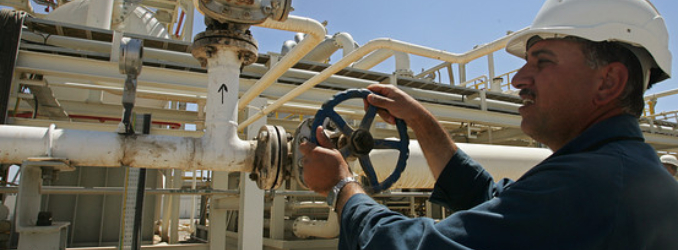
Iraq’s recent cabinet approval to transfer operations at the significant West Qurna 2 (WQ2) oilfield from Russia’s Lukoil to the state-owned Basra Oil Company (BOC) marks a pivotal moment for the nation’s energy future and global oil markets. This move, affecting a field currently producing 460,000 barrels per day (bpd) and holding an estimated 14 billion barrels of recoverable reserves, is more than a simple change of management; it represents Iraq’s determined effort to assert greater sovereign control over its vital resources amidst a complex geopolitical landscape. For investors, this development signals potential shifts in supply stability, operational efficiency, and Iraq’s long-term production trajectory, requiring careful consideration of its implications for global oil dynamics and future investment opportunities in the region.
Geopolitical Realignment: Iraq’s Strategic Asset Reclamation
The transition of West Qurna 2 operations to Basra Oil Company is deeply rooted in evolving geopolitical realities. Lukoil, holding a 75% stake in the 25-year technical service contract signed in January 2010, declared force majeure in October 2025, driven by the imposition of UK and U.S. sanctions. This forced divestment of international assets provided Iraq with an opportune moment to consolidate control over one of its largest upstream fields. The cabinet’s description of the deal as an “amicable settlement,” covering outstanding invoices and ensuring the employment of foreign personnel, underscores Iraq’s intent to manage the transition smoothly while securing long-term operational stability. Furthermore, the decision to treat taxes on foreign employees’ pay as final state revenue and to finance operations through the Majnoon field account, supplemented by revenues from crude marketed by SOMO, illustrates a deliberate strategy to internalize the economic benefits and management oversight of this strategic asset. This move reflects a broader trend among major oil-producing nations to enhance national participation in their energy sectors, ensuring that critical production assets align with national strategic priorities.
Market Implications and Production Outlook: Navigating Volatility
The transfer of West Qurna 2, currently contributing 460,000 bpd – approximately 0.5% of global oil supply – carries significant weight for market watchers, especially when considering the field’s ambitious target of ramping up production to 800,000 bpd. As of today, Brent Crude trades at $93.91, up 3.85% for the day, while WTI Crude stands at $90.38, showing a 3.39% increase. This daily rebound comes after a period of notable volatility, with Brent having declined sharply by nearly 20% from $118.35 on March 31st to $94.86 just yesterday. This recent price action underscores the market’s sensitivity to supply-side news and geopolitical shifts. Investors are keenly watching how Basra Oil Company’s management will impact the field’s ability to achieve its production targets. Successful execution of the ramp-up could add a substantial 340,000 bpd to global supply, potentially influencing future price stability. Conversely, any operational hiccups or delays could exacerbate supply concerns, particularly given the field’s history under an international operator. The challenge for BOC will be to maintain Lukoil’s operational efficiency and technical expertise while navigating the complexities of state-owned enterprise management.
Investor Focus: Addressing Supply Certainty and Future Price Trajectories
In a market characterized by such price swings, investor questions naturally gravitate towards fundamental drivers. Our proprietary reader intent data shows significant interest in whether “WTI is going up or down” and predictions for “the price of oil per barrel by end of 2026.” The WQ2 transition directly feeds into these concerns by impacting the perceived stability and future trajectory of global supply. For investors, the key question is whether Iraq’s state-owned Basra Oil Company can sustain, let alone increase, production efficiently. While Iraq gains greater sovereign control, the shift from a seasoned international operator like Lukoil to a state entity raises questions about capital expenditure commitment, technological adoption, and overall operational prowess. Chevron Corp. previously expressed interest in acquiring Lukoil’s stake but reportedly sought revised contract terms, indicating that major international players recognize the field’s potential but require specific frameworks to justify investment. This highlights the inherent risks and opportunities for investors evaluating Iraq’s long-term production growth and its capacity to meet future global demand. The successful management of WQ2 could bolster confidence in Iraq’s ability to be a reliable oil producer, while any missteps could add another layer of uncertainty to an already complex market outlook.
Upcoming Events and the Road Ahead for Iraqi Oil
The full implications of the West Qurna 2 transfer will unfold against a backdrop of critical upcoming energy events, demanding close attention from investors. The OPEC+ Joint Ministerial Monitoring Committee (JMMC) Meeting scheduled for tomorrow, April 21st, is particularly relevant. As a prominent OPEC+ member, Iraq’s increased control over a major producing asset like WQ2 will inevitably factor into its discussions regarding production quotas and compliance. Any signals from this meeting regarding future supply policies will directly impact global oil prices and investor sentiment. Furthermore, the weekly insights provided by the EIA Weekly Petroleum Status Reports on April 22nd and 29th, alongside the API Weekly Crude Inventory reports on April 28th and May 5th, will offer crucial data points on immediate supply and demand balances in the U.S. market, serving as a pulse check for the broader global picture. Looking further ahead, the EIA Short-Term Energy Outlook on May 2nd will provide a macro forecast that integrates such significant geopolitical and operational shifts. For investors, these events collectively offer a framework for assessing how Iraq’s strategic move at West Qurna 2 aligns with, or diverges from, the broader market narrative, and how it might influence crude prices and investment strategies into the latter half of 2026. The coming weeks will be instrumental in gauging the market’s reaction and Iraq’s strategic execution.