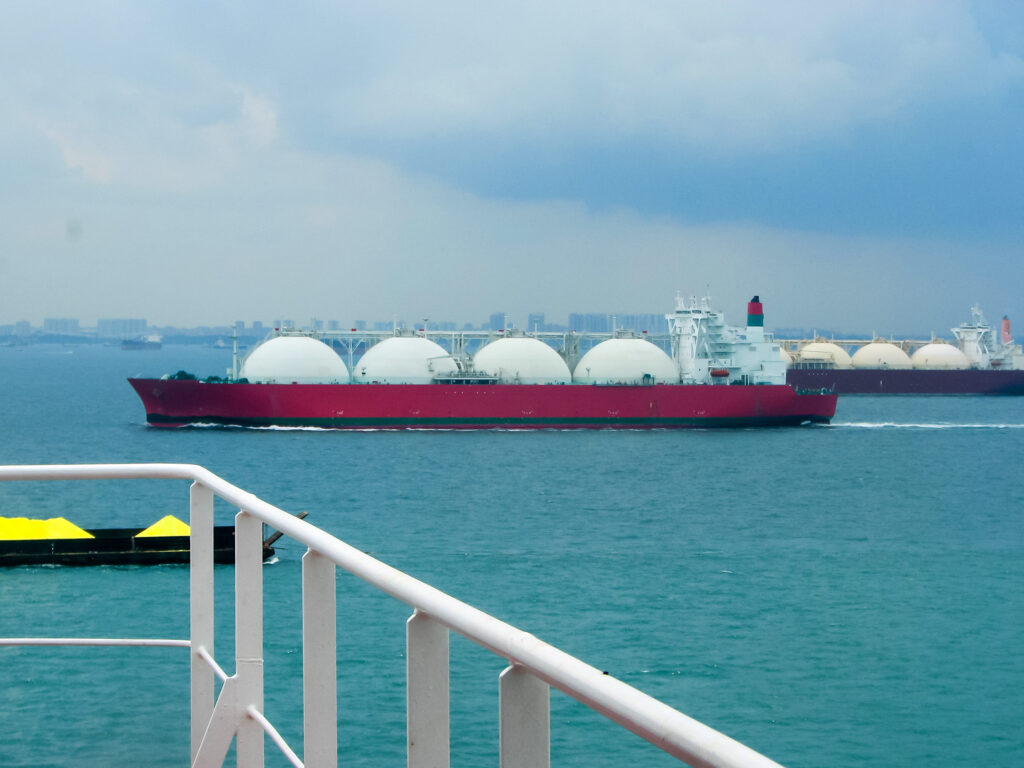
Iraq’s recent agreement with Excelerate Energy to establish its inaugural floating LNG import platform marks a pivotal moment in the nation’s long-term energy strategy. As the second-largest OPEC producer, Iraq has historically grappled with insufficient domestic gas supply, leading to a heavy reliance on imports and frequent power disruptions. This new floating storage regasification unit (FSRU) at Khor Al-Zubair is not merely an infrastructure project; it represents a strategic pivot towards energy diversification and enhanced grid stability, offering a compelling long-term investment thesis amidst the dynamic global energy landscape. For investors closely monitoring the interplay of geopolitics, energy security, and market fundamentals, this development warrants careful consideration, particularly in how it de-risks a significant regional energy player.
Iraq’s Strategic Shift: De-risking and Diversifying Energy Supply
For decades, Iraq has been caught in a challenging energy paradox: an abundance of associated gas from its vast oil fields, yet a critical shortage of gas for power generation, forcing dependence on external sources. This has led to persistent issues, including the flaring of valuable natural gas and crippling blackouts during peak demand periods, especially in the hot summer months. The contract with Excelerate Energy to deploy an FSRU is a direct response to these deep-seated challenges. By enabling the importation of liquefied natural gas, Iraq aims to significantly bolster its domestic power generation capacity, thereby stabilizing its national grid and, crucially, reducing its reliance on pipeline gas from neighboring Iran. This move aligns with broader international efforts to support Iraq’s energy independence, with U.S. Department of State officials highlighting the terminal as a vital step in advancing Iraq’s energy security and strengthening regional stability. From an investment perspective, supporting such critical infrastructure projects in a major oil-producing nation offers a pathway to long-term, stable revenue streams, driven by sovereign-backed energy security imperatives.
Navigating Volatility: The Investment Landscape for Gas Infrastructure
The decision to advance this significant LNG project comes at a time of notable volatility in the broader energy markets. As of today, Brent crude trades at $90.38 per barrel, reflecting a sharp 9.07% decline within the day, with WTI crude similarly dropping to $82.59, down 9.41%. This bearish sentiment in crude is further underscored by the 14-day trend, which has seen Brent prices fall by nearly 20%, from $112.78 on March 30 to current levels. Gasoline prices have also followed suit, now at $2.93, a 5.18% drop. While these fluctuations in crude and refined product prices can create short-term uncertainty across the energy sector, it’s crucial for investors to differentiate between commodity price volatility and the long-term strategic value of critical infrastructure. Iraq’s investment in an FSRU represents a foundational commitment to energy security that transcends daily price swings. Such projects, often backed by national governments and long-term contracts, provide a degree of insulation from the immediate turbulence of the crude market, offering a more predictable return profile for companies specializing in LNG infrastructure and services.
Forward Trajectories: Upcoming Events and LNG Market Signals
Looking ahead, the next few weeks are packed with events that will shape the broader energy market sentiment, indirectly influencing the investment climate for projects like Iraq’s FSRU. Investors will be keenly watching the upcoming OPEC+ Joint Ministerial Monitoring Committee (JMMC) meeting on April 19, followed by the full OPEC+ Ministerial Meeting on April 20. Decisions made during these gatherings regarding production quotas will directly impact global crude supply and, by extension, overall energy price stability. Furthermore, the regular API and EIA Weekly Crude Inventory reports on April 21-22 and April 28-29 will provide crucial insights into demand trends and inventory levels in major consuming nations. The Baker Hughes Rig Count, scheduled for April 24 and May 1, will offer a snapshot of upstream activity. While these events are primarily focused on the crude oil market, a stable or tightening crude market can foster a more confident environment for capital allocation across the entire energy complex, including gas infrastructure. For LNG specifically, sustained global demand for gas, driven by energy security concerns and the energy transition, suggests a robust long-term outlook that these broader market indicators will help contextualize.
Addressing Investor Concerns: Long-Term Value in a Shifting Energy Mix
Our proprietary reader intent data reveals that investors are keenly focused on long-term price predictions and fundamental market drivers. Questions such as “what do you predict the price of oil per barrel will be by end of 2026?” and inquiries about “OPEC+ current production quotas” underscore a desire for clarity on future market direction and supply-side management. Iraq’s move to secure LNG import capabilities directly addresses a core aspect of long-term energy stability: reliable supply. While short-term crude price gyrations capture headlines and influence immediate trading decisions, the strategic value of diversifying a nation’s energy mix through robust infrastructure cannot be overstated. For companies like Excelerate Energy, which are instrumental in delivering these solutions, this translates into durable business models underpinned by essential services. Investors seeking exposure to the energy sector beyond pure commodity price speculation should consider the stability offered by companies engaged in critical infrastructure development. These projects, often characterized by long-term contracts and essential national security implications, provide a hedge against market volatility and position portfolios to benefit from the sustained global push for energy independence and diversified supply chains.