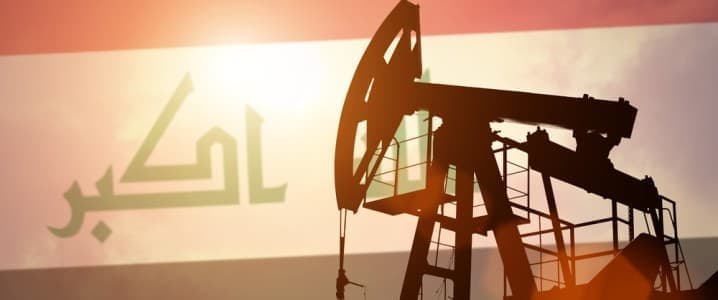
Iraq, OPEC’s second-largest producer, is actively engaging with the cartel to renegotiate its oil production quota, signaling a potential shift in global supply dynamics. This move comes as Baghdad’s production capacity continues to expand, presenting both opportunities and challenges for the stability of the crude market. For investors tracking energy plays, understanding the intricacies of Iraq’s aspirations, its historical compliance issues, and how these factors intersect with broader OPEC+ policy is crucial. This analysis delves into the underlying drivers of Iraq’s push for a higher quota, the immediate market implications, and what upcoming events signal for the future of global oil supply.
Iraq’s Capacity Ambitions Clash with Quota Realities
Baghdad’s oil minister has confirmed that Iraq is in discussions to reassess its production quota, citing an available production capacity of 5.5 million barrels per day (bpd). This stands in stark contrast to its current OPEC quota of 4.4 million bpd. While the nation aims to reach a sustainable production capacity of 5.5 million bpd by the end of this year through aggressive expansion in drilling, infrastructure upgrades, and enhanced water injection, its current crude oil exports hover around 3.6 million bpd. The ambition doesn’t stop there; Iraq projects its output capacity to surpass 6 million bpd by 2029. This significant disparity between current exports, quota, and projected capacity highlights a fundamental tension: Iraq’s long-term growth strategy is increasingly constrained by OPEC+ agreements designed to stabilize markets.
Adding another layer of complexity, Iraq has historically struggled with quota compliance. Alongside other members, it has often overproduced, leading to a current commitment to a compensation plan. Under this arrangement, Iraq is obligated to pump over 100,000 bpd less than its allocated quota until June 2026 to offset past infractions. This commitment means that even with rising capacity, Iraq is currently operating below its official quota, let alone its physical potential. The recent preliminary exploration agreements with Chevron, marking a significant re-engagement for the U.S. supermajor, and the restart of exports from the Kurdistan region at approximately 200,000 bpd, further underscore Iraq’s determination to maximize its oil potential. These developments suggest a future where Iraq will exert considerable pressure on OPEC+ for greater production flexibility.
Navigating a Shifting Market: The OPEC+ Conundrum
Iraq’s push for a higher quota comes at a particularly volatile time for the global oil market. As of today, Brent Crude trades at $90.38, reflecting a significant 9.07% daily decline. Similarly, WTI Crude has seen a sharp drop to $82.59, down 9.41% within the day’s trading range. This recent downturn is part of a broader trend; Brent crude has fallen from $112.78 on March 30th to its current level, representing a nearly 20% depreciation in less than three weeks. Gasoline prices have also dipped to $2.93, down 5.18% today. This pronounced market weakness presents a significant challenge for OPEC+. On one hand, maintaining production cuts helps support prices. On the other, members like Iraq, with increasing capacity and a need for revenue, will find it harder to adhere to restrictive quotas when prices are falling.
Investors are keenly observing this dynamic. Our proprietary data shows that a top question from OilMarketCap readers this week is, “What are OPEC+ current production quotas?” This highlights the market’s intense focus on compliance and the potential for quota adjustments. In this environment, Iraq’s request places OPEC+ in a difficult position. Allowing Iraq to increase its output could be perceived as weakening the cartel’s collective resolve, potentially exacerbating downward price pressure. Conversely, denying Iraq’s request risks internal friction and non-compliance, which could be equally detrimental to market stability. The delicate balance between member aspirations and collective market management will be tested in the coming weeks and months.
Upcoming OPEC+ Meetings: A Pivotal Moment for Supply Policy
The timing of Iraq’s stated intentions is particularly significant given the imminent OPEC+ calendar. Investors should mark their calendars for the OPEC+ Joint Ministerial Monitoring Committee (JMMC) Meeting on April 19th, followed by the full OPEC+ Ministerial Meeting on April 20th. While Iraq’s specific quota review might not be the sole focus of these immediate gatherings, its public declaration undoubtedly sets a crucial backdrop for discussions on overall supply strategy. These meetings will be vital in signaling whether the cartel intends to maintain its current production cuts, potentially deepen them in response to recent price declines, or begin to consider a gradual unwinding of restrictions later in the year.
Any decision regarding Iraq’s quota will have broader implications for the market’s perception of OPEC+ unity and its ability to manage global supply. Our readers are also asking, “What do you predict the price of oil per barrel will be by end of 2026?” The answer to this question is intrinsically linked to how OPEC+ handles internal pressures, such as Iraq’s request, and external market conditions. Should Iraq be granted a higher quota, even incrementally, it could signal a loosening of supply discipline, potentially capping upside price movements. Conversely, a firm rejection might temporarily support prices but could lead to increased non-compliance from Iraq, undermining the cartel’s credibility. The resolutions from these upcoming meetings will offer critical insights into the near-term supply outlook and OPEC+’s strategy for navigating a volatile market.
Long-Term Outlook: Geopolitical Factors and Infrastructure Growth
Looking beyond the immediate quota discussions, Iraq’s long-term capacity targets of 5.5 million bpd by year-end and over 6 million bpd by 2029 have significant implications for the global supply landscape. The country’s commitment to expanding its oil sector, evidenced by investments in well drilling, facility upgrades, and agreements with international majors like Chevron, positions it as a key player in future supply growth. The restart of Kurdistan exports, albeit at 200,000 bpd initially, also signals a move towards maximizing all available production avenues.
However, realizing these ambitious targets hinges on several factors, including sustained capital investment, technological advancements, and perhaps most critically, geopolitical stability within Iraq and the broader region. While increased supply from Iraq could help meet growing global demand in the coming years, it also introduces a potential wild card into OPEC+’s long-term planning. The ability of the cartel to integrate Iraq’s burgeoning capacity while maintaining market stability will be a defining challenge. For investors, monitoring Iraq’s infrastructure projects, the progress of its compensation plan, and the diplomatic engagements with OPEC+ will be paramount in assessing the future trajectory of global oil supply and prices.
Iraq’s determined push for a higher OPEC quota represents a significant development for the global oil market. With rising production capacity and a clear long-term growth strategy, Baghdad is poised to exert increasing influence on supply dynamics. However, the current market weakness, coupled with Iraq’s historical compliance challenges and ongoing compensation plan, complicates immediate adjustments. The upcoming OPEC+ meetings will serve as a crucial barometer, signaling the cartel’s willingness to accommodate individual member ambitions against the backdrop of collective market management. Investors must closely monitor these developments, as the outcome will undeniably shape both near-term price stability and the long-term supply narrative in the oil and gas sector.


