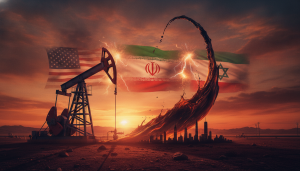
The geopolitical landscape surrounding Iran has once again tightened, sending tremors through global energy markets as a recently announced ceasefire appears to have unraveled. With accusations of violations from Tehran’s parliamentary speaker, Mohammad Bagher Ghalibaf, the fragile truce has quickly given way to renewed mistrust and heightened risk. For oil and gas investors, this development underscores the inherent volatility in a region critical to global supply, particularly concerning the strategic Strait of Hormuz. Our proprietary data pipelines highlight a market attempting to price in this uncertainty amidst existing supply-demand dynamics, demanding a keen eye on both immediate and forward-looking indicators.
Ceasefire Collapse and Deepening Distrust
Just days after President Donald Trump described Iran’s proposal as a “workable basis” for negotiations and agreed to a two-week halt in attacks, the prospect of de-escalation has significantly diminished. Mohammad Bagher Ghalibaf, Iran’s parliamentary speaker, issued a stern statement accusing the United States of violating the terms of the temporary agreement. Ghalibaf detailed three specific breaches: continued Israeli military actions in Lebanon, an unauthorized drone incursion into Iranian airspace, and the ongoing denial of Iran’s sovereign right to enrich uranium. This immediate breakdown, Ghalibaf asserted, renders any bilateral ceasefire or further negotiations “unreasonable.” Such pronouncements from high-ranking officials signal a hardening of positions, rooted, as Ghalibaf noted, in a “deep historical distrust” that Iran holds towards the U.S. This historical context is vital for investors to understand, as it suggests that quick resolutions to current tensions are unlikely and that geopolitical risk will remain a persistent factor in crude oil pricing.
The Strait of Hormuz: A Chokepoint Under Renewed Threat
Central to the dispute and of paramount concern to global energy markets is the Strait of Hormuz. The core of the short-lived ceasefire agreement hinged on Iran allowing unimpeded passage for ships through this vital waterway. However, a significant divergence in interpretation quickly emerged. While President Trump stated the ceasefire was contingent on the Strait’s “complete, immediate and safe opening without limitation, including tolls,” Iranian reports, specifically from The Financial Times, indicated Tehran’s intention to demand tolls for passage. This fundamental disagreement highlights the precarious nature of maritime security in the Gulf. Before the U.S. and Israeli attacks on February 28, approximately 20% of global oil supplies transited the Strait. Since the conflict escalated, Iranian state news agency Fars has reported a halt in oil tanker traffic, attributing it to continued Israeli attacks on Lebanon. Indeed, tanker traffic through the Strait has plunged, precipitating what has been termed the “largest crude oil supply disruption in history.” Data indicates that ship traffic has not recovered beyond minimal levels, underscoring the severe constriction of a critical artery for crude exports and imports alike. Any further escalation around this chokepoint could trigger a profound reassessment of global supply security.
Market Response and Investor Sentiment
Amidst these rising geopolitical temperatures, crude oil markets are exhibiting a complex reaction. As of today, Brent Crude trades at $93.79 per barrel, marking a +0.59% gain, within a day range of $91.39-$94.86. Similarly, WTI Crude stands at $89.8 per barrel, up +0.14%, having traded between $87.64 and $91.41. While these figures show an uptick today, it’s crucial to contextualize them within the broader trend. Over the past two weeks, Brent crude has actually trended downwards, retreating from $101.16 on April 1st to $94.09 by April 21st, representing a decline of $7.07, or 7%. This suggests that while immediate headlines may create intraday volatility, the market has recently been absorbing other factors, potentially including demand concerns or expectations of supply elsewhere, even as Middle East risk premium looms. Our proprietary reader intent data reveals a common thread among investors: a keen focus on the future trajectory of crude prices. Questions like “is WTI going up or down” and “what do you predict the price of oil per barrel will be by end of 2026?” dominate inquiries, reflecting a deep uncertainty. While the immediate market reaction to the ceasefire’s unraveling might seem muted against the recent downtrend, the underlying geopolitical risk premium remains a significant, albeit fluctuating, component of current pricing, poised for rapid adjustment should the situation in the Strait of Hormuz deteriorate further.
Upcoming Catalysts and Forward-Looking Fundamentals
For investors navigating this volatile landscape, understanding upcoming market catalysts is paramount. While geopolitical events often introduce unpredictable shocks, fundamental data points provide crucial insights into the market’s underlying health and ability to absorb disruptions. This week, the market will closely monitor the EIA Weekly Petroleum Status Report, scheduled for Wednesday, April 22nd, followed by the Baker Hughes Rig Count on Friday, April 24th. These reports offer vital snapshots of U.S. crude inventories, refinery activity, and drilling levels – key indicators of domestic supply and demand that can either buffer or exacerbate global supply concerns. Looking ahead, API Weekly Crude Inventory data will be released on April 28th and May 5th, providing further color on storage levels. Perhaps most pertinent to long-term outlooks, especially for those investors asking about year-end price predictions, will be the EIA Short-Term Energy Outlook on May 2nd. This comprehensive report will offer updated forecasts for crude oil production, consumption, and prices, incorporating the latest geopolitical developments. Any significant revisions in these outlooks, particularly concerning global supply/demand balances, could serve as powerful catalysts for price movements, underscoring the need for investors to integrate both geopolitical and fundamental analyses in their strategies.