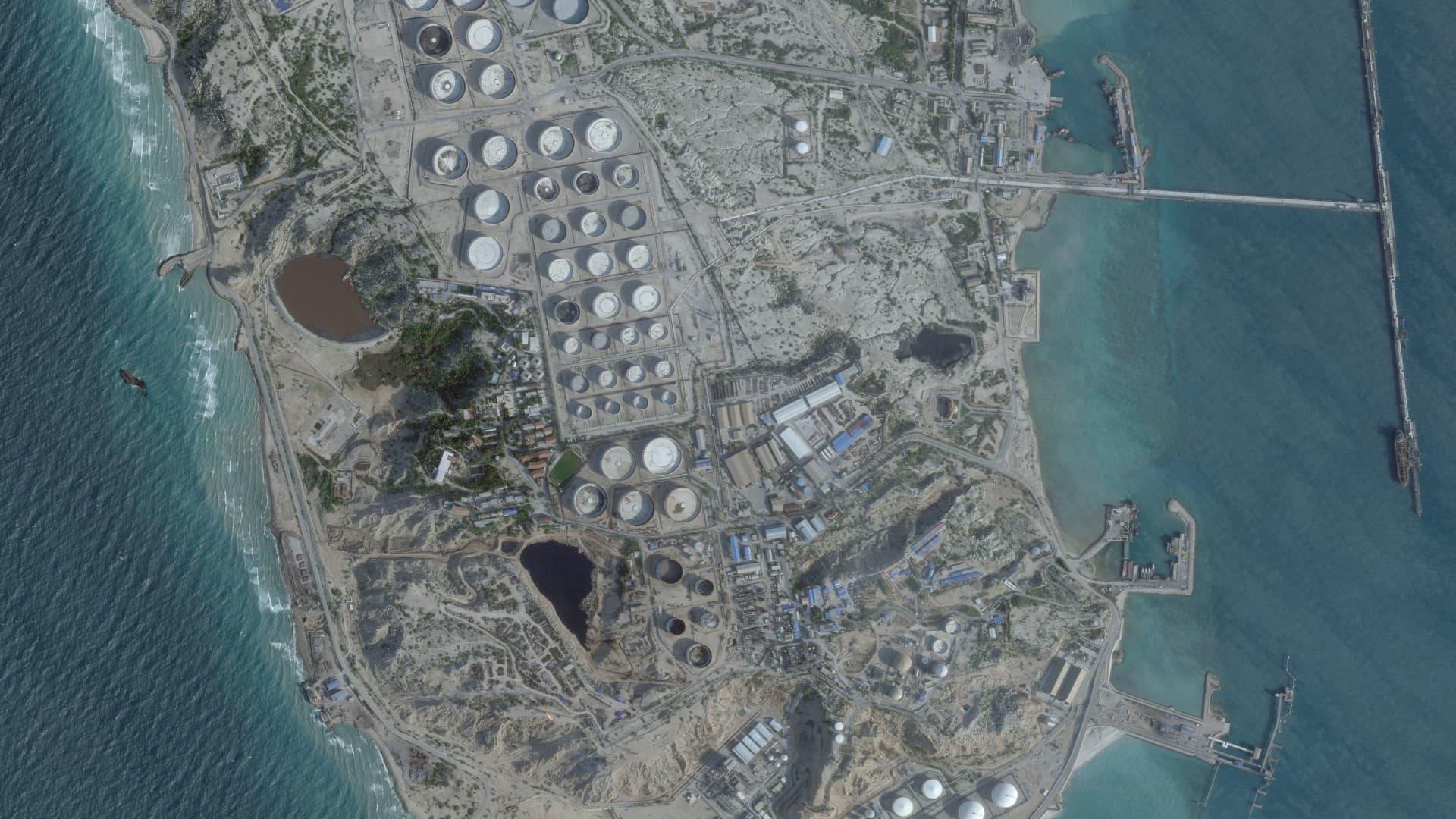
The global oil market continues its tumultuous journey, grappling with a potent mix of geopolitical tension and shifting supply-demand dynamics. While recent headlines screamed about crude prices breaching the $100 per barrel mark amidst escalated threats to Iranian oil exports, a closer look at real-time market data reveals a more complex, and perhaps cautionary, narrative for investors. The specter of disruption, particularly around Iran’s critical Kharg Island export facilities and the Strait of Hormuz, remains a significant bullish factor. However, the market’s immediate reaction has diverged from its initial panic, prompting a deeper dive into the forces at play and what lies ahead for energy investors.
Geopolitical Flashpoints and the Market’s Measured Response
The escalating situation surrounding Iran’s oil export capabilities has understandably sent shockwaves through the market. Threats of U.S. military action targeting critical infrastructure on Kharg Island, which accounts for approximately 90% of Iran’s 3.2 million barrels per day (bpd) production, represent a grave risk. Analysts have warned that a direct strike could immediately halve Iran’s crude exports by 1.5 million bpd, potentially triggering severe retaliation in the Strait of Hormuz, a choke point through which 20% of the world’s oil supply transits. Such an event would undoubtedly constitute an unprecedented supply disruption.
Yet, despite this looming geopolitical risk, the market’s immediate pricing action has been more subdued than one might expect. As of today, Brent Crude trades at $92.9 per barrel, reflecting a modest 0.36% decline for the day, with its range between $92.57 and $94.21. Similarly, WTI Crude stands at $89.24 per barrel, down 0.48% within a daily range of $88.76 to $90.71. This stands in stark contrast to the initial surge that saw Brent briefly exceed $105 and WTI top $100. Our proprietary data further illustrates this tempering of sentiment: Brent crude has seen a notable pullback over the last 14 days, falling from $101.16 on April 1st to $94.09 on April 21st, a decline of approximately 7%. This suggests that while the risk premium is undeniably present, the market is not currently pricing in a full-blown, immediate catastrophe. Investors are carefully weighing the rhetoric against the reality of current supply flows, indicating a degree of skepticism or perhaps a longer fuse on the most extreme scenarios.
Strategic Reserves and the Limits of Intervention
In response to the initial surge in oil prices and the perceived supply deficit, an unprecedented global release of strategic petroleum reserves (SPR) was announced. Over 30 countries committed to releasing 400 million barrels of stockpiled oil, with the U.S. alone pledging 172 million barrels from its Strategic Petroleum Reserve. This marks the largest coordinated effort of its kind in history, aimed at cushioning the blow of potential supply disruptions and stabilizing prices.
While such a massive intervention might seem like a guaranteed price depressant, its effectiveness in the face of ongoing geopolitical risk remains a subject of intense debate. The initial price action, where oil climbed despite these announcements, highlighted the market’s primary focus on the underlying supply threat rather than temporary relief. However, the subsequent correction in prices, as evidenced by Brent’s 7% decline over the past two weeks, suggests that the SPR releases, coupled with a lack of immediate escalation, have provided some breathing room. Energy Secretary Chris Wright’s candid admission that “there’s no guarantees in wars at all” underscores the inherent uncertainty. While these reserves can mitigate short-term shortages, they cannot fundamentally alter the geopolitical risk landscape or prevent a sustained, major supply shock if the situation in the Persian Gulf deteriorates further. Investors must consider these releases as a temporary bandage, not a cure for structural instability.
Navigating the Near-Term: Data Signals and Investor Insights
For investors grappling with the paramount question of whether WTI is heading up or down, the coming weeks will offer crucial data points that could shift market sentiment. The market remains highly sensitive to inventory levels and production trends, which provide tangible insights beyond geopolitical headlines. Our proprietary reader intent data shows a clear preoccupation with future price direction, reflecting the acute uncertainty in the current environment.
Key upcoming events on the energy calendar will be critical for shaping the near-term outlook. This week, the EIA Weekly Petroleum Status Report on April 22nd (Wednesday) will offer a detailed snapshot of U.S. crude oil, gasoline, and distillate inventories, as well as refinery utilization rates. Following shortly, the Baker Hughes Rig Count on April 24th (Friday) will provide insight into North American drilling activity, a leading indicator for future production. Further inventory data from the API on April 28th (Tuesday) and another EIA report on April 29th (Wednesday) will continue to refine the supply picture. Looking into early May, the EIA’s Short-Term Energy Outlook on May 2nd (Saturday) will offer updated projections for supply, demand, and prices, providing a vital baseline for longer-term investor strategies. These regular data releases are essential for investors seeking to understand the underlying fundamentals that will either reinforce or contradict the geopolitical risk premium currently embedded in oil prices. A surprise build in inventories, for instance, could further cool prices, while an unexpected draw could reignite bullish sentiment despite the current pullback.
The Long Game: Supply Response and Demand Resilience
Beyond the immediate geopolitical concerns and inventory fluctuations, investors are also keenly focused on the broader supply and demand equilibrium, with many questioning the price of oil per barrel by the end of 2026. While the current market is dominated by short-term risks, the long-term trajectory will depend on the industry’s ability to respond to sustained price signals and the resilience of global demand. Even with Brent currently below $100, these are still elevated prices that historically incentivize increased investment in exploration and production. The Baker Hughes Rig Count, scheduled for release again on May 1st, will be a recurring indicator of this supply-side response. A sustained increase in active rigs, particularly in key basins, could signal a gradual easing of supply tightness.
However, demand resilience cannot be underestimated. Despite global economic headwinds and efforts towards energy transition, crude oil remains the lifeblood of global commerce and transportation. Any significant economic recovery, particularly in major consuming nations, could quickly absorb additional supply. Furthermore, the capacity of OPEC+ to effectively manage output and the ongoing underinvestment in conventional oil projects over recent years suggest that even without acute geopolitical shocks, the market may face structural tightness in the medium to long term. Investors should monitor capital expenditure announcements from major producers and the pace of global economic growth to form a comprehensive view of oil’s trajectory beyond the immediate crisis.