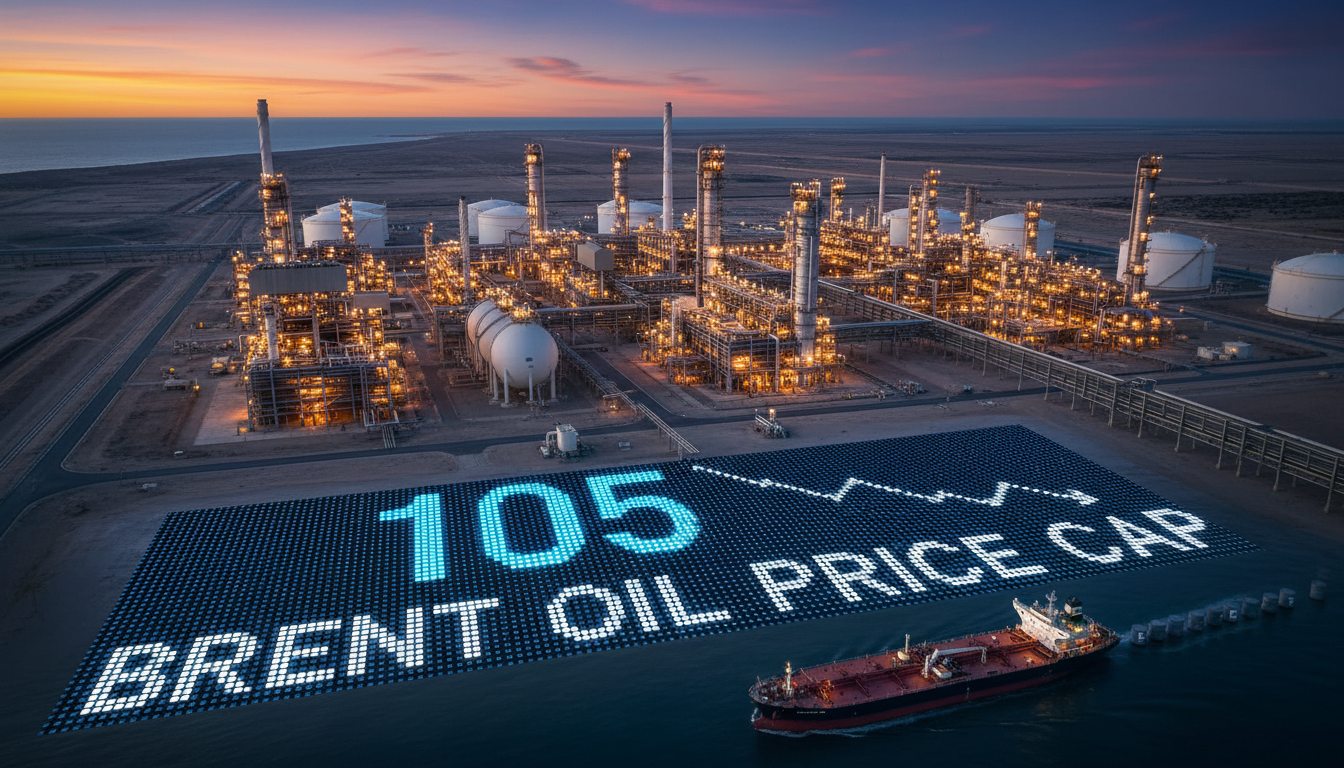
The global crude oil market continues its dynamic ascent, with benchmark prices reflecting a complex interplay of geopolitical tensions, supply adjustments, and the ever-present specter of diplomatic breakthroughs. Investors navigating this volatile landscape must consider multiple vectors influencing price discovery. Our proprietary data pipelines reveal a significant upward trend, with Brent crude surging over $16 in the past fortnight alone. While initial diplomatic overtures surrounding Iran previously signaled a potential ceiling, the market’s current trajectory suggests a re-evaluation of these tempering forces, demanding a sophisticated approach to investment strategy in the energy sector.
Brent Breaches Previous Hurdles Amid Elevated Geopolitical Risk
As of today, Brent Crude is trading at $112.77 per barrel, marking a robust 2.11% gain within the day’s range of $110.26 to $114.66. West Texas Intermediate (WTI) Crude follows suit at $108.67, up 1.67% and oscillating between $106.45 and $110.93. This current market snapshot represents a notable shift from just weeks ago. Our 14-day Brent trend data highlights a substantial increase from $95.2 on April 10th to $111.65 by April 29th, an impressive surge of $16.45, or 17.3%. This upward momentum has decisively pushed past the $110 threshold that some analysts previously identified as a near-term ceiling, tempered by diplomatic efforts.
A significant portion of this price appreciation can be attributed to persistent geopolitical flashpoints. The Strait of Hormuz remains a critical choke point, underpinning a substantial risk premium. Recent actions by Iran’s Islamic Revolutionary Guard Corps (IRGC), specifically the seizure of two container ships, the MSC Francesca and the Epaminondas, following a prior U.S. seizure of the Touska, underscore the extreme fragility of maritime trade routes. These incidents, effectively halting non-oil tanker passage, inject considerable uncertainty into global supply chains and directly impact the pricing of oil. The current $4.10 spread between Brent and WTI further reflects the influence of these international geopolitical factors on global versus regional market dynamics.
Iran Talks: A Potential Future Headwind, Not a Current Ceiling
Investor questions this week highlight keen interest in the broader US-Iran negotiations, with many asking about the state of these talks and their implications for oil prices. Our proprietary intent data indicates that investors are grappling with the fact that while a ceasefire between Israel and Lebanon has been extended by three weeks, the broader US-Iran negotiations remain stalled. The U.S. has ruled out rushing a deal, and Iran insists on a full lifting of sanctions on its ports. This lack of immediate progress means that the tempering effect on oil prices that was once anticipated from renewed diplomatic efforts has largely dissipated, or at least been overshadowed by other bullish factors.
While renewed diplomatic efforts historically have the potential to act as a psychological “ceiling” on crude prices by hinting at increased supply, the current market reality, with Brent firmly above $112, indicates that this particular ceiling has been breached. Investors are now pricing in less likelihood of a swift return of significant Iranian crude to global markets in the near term. Should a breakthrough materialize and sanctions be eased, the reentry of Iranian barrels could certainly introduce downward pressure, potentially re-establishing a lower price ceiling. However, for now, the protracted nature of negotiations and Iran’s firm stance on sanctions relief mean that the market’s focus remains on current supply tightness and geopolitical risks rather than an imminent flood of Iranian crude.
Shifting Supply Dynamics and European Energy Security
Beyond the Strait of Hormuz, the global supply landscape is undergoing significant shifts. In Europe, a measure of relief materialized with the reactivation of Russian crude oil flows through the Druzhba pipeline, ending a three-month hiatus. This crucial restart for European energy security immediately followed Slovakia and Hungary lifting their vetoes on a $105 billion EU loan package for Kyiv. While offering regional respite, this development is set against the backdrop of the European Union’s 20th package of sanctions against Russia.
This latest EU iteration targets Russia’s shadow fleet, adding 46 tankers to a prohibited list, banning transactions involving the ports of Murmansk and Tuapse, and introducing a ‘no-Russia’ clause for all future tanker sales. These measures are designed to further constrict Russia’s oil revenue streams but simultaneously introduce new complexities and costs for the global maritime and energy logistics sectors. Investors must monitor the ripple effects on shipping rates, vessel availability, and ultimately, the cost of crude oil delivery worldwide. Complementing these market dynamics, the U.S. government continues to utilize its Strategic Petroleum Reserves (SPRs), having released 79.7 million barrels to 12 companies, with at least 4 million barrels currently en route from the Gulf Coast to Europe, including a very large crude carrier (VLCC) transporting 2 million barrels of Bryan Mound medium sour crude.
Forward Catalysts: Key Reports to Shape the Next Quarter’s Outlook
Looking ahead, the coming weeks are packed with critical data releases that will provide essential insights for investors seeking to build a base-case Brent price forecast for the next quarter and understand the 2026 weekly trend for crude oil. These upcoming calendar events are vital for assessing supply-demand balances and production trends.
- **May 1st and May 8th:** The Baker Hughes Rig Count reports will offer a real-time pulse on U.S. drilling activity, providing clues on future domestic production capabilities.
- **May 2nd:** The EIA Short-Term Energy Outlook (STEO) is a crucial macro report that will provide updated forecasts for global supply, demand, and inventory levels, influencing market sentiment significantly.
- **May 5th and May 12th:** The API Weekly Crude Inventory reports will be closely watched for short-term inventory builds or draws, offering a glimpse into immediate market balances.
- **May 6th and May 13th:** These will be followed by the official EIA Weekly Petroleum Status Reports, which often move markets as they confirm or contradict API figures and provide more granular data on refinery utilization and product demand.
- **May 12th:** The IEA Oil Market Report will offer another high-level perspective on global oil supply and demand fundamentals, particularly important for understanding international market dynamics and potential shifts in OPEC+ policy.
These forward-looking data points will be instrumental in answering questions about potential over-production by certain OPEC+ members and refining price expectations. Investors should closely track these releases to identify emerging trends and adjust their portfolios accordingly, as the market navigates persistent geopolitical risks and evolving supply-demand fundamentals.