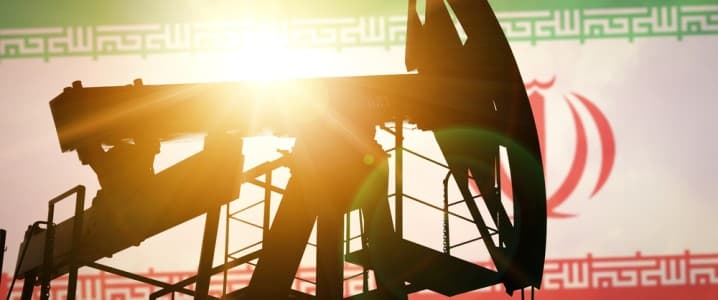
The Persian Gulf, a perennial flashpoint for global energy markets, is once again witnessing elevated geopolitical tensions, this time centered on a long-disputed offshore natural gas field and several strategically vital islands. Iran’s recent forceful rejection of claims from the Gulf Cooperation Council (GCC) regarding the Arash (Dorra) gas field and the islands of Abu Musa, Greater Tunb, and Lesser Tunb serves as a potent reminder of the inherent risks embedded in regional energy investments. For oil and gas investors, this isn’t merely a diplomatic spat; it’s a critical signal of potential supply disruptions, heightened risk premiums, and uncertain long-term development prospects in a region that accounts for a significant portion of the world’s hydrocarbon output. Understanding these evolving dynamics is paramount for navigating the complex energy landscape ahead.
The Contested Assets: A Deep Dive into Arash/Dorra and Strategic Islands
At the heart of the escalating rhetoric lies the Arash gas field, known as Dorra by the Arab Gulf states, a significant offshore discovery from the 1960s. This field, estimated to hold some 220 billion cubic meters of natural gas reserves, straddles what Iran claims are its territorial waters, leading to its assertion of partial ownership. Conversely, Kuwait, supported by Saudi Arabia, insists the field is entirely within its maritime boundaries. This dispute gained fresh urgency in July when Kuwait initiated construction of an onshore gas processing plant intended to be fed directly from the Dorra field, following a joint development agreement signed with Saudi Arabia in 2022. The GCC’s recent statement, explicitly affirming the field’s full ownership by Kuwait and Saudi Arabia, was met with a swift and unequivocal rejection from Iran, which labeled these “one-sided claims” as “hackneyed and legally baseless,” calling instead for bilateral dialogue.
Adding another layer of complexity are the three islands – Abu Musa, Greater Tunb, and Lesser Tunb – which Iran asserts are sovereign Iranian territory, while the GCC maintains they are Kuwaiti territory under Iranian occupation. These islands are not merely symbolic; their control dictates maritime boundaries and strategic influence over vital shipping lanes in the Gulf. For investors, the unresolved status of these assets means potential delays in exploration, development, and production, locking away valuable natural gas resources that could otherwise contribute to global energy security. The lack of a clear, internationally recognized resolution continues to cloud the investment outlook for the entire region.
Geopolitical Risk Premium: Market Response and Future Implications
Such geopolitical flashpoints inevitably translate into a heightened risk premium for crude oil and natural gas prices, even if the immediate impact isn’t always a dramatic spike. As of today, Brent crude trades at $90.38 per barrel, marking a significant 9.07% decline for the day, while WTI crude sits at $82.59, down 9.41% within the same period. This current market snapshot shows a general retreat from recent highs, with Brent having fallen from $112.78 on March 30 to $91.87 just yesterday, an 18.5% drop over the past two weeks. However, this downturn in tactical trading does not diminish the strategic importance of underlying geopolitical tensions.
While today’s market movements might reflect broader demand concerns or profit-taking, the persistent and escalating dispute over the Arash/Dorra field acts as a constant upward pressure on the geopolitical risk component of oil prices. It signals potential for supply disruptions, either through direct confrontation or, more likely, through sanctions, heightened shipping costs, or delayed investment in critical infrastructure. Investors must recognize that while daily price fluctuations are common, the long-term trajectory of crude oil and natural gas remains highly susceptible to regional instability. Any further escalation in this particular dispute could quickly reverse recent price declines and inject significant volatility back into the market, challenging the stability seen in the broader energy complex.
Investor Focus: Long-Term Price Predictions Amidst Supply Uncertainty
Our proprietary intent data reveals that investors are keenly focused on the long-term trajectory of crude, with a prominent question this week being: “What do you predict the price of oil per barrel will be by end of 2026?” The ongoing dispute over the Arash/Dorra field directly complicates such predictions. Unresolved ownership claims and territorial disputes are significant deterrents to investment in exploration and production, particularly for a field containing 220 billion cubic meters of natural gas. This gas, if developed, could play a crucial role in regional energy security and potentially offer an alternative supply source in an increasingly tight global natural gas market.
However, the current impasse means these reserves remain largely untapped, preventing their contribution to global supply. This supply uncertainty, stemming from geopolitical friction, inherently adds a bullish bias to long-term price forecasts. Should the dispute escalate, or remain unresolved for an extended period, the market will factor in the lost opportunity for additional supply, particularly as global demand continues to recover and transition efforts face challenges. Investors must therefore integrate these geopolitical risks into their fundamental analysis, understanding that political will and diplomatic breakthroughs are as critical to future supply as geological potential and technological capability.
The OPEC+ Factor and Upcoming Market Catalysts
Another pressing concern for our readers, as highlighted by our AI assistant, revolves around “What are OPEC+ current production quotas?” This question underscores the market’s reliance on collective supply management, and the Arash/Dorra dispute adds a layer of complexity to the upcoming OPEC+ discussions. The immediate horizon brings critical OPEC+ meetings, with the Joint Ministerial Monitoring Committee (JMMC) scheduled for April 18 and the full Ministerial Meeting on April 19. While these meetings will primarily focus on production policies, the undercurrent of heightened regional tensions cannot be ignored.
Both Kuwait and Saudi Arabia are influential members of OPEC+, and their involvement in a territorial dispute with Iran, another OPEC member, albeit under sanctions, could subtly influence the dynamics within the cartel. While direct discussion of the Arash/Dorra field is unlikely on the formal agenda, the broader regional instability it represents could impact member states’ cohesion and willingness to adhere to or adjust production quotas. Any perceived threat to regional stability could lead to more conservative production decisions by Gulf producers, aiming to maintain spare capacity as a geopolitical hedge. Beyond OPEC+, the market will also closely watch weekly inventory reports from API on April 21 and EIA on April 22, along with the Baker Hughes Rig Count on April 24, for tactical supply-demand signals. However, these tactical data points must always be viewed through the lens of strategic geopolitical developments like the Iran-GCC dispute, which fundamentally shape the long-term investment landscape in the energy sector.


