The global oil market is once again grappling with significant geopolitical turbulence, stemming from heightened tensions in Iran and the resulting disruption to critical shipping lanes. Specifically, the Strait of Hormuz, a choke point for approximately 20% of the world’s daily oil supply, has seen its passability severely impacted. This crisis immediately raises questions about market stability and the potential for mitigating supply shocks. While political rhetoric has often championed the rapid expansion of U.S. domestic oil production as a panacea for energy security, a deep dive into current market realities and logistical constraints reveals that American output alone is unlikely to be the swift fix investors are hoping for in the face of such a profound global supply challenge.
The Illusion of Domestic Production as a Quick Fix
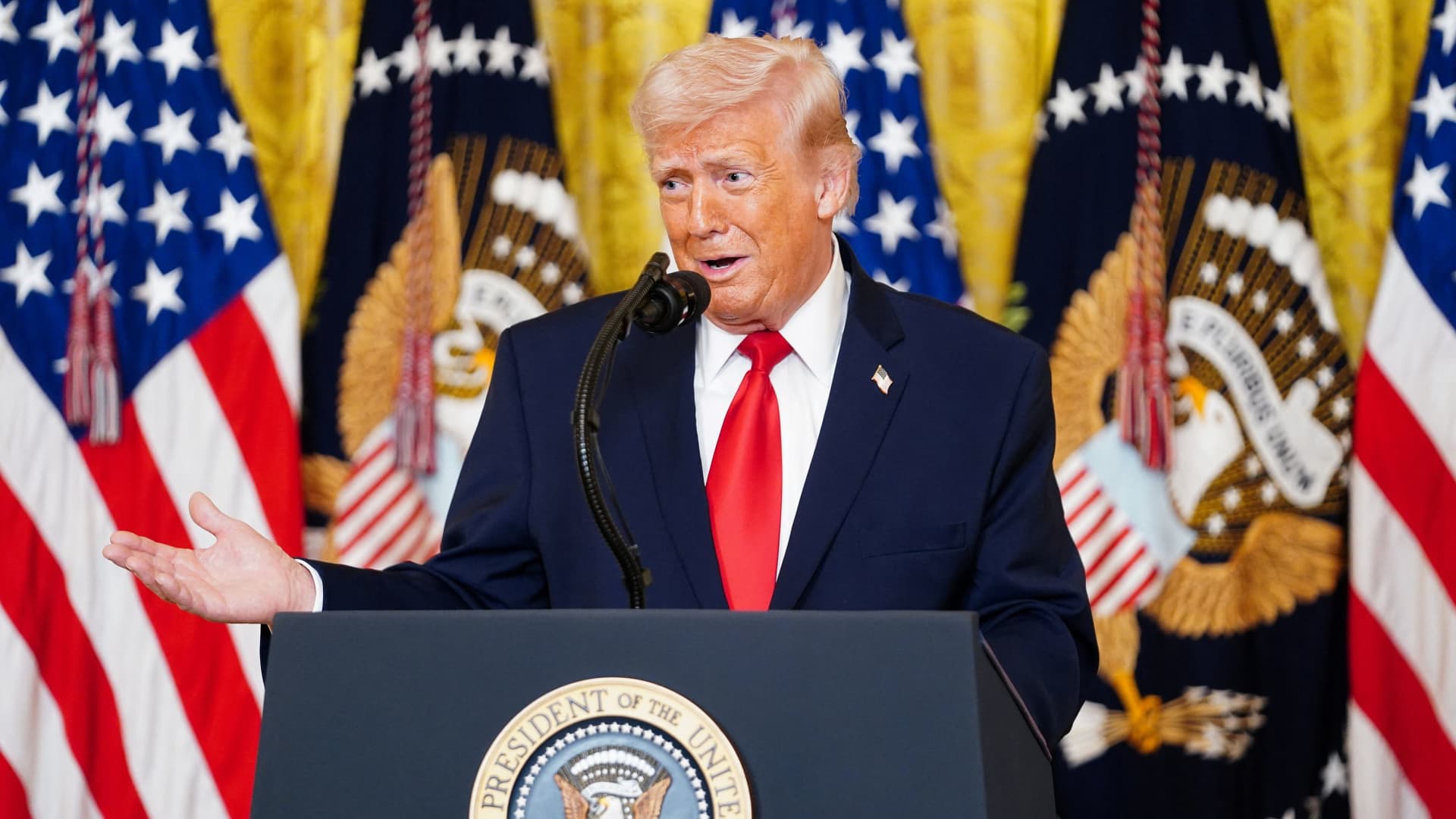
The “drill, baby, drill” mantra, a prominent feature of the 2024 presidential campaign, fueled expectations that robust domestic fossil fuel policies could shield the U.S. economy from global oil price shocks. The previous administration aggressively pursued measures designed to boost production, including opening new federal lands and waters for leasing, streamlining regulations, and pushing an ambitious drilling schedule. However, these policies, while aimed at increasing U.S. output, are proving insufficient to counter a disruption of the magnitude seen in the Middle East. As Senator Martin Heinrich, a ranking member of the Senate Energy and Natural Resources Committee, recently noted, the sheer quantity of oil required to offset a sustained closure of the Strait of Hormuz is simply not available from U.S. sources. The U.S. currently produces approximately 13.7 million barrels of oil per day, according to December EIA data. While substantial, this pales in comparison to the over 100 million barrels per day of global demand, particularly when 20 million barrels of that supply are jeopardized. Further illustrating the practical limitations, recent efforts to open Alaska’s Cook Inlet for offshore exploration garnered no bidders, signaling that even with favorable policy, the economic and logistical hurdles to rapid expansion remain formidable.
Navigating Current Market Volatility Amidst Geopolitical Risk
The immediate impact of the Iranian crisis is palpable, yet the market’s response has shown complex dynamics. As of today, Brent Crude trades at $92.99 per barrel, reflecting a marginal dip of 0.27% within a daily range of $92.57 to $94.21. Similarly, WTI Crude stands at $89.44, down 0.26% for the day, trading between $88.76 and $90.71. Gasoline prices, a direct concern for consumers and a key driver of living costs, currently hover at $3.11, down slightly by 0.64% today. This intraday stability, however, masks the significant underlying volatility and risk. Our proprietary data shows Brent crude has pulled back about 7% over the past two weeks, falling from $101.16 on April 1st to $94.09 on April 21st. This recent correction suggests a market grappling with various factors, but the geopolitical premium remains a dominant force. Despite the slight downward movement today, the fundamental threat to global supply from the Strait of Hormuz disruption persists, meaning any temporary market calm should not be mistaken for a resolution of the core crisis. Investors must remain vigilant, as the situation could rapidly escalate, impacting refining operations which, last week, processed approximately 16 million barrels of oil per day in the U.S.
Investor Focus: Price Direction and Long-Term Outlook
Our first-party reader intent data clearly indicates that investors are keenly focused on the immediate and long-term trajectory of crude oil prices. Questions like “Is WTI going up or down?” and “What do you predict the price of oil per barrel will be by end of 2026?” dominate current inquiries. This reflects a pervasive uncertainty driven by the current geopolitical climate. While no analyst can offer a crystal ball, the prevailing consensus among experts is that significant impacts on gas prices are inevitable and will likely persist for many months. The global nature of the oil market means that disruptions to a major artery like the Strait of Hormuz create an imbalance between overall supply and demand that cannot be quickly rectified by localized increases in production. Furthermore, investor interest extends to the performance of specific players, with queries about companies like Repsol’s potential performance in April 2026 highlighting the desire to understand how individual entities will weather broader market shifts. The key takeaway for investors is that the current environment necessitates a focus on global supply-demand fundamentals and geopolitical developments over purely domestic production narratives.
Key Events on the Horizon for Energy Investors
In the coming weeks, investors should closely monitor a series of critical data releases that will offer further insights into the unfolding supply situation and market dynamics. The EIA Weekly Petroleum Status Reports, scheduled for April 22nd, April 29th, and May 6th, will provide crucial updates on U.S. crude oil inventories, refining activity, and product supplied, offering a snapshot of domestic supply-demand balances amidst the global crisis. Complementing these, the API Weekly Crude Inventory reports on April 28th and May 5th will offer an additional perspective on crude stock levels. For a look at future production potential, the Baker Hughes Rig Count, due out on April 24th and May 1st, will indicate drilling activity trends, though as discussed, the ability of these numbers to rapidly offset a major global supply shock is limited. Perhaps most significant will be the EIA Short-Term Energy Outlook, set for release on May 2nd. This comprehensive report will provide updated official forecasts for supply, demand, and prices, offering a vital benchmark for investor expectations. Each of these events will serve as a crucial touchpoint for assessing the market’s response to the Iran crisis and adjusting investment strategies accordingly.