IPAA Leadership Charts Course for Independent Producers Amidst Volatility
The Independent Petroleum Association of America (IPAA) has appointed Edith Naegele as its new President and CEO, a critical development for the hundreds of independent oil and natural gas producers across the U.S. Naegele takes the helm at a pivotal time, asserting that these firms remain central to America’s energy supply and global markets, even as they navigate a profoundly challenging price environment. Her leadership will be instrumental in advocating for policies that foster the stability these producers desperately need to make sound capital allocation decisions and continue their vital role in powering the nation.
Navigating a Challenging Price Environment: The Investor’s View
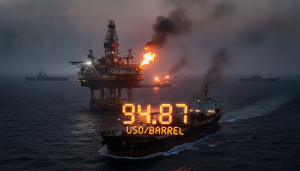
Naegele’s immediate focus on the “challenging price environment” for independent producers resonates deeply with current market realities. As of today, Brent crude trades at $90.81, marking a modest +0.42% increase from its open, while WTI crude sits at $87.49, up +0.08%. Gasoline prices have also seen a slight uptick to $3.06, a 0.66% rise. However, these daily gains offer little solace against the backdrop of significant recent volatility. Our proprietary market data reveals a stark 14-day decline in Brent crude, plummeting nearly 20% from a high of $118.35 on March 31st to $94.86 just yesterday, April 20th, and further dipping to today’s $90.81. This precipitous drop of over $27 per barrel in just three weeks directly impacts the financial health and strategic planning of independent producers.
For investors, this rapid erosion of value translates into squeezed margins, particularly for smaller independents operating with tighter budgets and less hedging flexibility. Naegele’s emphasis on the need for stability is not merely rhetorical; it reflects the real-world pressures faced by companies across various basins. This level of price fluctuation makes long-term capital expenditure planning exceedingly difficult, forcing a cautious approach to new drilling and expansion projects. The recent downturn underscores why the IPAA’s advocacy for a more predictable regulatory and market landscape is more crucial than ever for maintaining domestic energy output and supporting the jobs and economic security dependent on these producers.
Capital Allocation Under Scrutiny: What Investors Are Asking
The market’s current unpredictability has naturally amplified investor scrutiny, with common questions surfacing like “is WTI going up or down?” and “what do you predict the price of oil per barrel will be by end of 2026?” These inquiries highlight the pressing need for clarity and stability that Naegele champions. Independent producers, as she noted, form the backbone of many producing communities, and their capital allocation decisions have far-reaching economic implications. When prices swing wildly, the calculus for deploying capital into new wells, infrastructure, or even M&A opportunities becomes exponentially more complex.
Investors are seeking signals that independent producers can sustain profitability and deliver shareholder value amidst this uncertainty. The ability of these firms to manage costs, optimize existing assets, and selectively pursue high-return projects in a volatile environment will differentiate performers. Naegele’s call for stability directly addresses this investor concern, advocating for a policy framework that allows producers to plan with greater confidence, thereby encouraging sustained investment in domestic energy production rather than a reactive, short-term approach driven by daily price swings. This strategic clarity is essential for companies aiming to provide long-term energy security and returns.
Forward-Looking Analysis: Key Events Shaping Future Stability
The quest for stability, vital for independent producers and their investors, will be heavily influenced by several critical upcoming events on the energy calendar. Tomorrow, April 21st, the OPEC+ Joint Ministerial Monitoring Committee (JMMC) meeting looms large. This gathering will be closely watched for any signals regarding production policy, which could directly impact global supply levels and, consequently, crude oil prices. Any surprise production adjustments from OPEC+ could either exacerbate or alleviate the volatility independent U.S. producers are currently experiencing.
Further insights into market fundamentals will come from the EIA Weekly Petroleum Status Reports, scheduled for April 22nd and April 29th. These reports provide crucial data on U.S. crude oil and product inventories, refinery activity, and demand indicators, offering a snapshot of domestic supply-demand balances. Additionally, the Baker Hughes Rig Count on April 24th and May 1st will serve as a bellwether for drilling activity among independent producers, reflecting their real-time sentiment and capital deployment strategies. Looking slightly further out, the EIA Short-Term Energy Outlook on May 2nd will offer a broader analytical perspective on market trends and price forecasts, providing valuable context for investors and informing independent producers’ longer-term planning. For independent producers, these events are not just news items; they are direct inputs into their capital allocation models, influencing decisions from new well permits to staffing levels, all in pursuit of the stability Naegele emphasizes.
The Enduring Role of Independent Producers in Evolving Global Markets
Edith Naegele’s appointment reaffirms the IPAA’s commitment to highlighting the irreplaceable role of independent producers. These companies were the architects of the shale revolution, dramatically altering the global energy landscape and cementing the U.S. as a powerhouse in oil and natural gas production. Their proven record of delivering energy securely and competitively, even in challenging times, underscores their strategic importance. As global markets continue to evolve and new production opportunities emerge worldwide, IPAA member companies will undoubtedly continue to evaluate prospects to produce oil and natural gas safely and securely.
The emphasis on “producing the energy that powers American lives and competitiveness” is a powerful reminder of the fundamental contribution of these firms. Despite the recent price shocks and the constant pressure to innovate and adapt, independent producers remain crucial for national energy security, economic vitality, and technological advancement within the energy sector. Investors should recognize that while volatility persists, the long-term demand for reliable energy, coupled with the proven agility of independents, ensures their continued relevance and offers compelling opportunities for those who understand the dynamics of this essential industry.