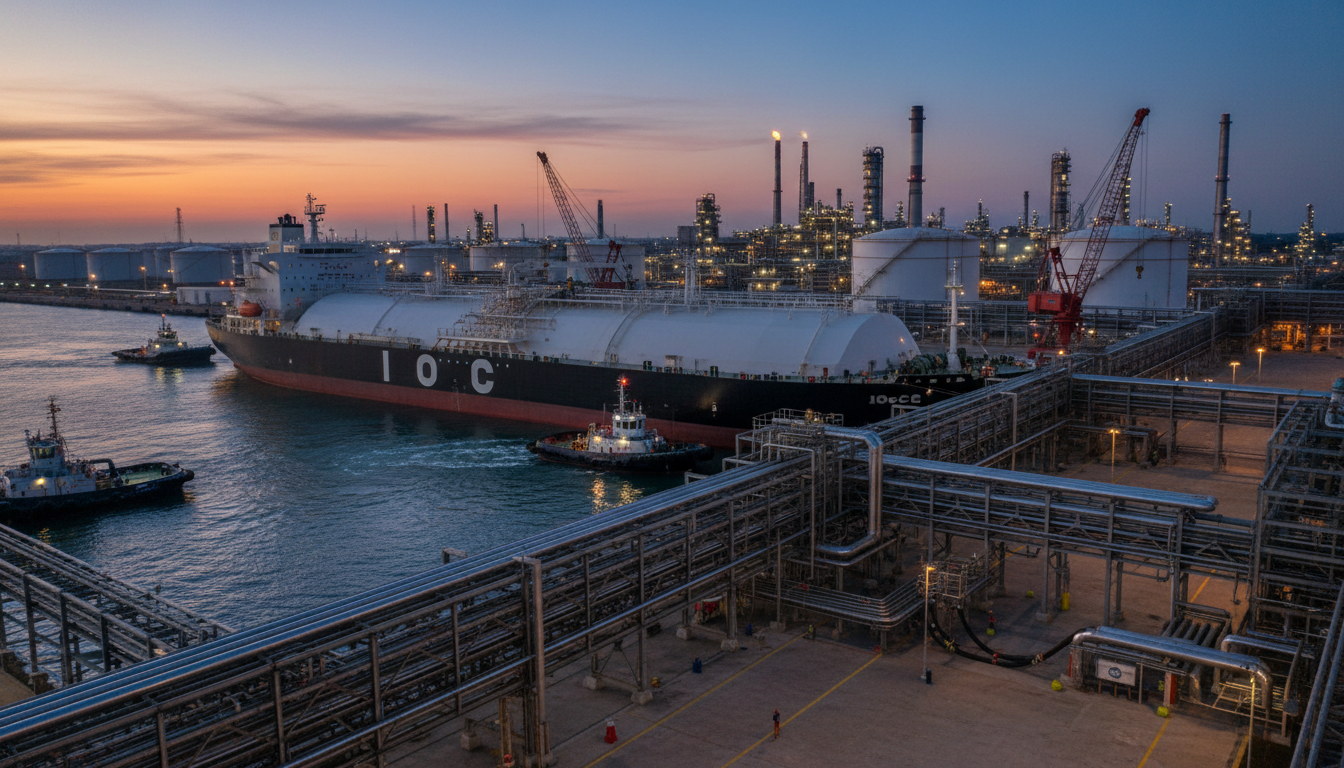
India’s recent landmark acquisition of liquefied petroleum gas (LPG) from Iran by state-owned Indian Oil Corporation (IOC) marks a pivotal moment for global energy markets, extending far beyond a simple transaction. This move, the first direct energy procurement from the Islamic Republic by IOC in nearly eight years, signals a calculated strategic shift by India to bolster its energy security amidst escalating geopolitical tensions and supply chain vulnerabilities. For oil and gas investors, this development necessitates a re-evaluation of regional supply dynamics, potential shifts in trade routes, and the long-term implications for price stability and infrastructure investments, particularly as the global energy landscape continues its rapid evolution.
India’s Urgent Drive for Supply Diversification
India stands as one of the world’s largest consumers of LPG, a vital cooking fuel for millions of households, yet it imports approximately two-thirds of its total requirements. A staggering 90 percent of these imports have traditionally originated from the Middle East, with a significant portion transiting through the Strait of Hormuz. This geographical concentration has historically exposed India to considerable supply chain vulnerabilities, a risk that has starkly materialized in recent months. The ongoing conflict in West Asia has dramatically intensified disruptions, rendering the Strait of Hormuz an increasingly perilous passage for maritime trade and leading to noticeable domestic shortages across India.
The imperative to diversify supply sources is clear. Reports indicate frustratingly long queues for cylinder refills and some communities reverting to less efficient cooking methods. In response, the Indian government has taken decisive measures, including curtailing LPG supplies to commercial entities like hotels and restaurants, and accelerating critical natural gas pipeline development projects under emergency provisions. Investors closely monitoring the energy sector have consistently asked about the stability of major demand centers. This proactive move by India directly addresses concerns about energy security in a volatile region, offering a blueprint for other import-dependent nations seeking to mitigate similar risks and maintain domestic stability.
Geopolitical Shifts and the Return of Iranian Barrels
The pivotal purchase from Iran follows closely on the heels of a temporary waiver issued by the United States earlier this month. This exemption permits India to procure crude oil and petroleum products from Iran, effectively easing stringent sanctions that had largely kept Iranian energy cargoes off the global market. The re-entry of Indian buyers into the Iranian energy arena is being closely monitored by international markets, offering an early indicator of potential broader shifts in trade patterns should more nations opt to leverage similar waivers.
For investors, this signifies a potential recalibration of geopolitical leverage and energy diplomacy. Iran, holding vast hydrocarbon reserves, presents a significant alternative supply source for nations looking to reduce reliance on traditional suppliers. While this specific transaction involves LPG, it opens the door for potential future crude oil deals, which could have a more direct impact on global crude balances. The broader implication is a fragmented sanctions regime, where targeted waivers allow for strategic bilateral energy deals, potentially unlocking new supply streams that were previously constrained. This development could introduce more complexity and optionality into global energy flows, compelling a re-evaluation of long-term supply forecasts.
Navigating Market Volatility and Investor Sentiment
The global oil market continues to grapple with a delicate balance of supply concerns, demand fluctuations, and geopolitical headwinds. As of today, Brent crude trades at $92.45 per barrel, reflecting a modest downturn of 0.85% within a day range of $91.39 to $94.21. Similarly, WTI crude is priced at $88.69, down 1.09%, trading between $87.64 and $90.71. This intraday volatility is symptomatic of a market reacting to a multitude of signals, including the broader trend observed over the past two weeks, where Brent has seen a decline from $101.16 on April 1st to $94.09 by April 21st, representing a $7.07 or 7% drop.
Against this backdrop, the diversification of India’s LPG supply through Iranian channels, while focused on a specific product, subtly influences overall market sentiment. Investors frequently ponder whether “WTI is going up or down” or “what the price of oil per barrel will be by the end of 2026.” While the Iranian LPG deal doesn’t directly impact crude prices immediately, it contributes to the narrative of supply availability. Any move that enhances energy security for a major consumer like India can, in the long run, reduce the perceived vulnerability of global supply chains. This, in turn, can mitigate extreme price spikes driven by supply fears, even as the market continues to react to daily inventory reports and geopolitical headlines. The relative stability gained from diversified sourcing may provide a slight psychological buffer, though it won’t single-handedly dictate the trajectory of crude prices in the near term.
Forward Outlook: Upcoming Events and Long-Term Trajectories
Looking ahead, investors should closely monitor a series of upcoming energy events that will provide further clarity on market direction. The EIA Weekly Petroleum Status Reports, scheduled for April 22nd, April 29th, and May 6th, will offer critical insights into U.S. crude oil, gasoline, and distillate inventories. Any significant build-ups or drawdowns will continue to exert pressure on global prices, especially with the added complexity of diversified supply chains. Furthermore, the Baker Hughes Rig Count reports on April 24th and May 1st will indicate the health of upstream activity, a key determinant of future production capacity. A sustained increase in active rigs could signal growing future supply, potentially counterbalancing geopolitical disruptions.
Crucially, the EIA Short-Term Energy Outlook on May 2nd will be a cornerstone for investors seeking updated price forecasts and supply/demand projections. This report will be particularly scrutinized for its assessment of how geopolitical developments, including shifts in sanctioned oil flows, might influence global balances through the rest of 2026. For India, the long-term implications of this Iranian deal extend to infrastructure development. The accelerated natural gas pipeline projects, coupled with the proven ability to tap alternative LPG sources, suggest a robust strategy to build resilience into their energy matrix. Investors should consider opportunities in companies exposed to India’s burgeoning energy infrastructure sector and those positioned to capitalize on evolving global trade routes and the gradual re-integration of previously sanctioned energy players.


