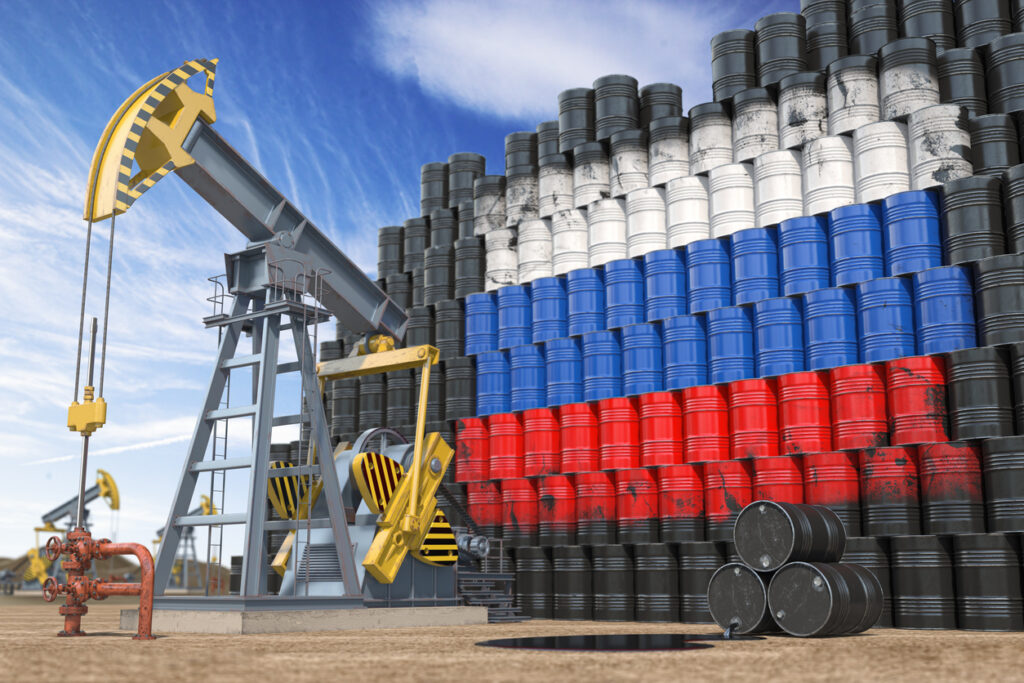
The global crude oil market is undergoing a significant re-alignment, with India’s largest refiner, Indian Oil Corp. (IOC), signaling a major pivot away from Russian supply. This strategic shift, driven by recent U.S. sanctions targeting Russian oil majors like Rosneft and Lukoil, has profound implications for global crude flows, refining economics, and investor strategies. IOC is reportedly seeking up to 24 million barrels from the Americas for the first quarter of next year, a clear indication that a structural change in sourcing is underway. This move not only highlights the growing influence of geopolitics on energy trade but also underscores the increasing relevance of Western Hemisphere crude producers in meeting Asian demand.
Geopolitical Pressures Reshape Supply Chains and Drive Costs
The immediate catalyst for IOC’s pivot is the latest round of U.S. sanctions, which have effectively complicated the procurement of Russian crude for key Indian buyers. While Russian oil previously offered attractive discounts, ranging from $8 to $12 per barrel below Middle Eastern benchmarks, this arbitrage is now evaporating. Our analysis shows that Indian refiners are already facing higher import costs, with the average price for imported crude inching higher by $5 per barrel over the Dubai benchmark in the current fiscal year. This cost escalation is forcing refiners to switch to more expensive alternative grades, impacting their bottom line. We’ve observed this week, for instance, that IOC has already secured 2 million barrels of West African crude from Angola and Nigeria. This immediate shift signals the urgency with which refiners are adapting to the new supply landscape. As of today, Brent crude trades at $90.38, reflecting a significant daily decline of 9.07%, while West Texas Intermediate (WTI) crude stands at $82.59, down 9.41% for the day. This current market dip comes despite tightening supply fears, with Brent having corrected substantially from $112.78 just two weeks ago, indicating a complex interplay of demand concerns and geopolitical supply adjustments.
The Americas Emerge as a Critical Supply Hub
IOC’s proactive search for crude from the United States, Canada, Brazil, and other Latin American countries signifies a monumental shift in global trade routes. This move is not entirely unprecedented; our proprietary data reveals that Indian imports from the United States have already surged to 575,000 barrels daily this month, marking the highest level since 2022. This trend positions producers in the Americas as increasingly vital suppliers to one of the world’s largest and fastest-growing energy consumers. The requirement for both high-sulfur and low-sulfur grades from IOC suggests a broad appetite, indicating that a diverse range of producers across the Western Hemisphere could benefit. This reorientation of supply lines means increased tanker traffic on transatlantic and transpacific routes, potentially impacting shipping costs and, in turn, refining margins for those reliant on these new, longer supply chains. Investors should closely monitor the earnings calls of major North and South American producers for signals of increased export volumes and new contractual agreements.
Investor Focus: Price Volatility and Upcoming Market Catalysts
Our first-party intent data from reader questions highlights a significant focus among investors on future oil price predictions and the stability of OPEC+ production quotas. The recent decline in crude prices, with Brent falling over 19% in the last 14 days, from $112.78 to its current $90.38, has injected considerable uncertainty into the market despite the geopolitical supply disruptions. This volatility underscores the importance of upcoming energy events. The OPEC+ Joint Ministerial Monitoring Committee (JMMC) and Ministerial Meetings, scheduled for April 19th and 20th respectively, will be critical. The market will be keenly watching for any adjustments to current production quotas, especially in light of the evolving supply landscape and the impact of sanctions on Russian exports. Further market signals will come from the API Weekly Crude Inventory and EIA Weekly Petroleum Status Reports on April 21st, 22nd, 28th, and 29th. These reports will provide crucial insights into inventory levels, offering a clearer picture of the immediate supply-demand balance and helping to frame price expectations moving into the second quarter. Investors should be prepared for significant price swings around these dates as the market digests new information and policy decisions.
Refining Margins and Strategic Positioning in a Dynamic Market
The shift in crude sourcing carries direct implications for refining economics. The move away from discounted Russian crude to costlier alternatives is expected to elevate input costs for Indian refiners, potentially squeezing their margins. This scenario is exacerbated by already challenged operational environments; refinery run rates in India had already slipped to a 19-month low in September, even before the latest sanctions were announced. For investors, understanding which refiners are most exposed to these changing dynamics is crucial. Companies with diversified crude procurement strategies or those with significant exposure to the newly favored Americas crude streams might be better positioned. Conversely, refiners heavily reliant on specific crude types or with less flexibility in their supply chains could face headwinds. The demand for both high-sulfur and low-sulfur grades from IOC suggests that the market for various crude qualities will see increased competition. Monitoring the Baker Hughes Rig Count reports on April 24th and May 1st will also be important for gauging future production capacity in the US, which is now a crucial alternative supplier.