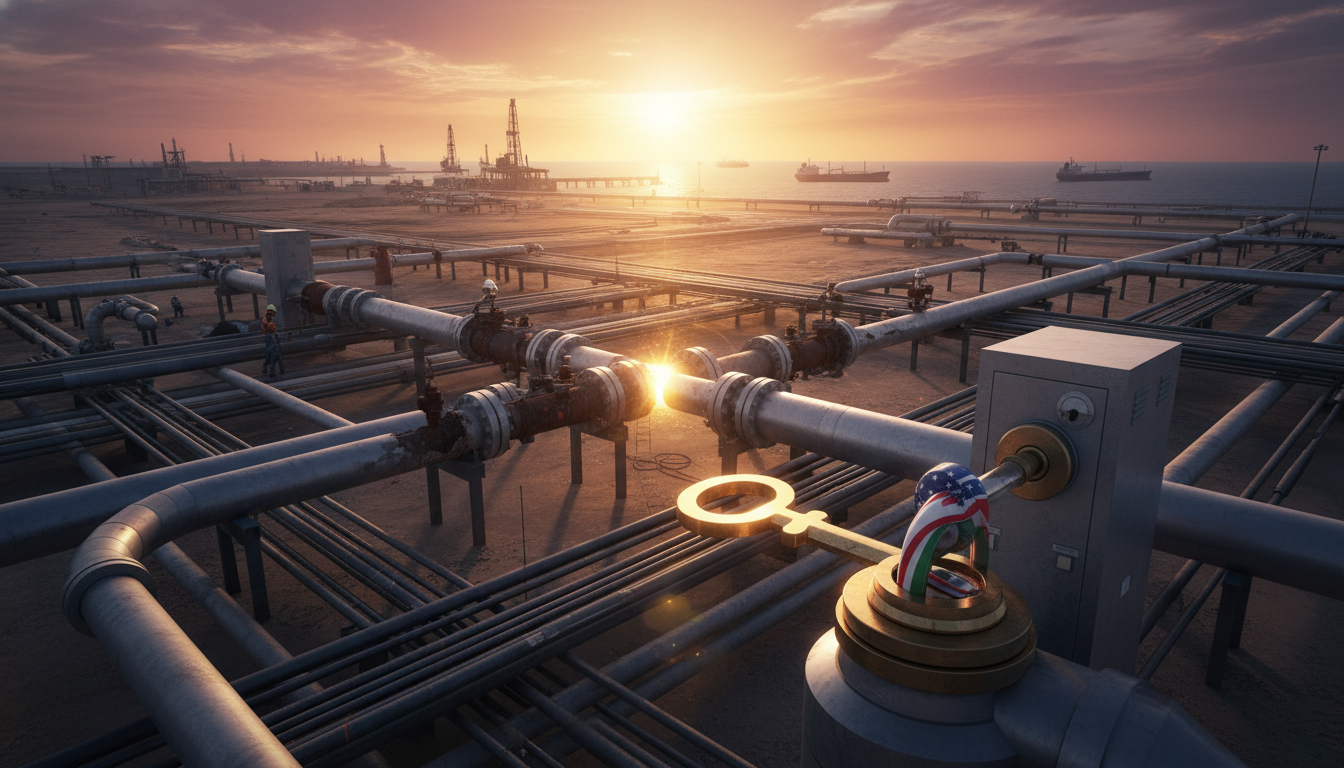
Middle East Tensions Cast Long Shadow Over Global Oil Flow and Economic Outlook
The stability of the Middle East remains the single most critical determinant for global energy flows and, by extension, the health of the world economy. As geopolitical tensions escalate, particularly around vital maritime chokepoints, the immediate and long-term implications for oil and gas markets become increasingly severe. Industry leaders, including HSBC group chairman Brendan Nelson, have underscored that an expeditious resolution to the current disruptions is paramount to mitigating widespread economic damage. The longer the current state of flux persists, the more pronounced the indirect effects of elevated energy costs will be, fueling inflation and acting as a significant drag on global growth prospects. Indeed, the acceleration of inflation, driven by these energy shocks, stands as a looming risk that demands the close attention of investors.
The Strait of Hormuz: A Contested Artery and Its Supply Shockwaves
The Strait of Hormuz, a narrow passage connecting the Persian Gulf with the Arabian Sea, has transitioned from a controlled chokepoint to an actively contested maritime space, characterized by selective access, intensified military positioning, and emerging enforcement actions. This shift, identified by maritime intelligence firms, has profound implications for global crude supply. Analysts at ANZ estimate that Iranian control within the Strait has already curtailed approximately 10 million barrels per day (bpd) of crude oil from reaching global markets. Furthermore, a prolonged U.S. naval blockade, which commenced earlier this week, threatens to remove an additional 4 million bpd. The combined impact of these disruptions is staggering, representing a substantial portion of global daily consumption and creating an unprecedented shockwave through the international energy system. Without a clear path to the unrestricted reopening of this crucial waterway, the economic reverberations will only deepen, exacerbating inflationary pressures and dampening industrial activity worldwide.
Market Volatility and Investor Questions Amidst Geopolitical Unrest
The direct impact of these geopolitical developments is immediately evident in the daily gyrations of crude oil benchmarks. As of today, Brent Crude trades at $95.19 per barrel, marking a robust 5.32% gain within a day range of $92.77 to $97.81. Similarly, WTI Crude has seen a significant uptick, currently priced at $87.05 per barrel, up 5.4% within its daily range of $85.45 to $89.60. These recent surges occur against a backdrop of considerable market volatility; our proprietary data shows Brent crude experienced a nearly 20% decline, dropping from $112.78 on March 30th to $90.38 on April 17th, illustrating the extreme sensitivity to headlines and perceived risk. Gasoline prices, reflecting these upstream movements, stand at $3.04, up 3.75% today.
This heightened uncertainty is clearly reflected in the questions OilMarketCap.com readers are posing this week. Investors are keenly asking about the short-term direction of benchmarks like WTI and, perhaps more tellingly, what the price of oil per barrel will be by the end of 2026. These inquiries highlight a deep concern about both immediate trading opportunities and the long-term stability required for strategic portfolio planning. The truth is, predicting end-of-year oil prices becomes exceedingly challenging when a vital chokepoint remains a “contested maritime space.” The current geopolitical landscape introduces an unpredictable variable that can dramatically swing prices in either direction, making any long-term forecast highly speculative without a clear resolution to Middle East tensions.
The Long Road to Supply Recovery: A Multi-Month Outlook
Even under the most optimistic scenario, where a peace deal or a diplomatic breakthrough in the Middle East is achieved today, the restoration of full crude and natural gas supply flows from the region is not an immediate prospect. According to analysis from Wood Mackenzie, the physical and logistical recovery of oil and gas supply could extend for several months, potentially well into the late summer. This protracted recovery timeline means that the market will continue to grapple with underlying tightness even after a de-escalation of tensions. The longer the Strait of Hormuz crisis persists, the more entrenched the supply deficits become, delaying the rebalancing of global inventories and maintaining upward pressure on energy costs. This extended period of vulnerability underscores Nelson’s caution regarding economic growth estimates, which must be approached with considerable reservation given the persistent uncertainties surrounding energy prices and the broader economic impact of the conflict.
Upcoming Events: Navigating the Near-Term Energy Calendar
While the broader geopolitical climate remains the dominant factor, investors must closely monitor a series of key events in the coming weeks that will offer insights into global supply and demand dynamics. On April 20th, the OPEC+ JMMC Meeting is scheduled, followed by the crucial OPEC+ Ministerial Meeting on April 25th. These gatherings will be critical in determining the cartel’s collective strategy in response to the Middle East supply disruptions and the prevailing market volatility. Any adjustment to production quotas or even strong rhetoric could significantly sway prices. Furthermore, the weekly API Crude Inventory reports (April 21st and 28th) and the EIA Weekly Petroleum Status Reports (April 22nd and 29th) will provide crucial data points on U.S. inventory levels, offering a proxy for demand and the effectiveness of any strategic reserve releases. Finally, the Baker Hughes Rig Count reports on April 24th and May 1st will indicate the level of drilling activity in North America, signaling potential future supply responses from non-OPEC producers. These events, against the backdrop of an incredibly tense geopolitical environment, will offer essential cues for investors seeking to position their portfolios in a volatile and uncertain energy market.


