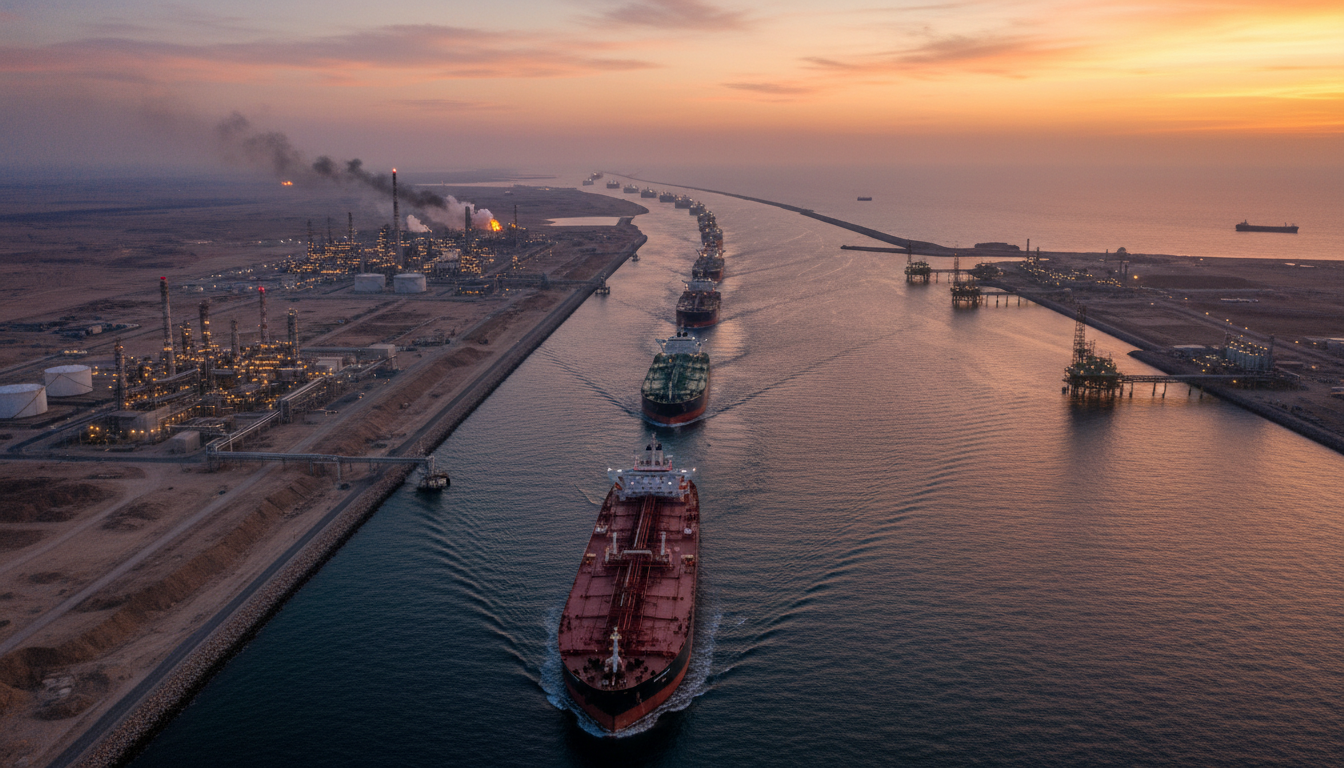
The Strait of Hormuz, the indispensable artery for global energy flow, is once again commanding the attention of astute oil and gas investors. Recent proprietary data from OilMarketCap.com reveals a notable surge in vessel transit through this critical chokepoint, reaching levels not observed since the initial, more restrictive phases of the ongoing geopolitical complexities. This uptick, while seemingly a sign of returning normalcy, paradoxically signals a deeper shift: a growing formalization of Iranian leverage over the Strait, as an increasing number of nations secure individualized passage agreements. For investors, this evolving dynamic presents a complex calculus of risk and opportunity, shaping the future of global oil supply and pricing.
Hormuz Rebound: Conditional Access and Formalized Control
Our proprietary tracking indicates a significant increase in maritime activity within the Strait of Hormuz. Over a recent weekend, 21 ships successfully navigated the waterway, marking the highest two-day total since early March when passage was severely constrained. Of these, 13 vessels departed into the Arabian Sea, suggesting a deliberate and managed re-opening of a vital export route. This marks a stark contrast to the pre-conflict era, when approximately 135 vessels would routinely transit daily, highlighting that while traffic has increased, it remains heavily controlled and far from unhindered. The nature of these transits is particularly telling: we observe a pattern of bilateral, often opaque, agreements between energy-dependent nations and Iran. For instance, an Iraqi crude tanker secured an explicit exemption, while India, a major energy importer, has not only seen some of its fleet gain passage but has even received Iranian liquefied petroleum gas (LPG) — a trade dynamic unseen in years. Eight Indian LPG tankers have transited, demonstrating the urgent need for nations to diversify energy sourcing amidst global instability. Even strategic economic powers like China and Japan have successfully navigated vessels through, albeit after earlier disruptions and under apparent negotiated terms. This individualized access solidifies Tehran’s tactical control and its ability to monetize passage, fundamentally altering the risk profile for global shipping and supply chains.
Market Reaction and Investor Sentiment in a Shifting Landscape
Despite the heightened activity and underlying geopolitical tensions in the Strait of Hormuz, the broader oil market has shown a nuanced reaction. As of today, Brent Crude trades at $93.66 per barrel, reflecting a modest gain of 0.45% within a daily range of $91.39 to $94.86. Similarly, WTI Crude stands at $90.04 per barrel, up 0.41% for the day. This immediate market response suggests that while the Hormuz situation is critical, other factors are currently exerting more dominant influence on prices. Our 14-day Brent trend data further illustrates this point: Brent has actually declined by approximately 7% from $101.16 on April 1st to $94.09 on April 21st. This downward trajectory, despite increasing Hormuz leverage for Iran, indicates that the market might perceive the increased traffic as a slight de-escalation of immediate conflict risk, even as it acknowledges Iran’s strengthened control. Investors are actively questioning, “is WTI going up or down?” Our analysis suggests that while Hormuz introduces a persistent risk premium, the current market is balancing this against broader supply-demand fundamentals, global economic outlooks, and potentially increased supply from other regions. The market appears to be internalizing this ‘precarious normalization’ rather than reacting with a sharp bullish spike, suggesting that the risk of outright closure or major disruption is not seen as imminent, though the cost of doing business through the Strait is undoubtedly rising.
Forward Outlook: Navigating Supply Volatility and Upcoming Signals
Looking ahead, the evolving dynamics in the Strait of Hormuz will continue to be a primary driver for oil and gas investors. The formalization of conditional access by Iran introduces a new layer of uncertainty and potential cost. This situation directly impacts global supply chain stability, insurance premiums for vessels, and the overall cost of transporting crude and refined products from the Middle East. Our proprietary event calendar highlights several key data releases that will shape the market’s sensitivity to these Hormuz developments. Tomorrow, April 22nd, investors will closely watch the EIA Weekly Petroleum Status Report for crucial insights into U.S. crude inventories and refinery activity. Significant draws could amplify market nervousness around any future Hormuz disruptions. Later in the week, the Baker Hughes Rig Count on April 24th will offer a glimpse into future North American supply capacity, which could either mitigate or exacerbate concerns over Middle Eastern supply. As we move into May, the EIA Short-Term Energy Outlook on May 2nd will be particularly critical, as it will incorporate these evolving geopolitical factors into its supply and demand forecasts. Investors are keenly asking, “what do you predict the price of oil per barrel will be by end of 2026?” Our view is that the formalized control over Hormuz will maintain a geopolitical risk premium, likely supporting prices above historical averages. Any escalation or re-tightening of transit could push prices significantly higher, while a sustained, albeit precarious, flow might allow other fundamentals to dictate movements. The interplay between these fundamental data points and the enduring geopolitical risk from Hormuz will define the market’s trajectory over the coming months and into 2026.
Strategic Implications for Energy Investment Portfolios
The persistent, and now increasingly formalized, leverage Iran holds over the Strait of Hormuz demands a strategic re-evaluation for energy investors. Companies with significant exposure to Middle Eastern crude production or reliant on shipping through the Gulf face elevated operational risks and potentially higher insurance and transit costs. This could impact their profitability and competitiveness. Conversely, producers in less volatile regions, such as North America, Latin America, or West Africa, might see their relative attractiveness increase. For those asking about specific company performance, such as “how well do you think Repsol will end in April 2026,” it is crucial to assess their geographical footprint and supply chain resilience against this backdrop. Diversification becomes paramount: portfolios heavily weighted towards Gulf-sourced energy could be vulnerable to sudden shifts in Hormuz access or transit conditions. Investments in integrated energy companies with diverse upstream assets and robust logistics networks, or those focused on renewable energy alternatives, may offer a hedge against this concentrated geopolitical risk. While the recent increase in traffic offers a semblance of continuity, the underlying reality is one of a heavily managed and potentially precarious supply route. Prudent investors will factor this persistent, structural risk into their long-term capital allocation decisions, prioritizing resilience and geographical diversification in their energy holdings.


