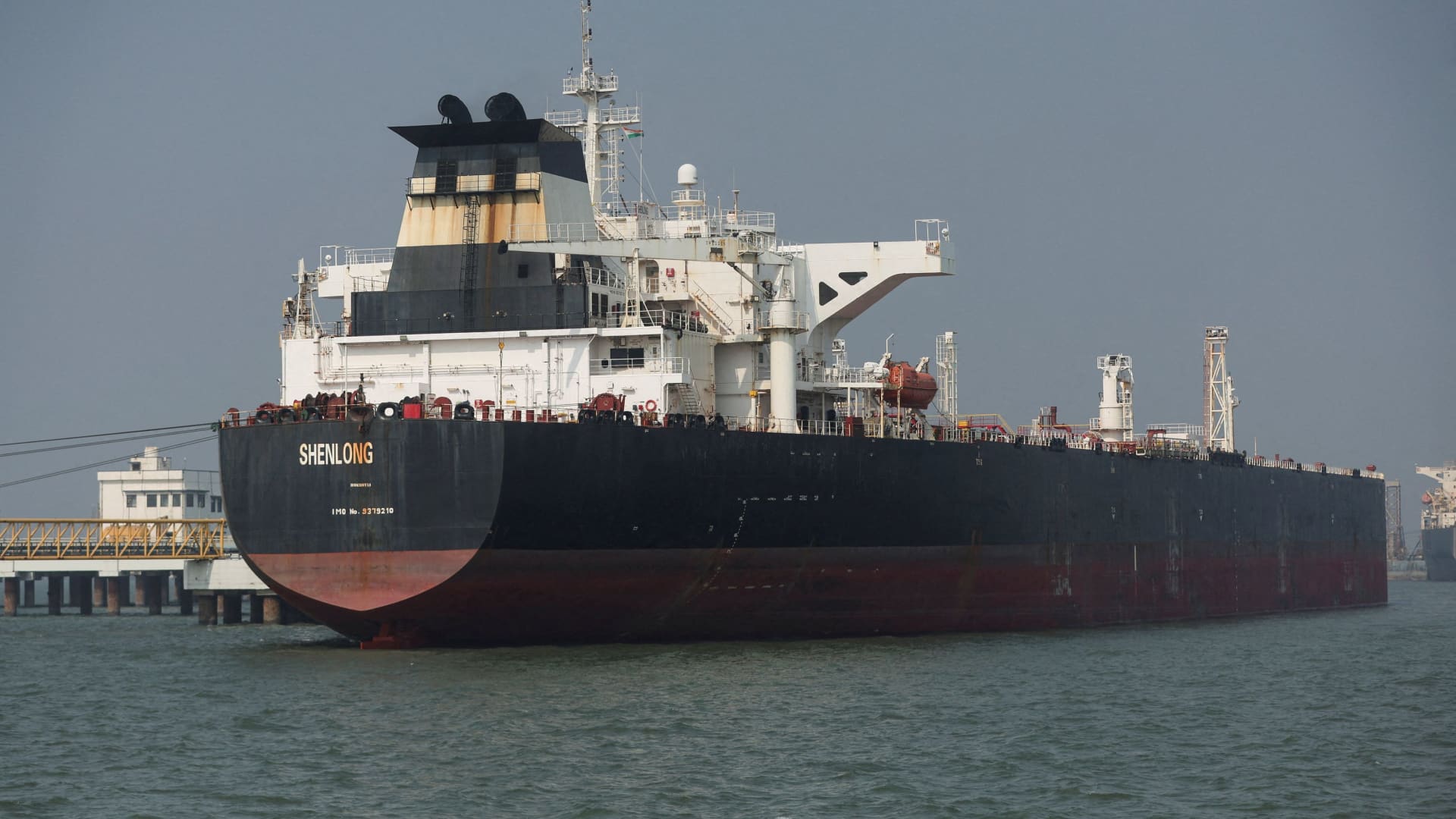
The Strait of Hormuz, a narrow maritime chokepoint funneling a substantial portion of the world’s oil supply, finds itself at the epicenter of escalating geopolitical tensions. Recent developments, including statements from Iran’s new supreme leader advocating for the continued closure of the vital passage as a strategic tool, signal a prolonged period of uncertainty. While defense officials have sought to downplay immediate concerns, the reality on the ground for global logistics and energy markets points to a significant disruption. For investors, this creates a complex landscape where the specter of supply chain shocks and potential oil price surges looms large, demanding a nuanced understanding of market dynamics and forward-looking indicators.
The Hormuz Strait: A Chokepoint Under Pressure
The strategic importance of the Strait of Hormuz cannot be overstated. This critical waterway is responsible for the transit of tens of millions of barrels of crude oil daily, alongside other essential commodities from fertilizers to metals. Its effective closure, or even the persistent threat thereof, introduces an unparalleled level of volatility into global energy supplies and broader trade routes. Iran’s new supreme leader, Mojtaba Khamenei, recently asserted that maintaining the closure is a legitimate “tool to pressure the enemy.” This assertive posture directly clashes with reassurances from figures like Defense Secretary Pete Hegseth, who stated that the situation is being managed and undue worry is unnecessary. This fundamental divergence in perspectives creates a precarious environment for oil prices, where the physical reality of disrupted cargo movement clashes with diplomatic rhetoric.
Current Market Realities: Brent Holds While Supply Fears Mount
Despite the severe geopolitical heat surrounding the Strait of Hormuz, the immediate market reaction has been somewhat counterintuitive, signaling a complex interplay of factors that investors must dissect. As of today, April 22, 2026, Brent Crude trades at $92.99 per barrel, reflecting a marginal decline of 0.27% within a day range of $92.57 to $94.21. Similarly, WTI Crude follows a comparable trend, currently at $89.44, down 0.26% for the day, fluctuating between $88.76 and $90.71. Gasoline prices have also seen a slight dip to $3.11, a 0.64% decrease. Looking at a broader timeframe, the 14-day trend for Brent Crude shows a more significant decline, moving from $101.16 on April 1, 2026, to $94.09 on April 21, 2026 – a drop of over 7%. This recent softening of prices, even amidst the Hormuz crisis, suggests that while the long-term risk of a price rally remains potent, short-term market dynamics, perhaps including inventory levels or broader economic concerns, are currently exerting downward pressure. This presents a critical juncture for investors, requiring them to assess whether the market is accurately pricing in the enduring risk of a sustained supply disruption, or if a significant upward correction is imminent once the full impact materializes.
Navigating Supply Chain Shocks: Beyond the Barrel
The ramifications of the Hormuz disruption extend far beyond crude oil prices, rippling through global supply chains and impacting a diverse range of sectors. Logistics providers, such as C.H. Robinson, have already highlighted the operational challenges, including constrained shipping capacity, selective cargo acceptance, and escalating fuel-related costs, all contributing to increased pricing volatility and inconsistent service conditions. This logistical bottleneck is directly translating into pressure points for retailers. Max Kahn, a respected industry analyst, underscores that while retailers have significantly enhanced their supply chain flexibility in recent years, largely driven by previous tariff challenges, the ongoing Hormuz situation is pushing the industry close to its limits. Grocery stores, with their inherently less flexible supply chains for perishable goods, are expected to feel the pinch first, facing immediate input cost pressures. Apparel retailers, conversely, may have more leeway to adjust production schedules. However, for all retailers, the dual challenge of managing rising input costs while navigating demand pressures will be paramount. The precedent set in 2022 and 2023, where retailers maintained resilience by raising prices to offset weakening unit sales, indicates a potential playbook for the current environment. Instances like stranded garment shipments for major players such as Inditex (Zara’s parent company) due to flight cancellations in the Middle East further illustrate the multifaceted nature of these disruptions. Ultimately, the persistent uncertainty and elevated costs threaten to impede overall GDP growth, transforming a sector-specific challenge into a broader economic concern.
Investor Focus: What Questions Are Shaping Strategy?
In this volatile environment, investor sentiment is highly reactive, with queries reflecting a blend of immediate concerns and long-term outlooks. Current investor inquiries reveal a sharp focus on directional trends, with many asking: “Is WTI going up or down?” and seeking clarity on “What do you predict the price of oil per barrel will be by end of 2026?” These questions underscore the prevailing uncertainty and the urgent need for actionable insights into crude price trajectories. The apparent disconnect between the severe geopolitical risk in Hormuz and the recent softening of crude prices adds complexity to these inquiries. Investors are keen to understand if the current price levels are a temporary anomaly, underpricing the true supply risk, or indicative of other, more dominant market forces. For energy sector investments, specifically in exploration and production companies, refiners, or even integrated oil majors, understanding this directional bias is crucial for portfolio positioning and risk management. The potential for a sudden, sharp rally driven by a more direct impact from the Hormuz situation could profoundly shift valuations, making forward-looking analysis of supply-demand fundamentals and geopolitical developments more critical than ever.
Forward Outlook: Key Data Points and Geopolitical Shifts
The coming weeks will offer crucial insights into the evolving energy landscape, with several key data releases poised to influence market sentiment and price action. Investors should closely monitor the EIA Weekly Petroleum Status Reports scheduled for April 22, April 29, and May 6, 2026, which will provide vital updates on U.S. crude oil and product inventories, refining activity, and demand indicators. Complementing these, the API Weekly Crude Inventory reports on April 28 and May 5 will offer an early look at these trends. Production-side dynamics will be illuminated by the Baker Hughes Rig Count releases on April 24 and May 1, indicating drilling activity and future supply potential. Perhaps most critically, the EIA Short-Term Energy Outlook on May 2, 2026, will present a comprehensive forecast that will undoubtedly incorporate the latest assessments of the Hormuz situation and its projected impact on global supply-demand balances. These data points, combined with ongoing monitoring of geopolitical developments in the Middle East, will be instrumental in shaping the market’s long-term view of crude prices. Any escalation or de-escalation of tensions related to the Strait of Hormuz, especially in conjunction with these fundamental data releases, could trigger significant market movements and dictate whether the anticipated oil price rally materializes or is further delayed.